Blanc to XO
Cask & climate
How long must a Rhum agricole age? That depends on the category, and the AOC recognizes three. The blanc is colorless and rests for at least six weeks in tank after distillation, before bottling.
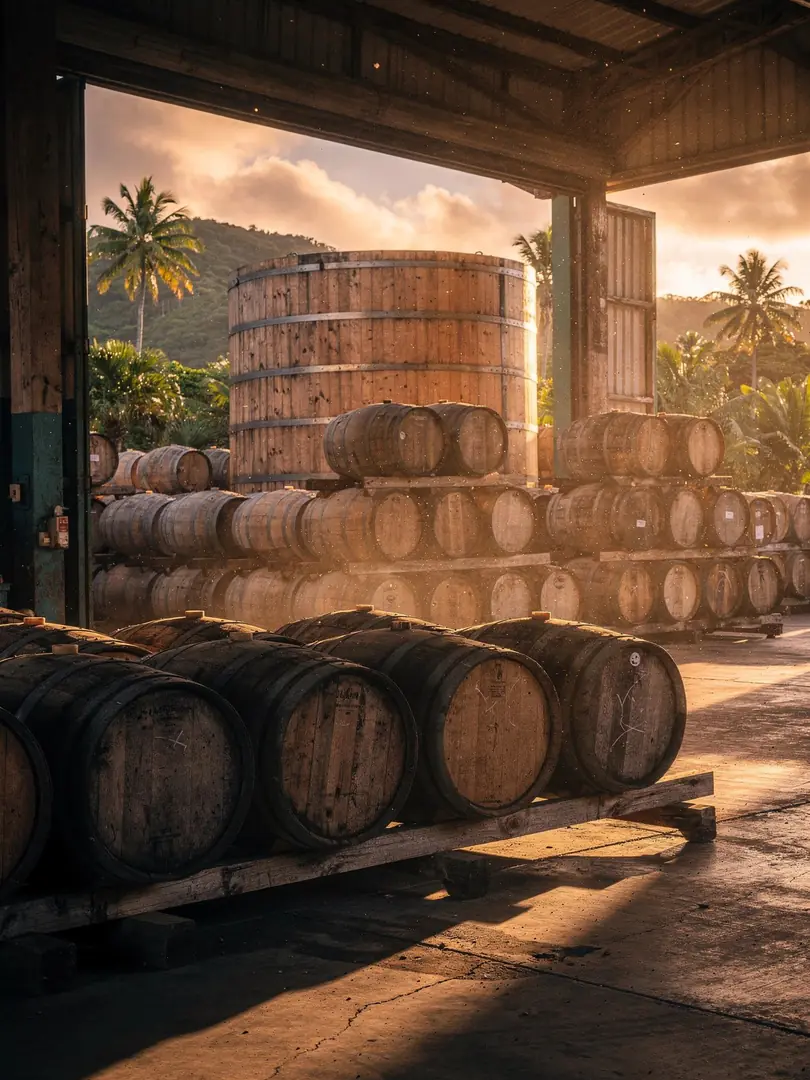
The élevé sous bois spends at least twelve months in oak. There is no limit on cask size, and large wooden vats, known as foudres, are common. It may not be called "vieux" and may bear no age-related terms.
The vieux needs at least three years in oak casks under 650 liters and must be bottled on Martinique. The additional terms are regulated: VO means at least three years, VSOP, Réserve Spéciale, Cuvée Spéciale and Très Vieux at least four, XO, Extra Vieux, Grande Réserve and Hors d'Âge at least six, each without interruption. Only a vieux with at least six years in cask may carry a vintage.
In the tropical climate, a great deal of rum evaporates through the wood. Trade publications often cite around eight percent a year for the Caribbean, compared to about two percent in Scotland. Anyone aging rum in cask therefore pays in volume, which explains why mature bottlings command their price.
Finishes and coloring are also permitted. The limit is the so-called obscuration: the difference between actual and apparent alcohol content, caused by wood extract, caramel or sugar, must stay below 2% ABV. The house JM, at the Habitation Fonds-Préville in Macouba, for example offers bottlings finished in Armagnac casks. The age rules are stricter than in the EU, where only the youngest component counts.