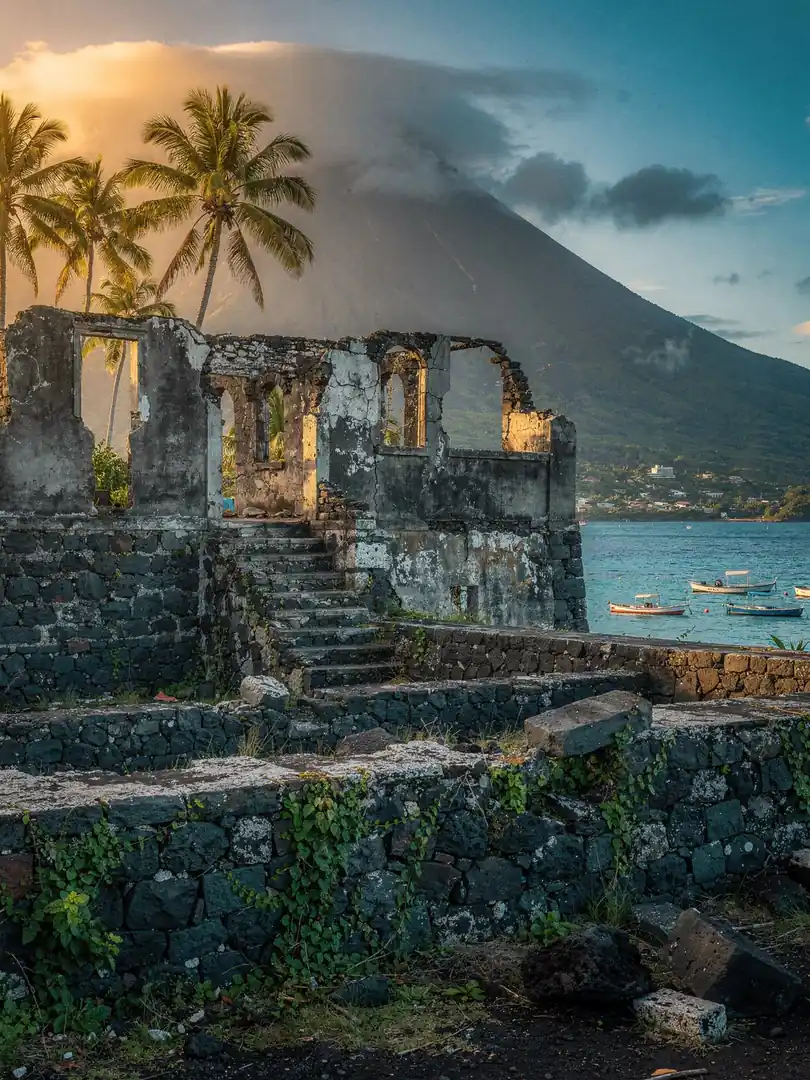
A City Buried in Ash
Region & History
The history of rum in Martinique's North Caribbean breaks off on a single morning—and then begins anew. On May 8, 1902, Montagne Pelée erupted over Saint-Pierre, and a pyroclastic cloud killed an estimated 29,000 to 30,000 people within minutes. Governor Louis Mouttet had kept residents in the city despite weeks of warning signs, because elections were approaching. Only three survivors are known by name; one of them, Ludger Sylbaris, was sitting in a prison cell at the time.
Before the eruption, Saint-Pierre was known as the "Petit Paris of the Antilles," the island's wealthy trading hub. Its prosperity came from sugarcane grown on the surrounding plantations, cultivated and processed by enslaved people until slavery was abolished in 1848.
How did the Depaz distillery come back? According to the house, the La Montagne estate dates back to 1651. Victor Depaz was studying in Bordeaux in 1902 and lost his family in Saint-Pierre. Seven years later he returned, planted the land he had inherited—521 hectares, according to the house—and in 1917 completed a replica of the Périnelle manor house, known today as Château Depaz. Of the city's distilleries, which the house numbers at 19, only this one was rebuilt, according to its own account.
In neighboring Le Carbet, the merchant Adrien Neisson bought the Thieubert estate in 1931—a habitation, as the island's plantations are called—and the distillery was officially recognized in 1932. It remains one of the island's last family-run distilleries: Claudine Vernant-Neisson ran it from 1995, before her grandson Grégory took over.
Both houses lie within communes of the AOC Martinique, protected by designation since the decree of November 5, 1996. Saint-Pierre and Le Carbet are among the 34 communes in the appellation. Of the island's seven active distilleries, two stand here at the foot of the volcano.