Juice Instead of Molasses
Sugarcane & Molasses
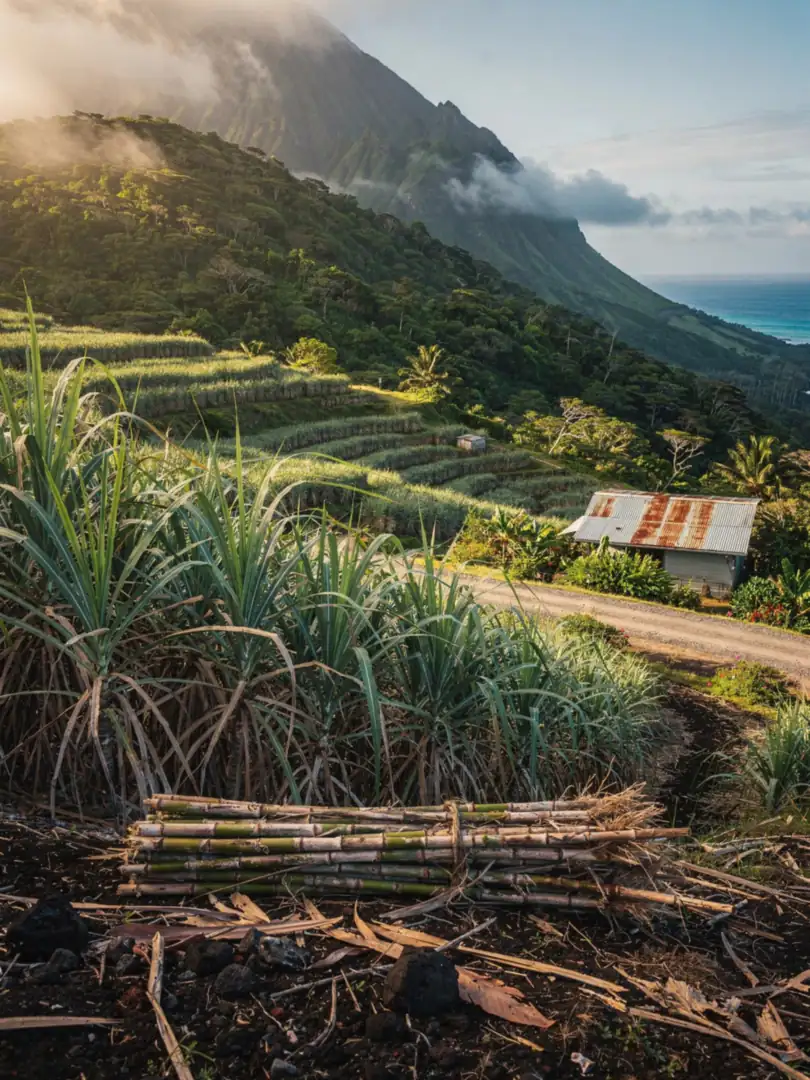
Why does rhum agricole taste like freshly cut grass instead of caramel? It's distilled from sugarcane juice, known as vesou, rather than molasses—the thick brown residue left behind in the sugar factory after crystallization.
Juice doesn't keep. It begins to ferment and spoil within hours, which is why the press stands close to the field and the distillery right next to it. Molasses can be shipped and stored for months; juice cannot. That's why juice-based rum exists only where the cane grows, and only during harvest season, which runs from January 1 to August 31 under the AOC Martinique.
The soil here is volcanic. The slopes of Montagne Pelée consist of ash and rock deposited by the mountain over thousands of years, and are considered mineral-rich. Neisson attributes the distinctive flavor of its rums to these northern soils—a claim made by the house itself.
At Habitation Thieubert, Adrien Neisson planted the first cane on 20 hectares in 1931. Today the house farms more than 40 hectares, which it has gradually converted to organic farming since the early 2010s; the first organic rum with AOC status reached the market in 2016. Depaz, by its own account, inherited 521 hectares, which Victor Depaz replanted seven years after the eruption.
The cane is cut during the harvest and cold-pressed in roller mills. The AOC requires the juice to reach at least 14°Brix—roughly 14 grams of dissolved solids per 100 grams of juice—and caps yield at 120 tonnes of cane per hectare. Depaz bottles a rum called Blue Cane, made from a blue-tinted cane variety known for being labor-intensive to grow.