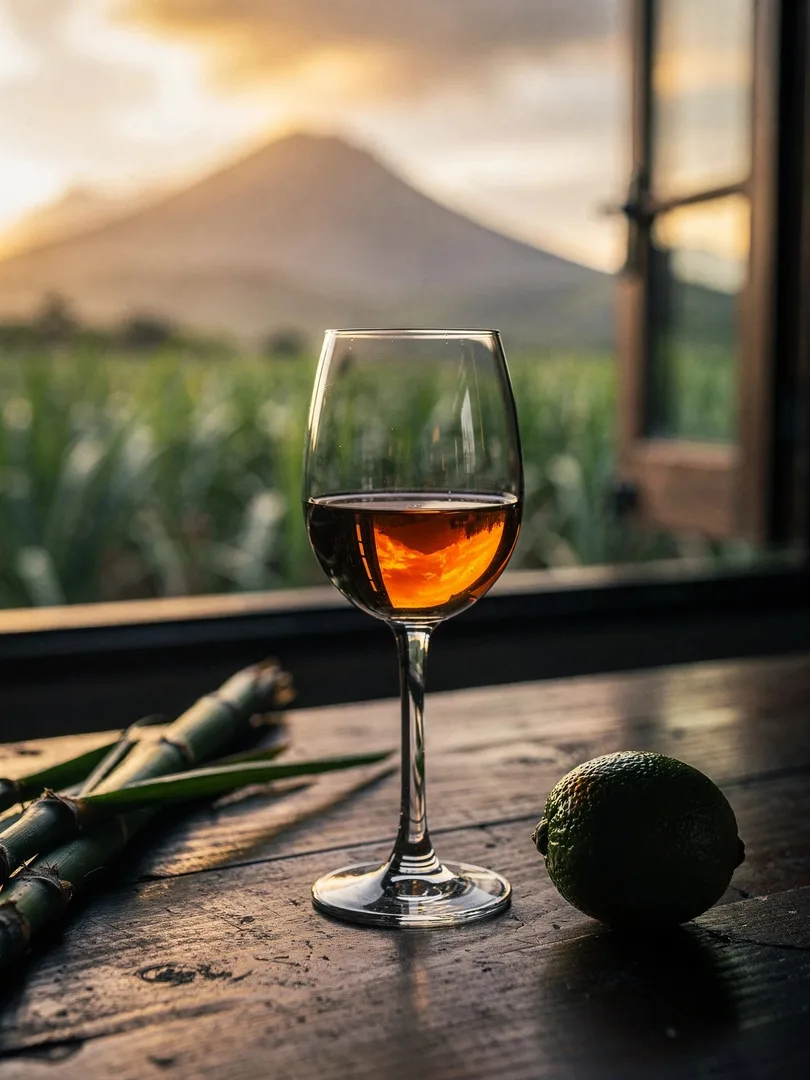
Cane, Volcano, Wood
Rum Style
What sets the rhum agricole of Saint-Pierre and Le Carbet apart from molasses-based rum? It's made from fresh sugarcane juice, smells of cane rather than caramel, and reaches the market in three tiers: blanc, élevé sous bois, and vieux.
The blanc is the purest expression of the cane. It's crystal clear, grassy, with notes of pepper and blossom, and both houses bottle blancs above 50% ABV—Neisson at 52.5%, Depaz at 55%. The AOC minimum is 40% ABV.
The élevé sous bois is the middle tier. A year in oak turns it amber and layers vanilla over the cane character, without overpowering it. Depaz Blue Cane is described by the trade press as amber-colored, with notes of caramel and sugarcane, reflecting this direction.
The vieux goes further still: after three or more years, spice, dried fruit, and wood step forward alongside the cane. A molasses-based rum, as produced in Jamaica, Barbados, or Cuba, tends by contrast toward a sweeter, heavier base note. Brazil's sugarcane spirit made from juice goes by a different name entirely: cachaça may only come from Brazil.
How do you spot an AOC rhum? The label will show "agricole" alongside "blanc" or "vieux" in the same field of view as the appellation. Caramel, sugar, and wood extract may together alter the stated strength by less than 2% ABV—meaning the gap between apparent and actual alcohol content stays small.
What sets this apart further is the mountain. Neisson sees a signature in the glass from the volcanic soils of the north. Whether every nose detects it is a matter of taste; what's certain is that both houses grow cane on their own land and process its juice the same day it's cut.
Rhum Agricole BlancCane juice · Column still
- Alcohol
- 40–55 % vol
- Cask ageing
- 0 Years
Grassy, fresh sugarcane, pepper, blossom; unaged and often bottled at high strength.