Wood in a Tropical Climate
Barrel & Climate
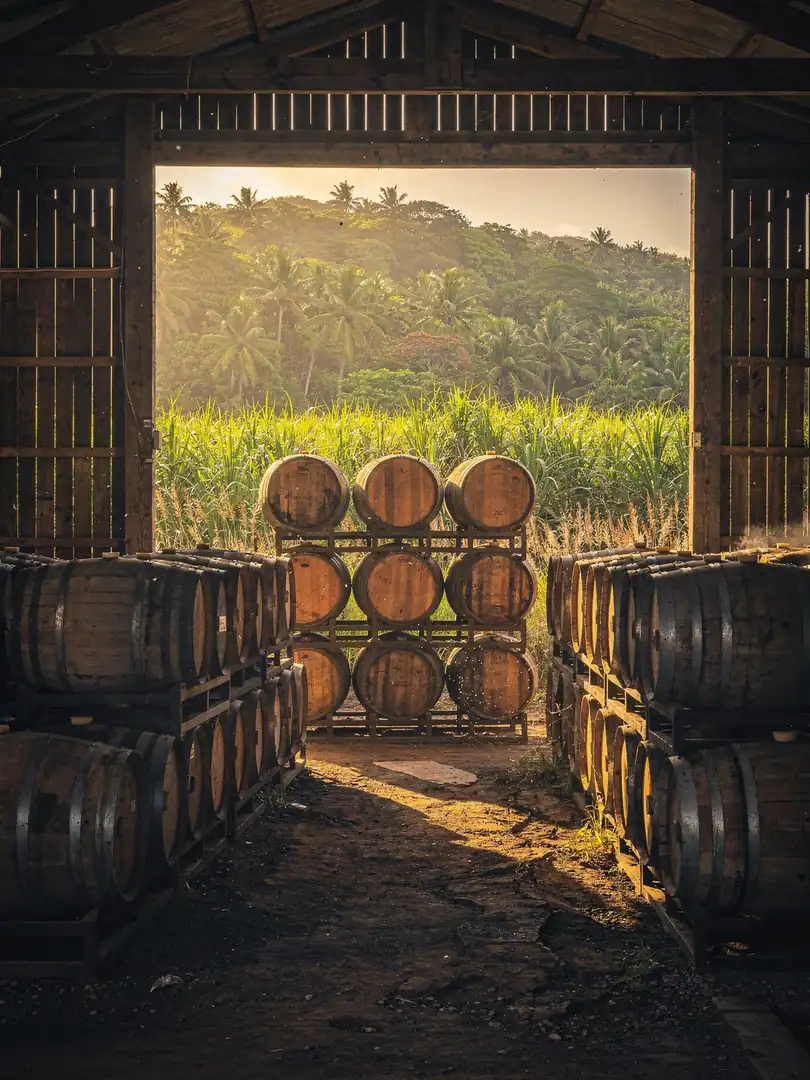
At Chamarel, after resting, the distillates go into barrels of various origins. A 2012 vintage, for example, exists as a single-cask bottling at 55 percent alcohol from a Moscatel barrel, meaning a barrel that previously held a sweet wine made from Muscat grapes. The wood lends the juice rum sweetness and spice without fully masking the cane character.
In the island's warm climate, the wood works faster than in cooler countries. At the same time, more rum evaporates from the barrel: often around eight percent a year in tropical warehouses, compared with roughly two percent in Scotland. The industry calls this loss the Angel's Share. It forces earlier bottling than one might be used to from Europe.
Anyone reading an age statement on the label can rely on a fixed rule within the EU: it must refer to the youngest rum in the blend, and the aging must have taken place under tax supervision. So a blend of a ten-year-old and a two-year-old rum may only be labeled as a two-year rum.
Abbreviations like VSOP or XO, however, are trade terms when it comes to rum from Mauritius. Chamarel offers a VSOP bottling. The term sounds like Cognac but says nothing binding about years in barrel for this rum; anyone wanting the exact figure should look for the vintage year on the label.
Vanilla rhums don't age in the classic sense. With these, the pods steep in the rum — that's an infusion, not barrel aging. Time in the bottle mainly changes the intensity of the vanilla here, not the base character of the spirit. At Saint Aubin, the vanilla grows between the estate's cane fields.