Pot and Column
Distillation
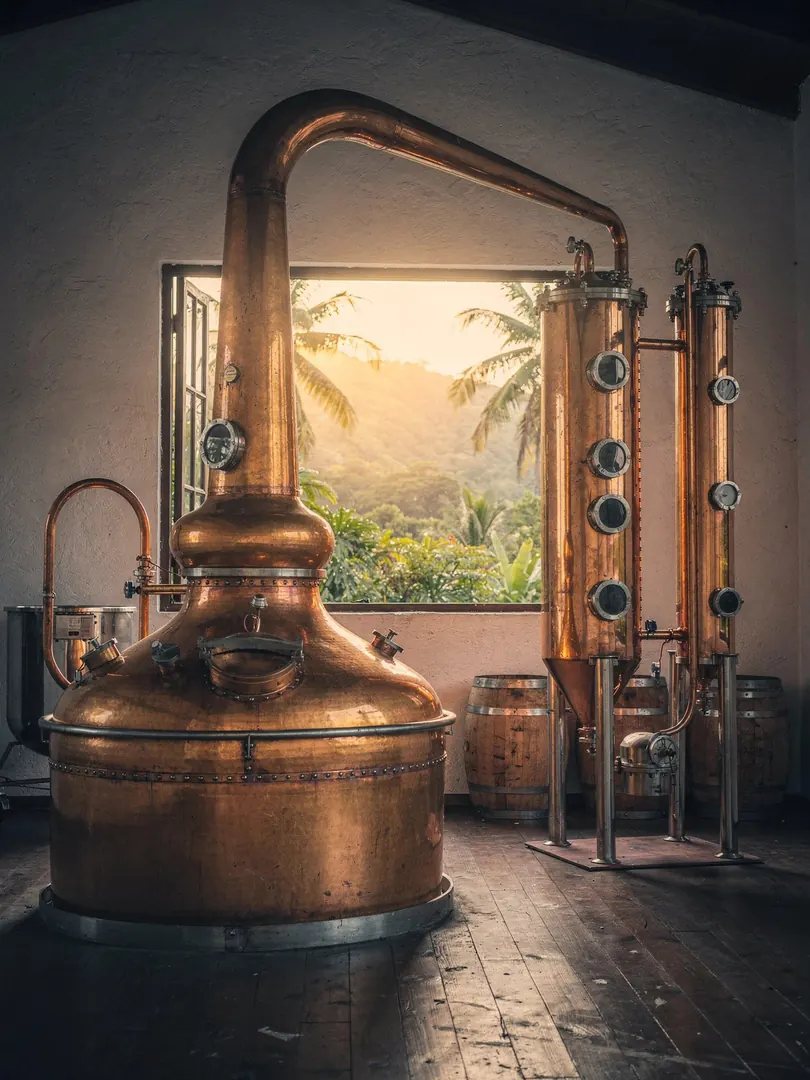
At Chamarel, two paths to the distillate exist side by side. The first runs through two copper pot stills of 20,000 liters each, similar to those used in the Cognac region. There, distillation happens twice: the first run yields a thin preliminary spirit, the second purifies and strengthens it.
The second path is continuous distillation. Chamarel uses a copper column for this, from the French manufacturer Barbet, with two columns and 24 plates, which the house calls the Alembic. Here the mash flows in continuously, and the distillate emerges at the top. Columns typically yield a lighter, cleaner spirit than the pot still.
According to the house, one of the white rums comes from the pot still, while the aged rums and the other white rums come from the column. This shows just how much the equipment shapes the style, even when the cane and fermentation are the same.
Afterward, the distillate rests in stainless steel tanks, according to the house, for several months before being bottled or filled into barrels. This resting period rounds out the spirit, as sharp notes settle down. Only then is it decided whether the distillate becomes a white rum or a barrel-aged rum that spends several years in wood. Copper plays a practical role here too: it binds sulfur compounds that would otherwise make the spirit smell of rotten eggs, keeping the distillate clean.
According to retailers, Saint Aubin uses a pot-still juice distillate for its Rhum Vanille Extra Premium, bottled at 40 percent alcohol. EU law requires rum to be distilled below 96 percent alcohol, so that the distillate still smells and tastes like rum.