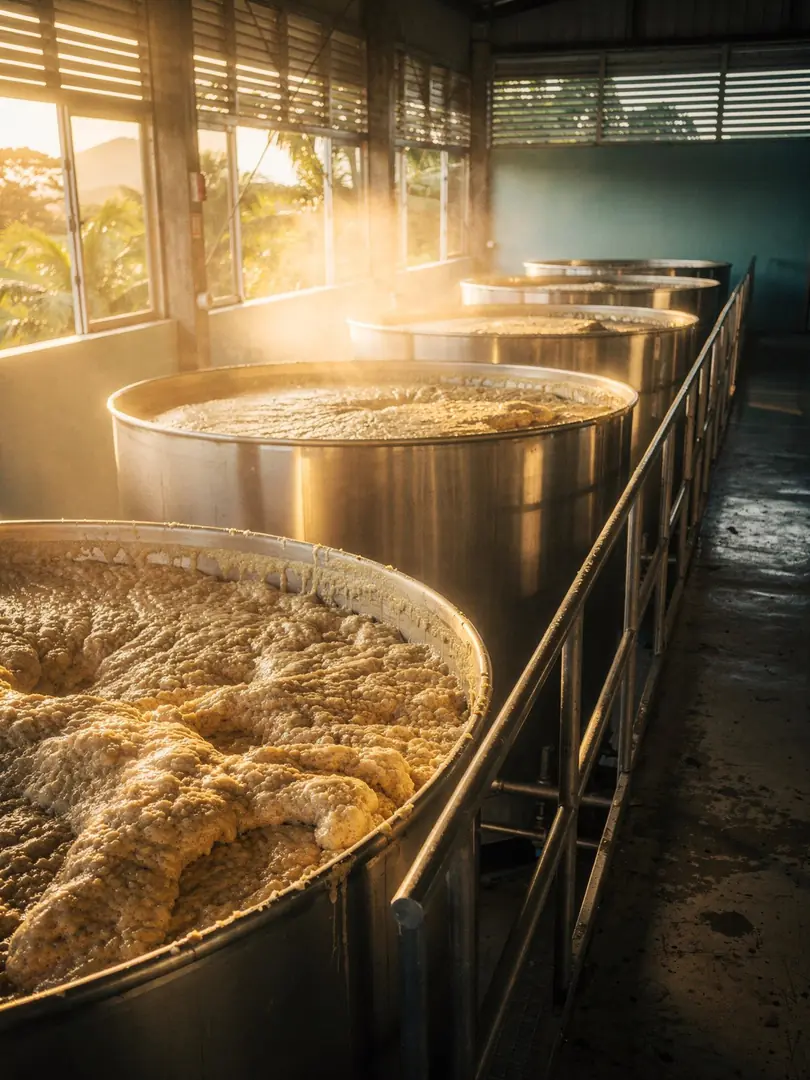
A Day and a Half
Fermentation
How long does molasses ferment for rum? At Grays, according to the company, 36 hours — a day and a half. That's short. Some distilleries let their mash work for many days to gain more aroma. Here, by contrast, the aim is a lean, clean rum, as shown by New Grove, which matures further in the barrel afterward.
At the start, the molasses is diluted with water, because undiluted it is so sugar-rich and viscous that the yeasts could barely work in it. With the water, the mass becomes a thin, sweet broth. Yeast is added, converting the sugar into alcohol and carbon dioxide. The mixture foams, warms up and smells of bread and ripe fruit.
In a tropical country, heat is the real challenge. Fermentation itself generates heat, and if it gets too warm, the yeasts die or produce unwanted compounds. Distilleries therefore cool the vessels or keep fermentation short. A day and a half is enough, because molasses contains so much fermentable sugar that the yeast has an easy job.
Besides alcohol, the yeasts form esters and higher alcohols. Esters are volatile compounds made from acids and alcohol; they smell of fruit and flowers. Higher alcohols, once called fusel oils, taste sharp and solvent-like if they become too dominant. A short fermentation produces relatively little of either, which keeps the spirit light.
What results is a mash with a few percent alcohol, smelling sour and still cloudy. A molasses mash rarely exceeds ten percent. It's the raw material that the column will later concentrate into rum. Those who keep fermentation short deliberately forgo the esters that make Jamaican rums so bold, opting instead for a spirit where wood and caramel from the barrel take center stage.