A Mexican Juice-Based Spirit
Rum Style
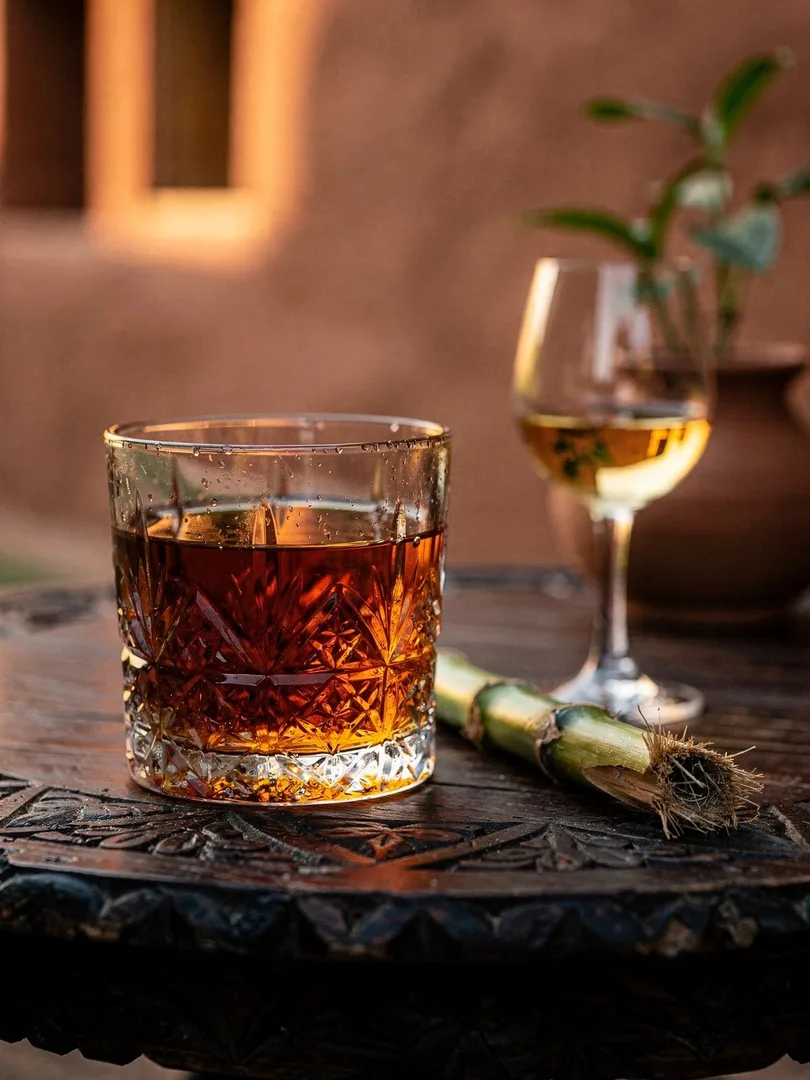
Charanda can be thought of in two styles, both sharing the same raw material: sugarcane juice or its derivative products. The Blanca is unaged and shows what the soil and the cane give, sweetish, grassy, sometimes slightly earthy notes, as known from juice-based spirits. Aged Charanda adds wood to that juice character: caramel, vanilla, spice.
The difference from the Rhum agricole of the Antilles lies chiefly in the law. Both come from juice. Agricole is tied in the EU to the French overseas territories and Madeira, Charanda to the 16 municipalities in Michoacán. Where the Antilles use a Creole column still, the protection decree names no specific distillation technique for Charanda.
Compared with Tequila and Mezcal, the case is clear: Charanda is not an agave spirit. Tequila and Mezcal are made from the hearts of the agave, Charanda from sugarcane. Like the other two, it carries a Mexican designation of origin, but it does not belong to the category of rum. The agave spirits are covered in the Tequila journey; here, a brief mention suffices.
The comparison with rum varies by style. Against a molasses rum from Barbados or Guyana, Charanda is lighter and more vegetal, since it's built on juice rather than dark molasses. Against the Spanish style from Cuba or Venezuela, it appears more rustic, since there column distillation and charcoal filtering strip much of the rum's own character. A Charanda should taste of the cane it comes from, and that's its defining trait.
There's also a distance from Cachaça. Cachaça is reserved for Brazil and tied to 38 to 48 percent ABV. Charanda has its own region, its own name, and its own standard, NOM-144-SCFI-2000. What juice-based spirits share is the raw material, not the origin.
Charanda blancaCane juice · Pot still
- Alcohol
- 38–54 % vol
- Cask ageing
- 0 Years
Sweetish and grassy, fresh cane, slightly earthy, clear and direct on the finish.