Red Earth
Sugarcane & Molasses
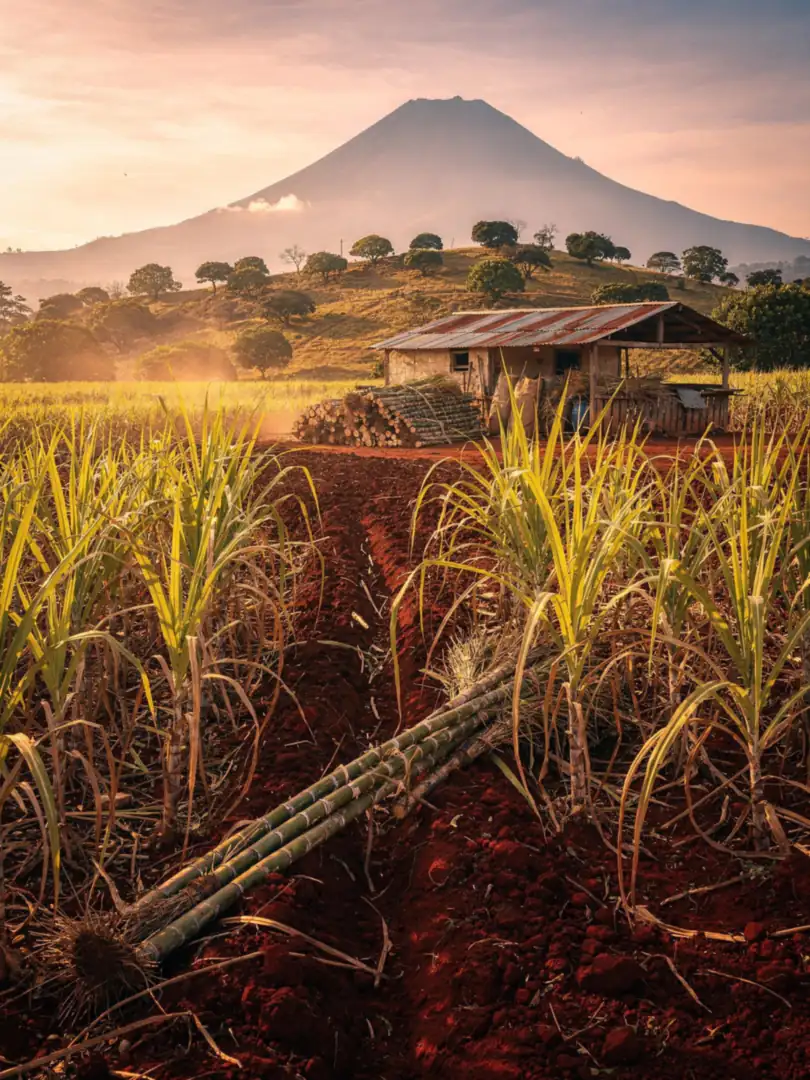
The red earth around Uruapan is the argument on which the protection decree bases its zone. The soil was formed by intense volcanic activity: between young ash cones lie heavily weathered layers, rich in iron and aluminum compounds and in humus. According to the decree, the area lies at roughly 1,600 to 3,842 meters, in the transition between the hot lowlands and the lake region, with an average annual temperature of 21.2 degrees Celsius.
A research center from Jalisco, CIATEJ, compared sugarcane from within and outside the zone. Total sugar, sucrose, iron, Brix (the sugar content of the juice), and purity were all measured. Within the zone, sugar, sucrose, and iron levels were higher. The juice smelled sweeter and more intense, while juice from outside the zone smelled weaker and grassy. This finding comes from the protection decree itself, not from an independent study, and it explains why the zone was tied to the soil.
More important for the glass is the raw material. According to the decree, Charanda is distilled from sugarcane juice, known in Spanish as guarapo, or from its derivative products: melado, which is thickened juice; piloncillo, the solid raw sugar; and melaza, molasses. This sets Charanda apart from many rums, which are made solely from molasses, the dark byproduct of sugar refining.
Cane juice spoils quickly, which is why the press must stand near the distillery. The colonial-era cane mills, the trapiches, stood in the middle of the fields for the same reason. Anyone who hears about harvest time should know: juice-based spirits can only be made while fresh cane keeps coming in, unless the juice is thickened into syrup.