Juice and Yeast
Fermentation
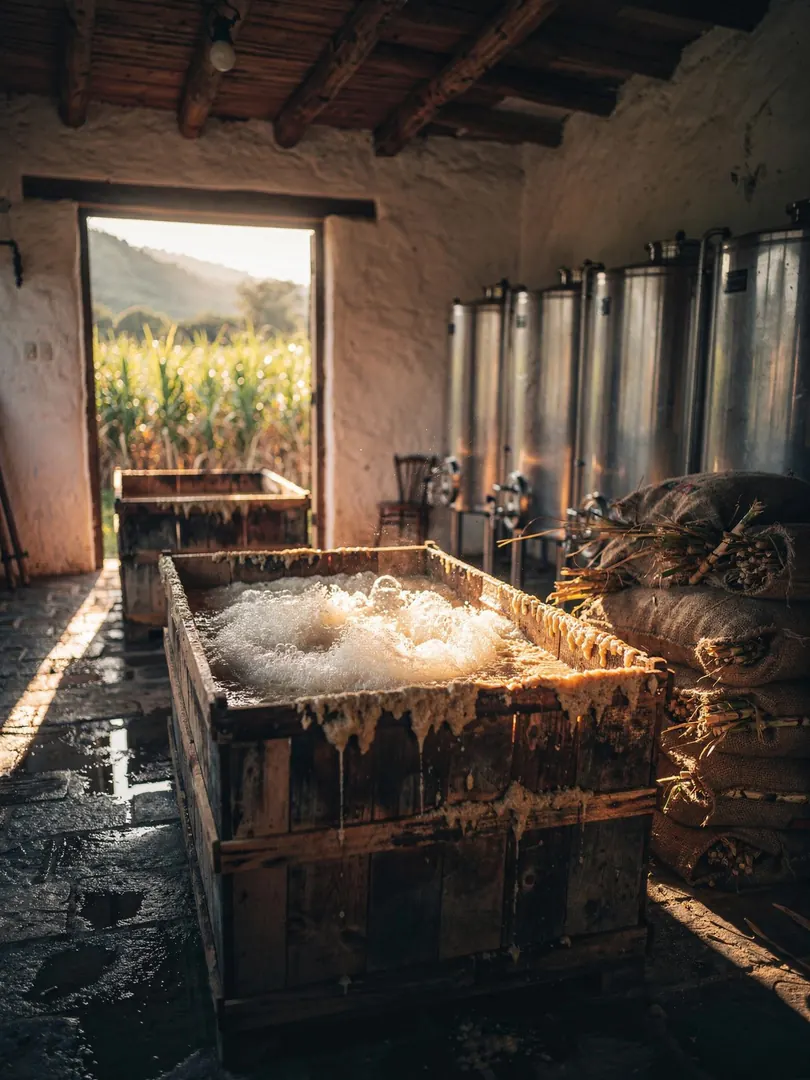
Fresh-pressed juice becomes Charanda as soon as yeast converts the sugar into alcohol. The protection decree describes this briefly: the juice ferments with yeast strains that may or may not be cultivated, and may be selected from the juice itself. This allows both laboratory yeast and the wild yeast naturally found in the cane.
How long the mash ferments is set by the official standard NOM-144-SCFI-2000, published in the official gazette on February 14, 2001, which defines raw material, types, and production methods. Mexican trade media cite roughly one day for fermentation. That's short compared to the weeks some Jamaican distilleries allow their mash.
This timing shapes the flavor. A short fermentation leaves little time for heavy esters, those aromatic compounds that can make rum smell like ripe banana or glue. With Charanda, one can expect cleaner, sweetish, grassy notes rather than intensity — and that's exactly what drinkers look for in a juice-based spirit: the scent of fresh cane, not of the fermentation pit.
The raw material also colors the mash. Melado and piloncillo are already thickened or cooked and taste caramelized even before distillation. A Charanda made from fresh juice tastes different from one made with these sugar products, and both are permitted under the protection decree.
Vessels and yeast strains are chosen by each house individually. Anyone visiting a distillery can ask about two things: the yeast and the duration. With these two answers, a house's style can already be fairly well placed: fresh juice, short fermentation, clean fruitiness.