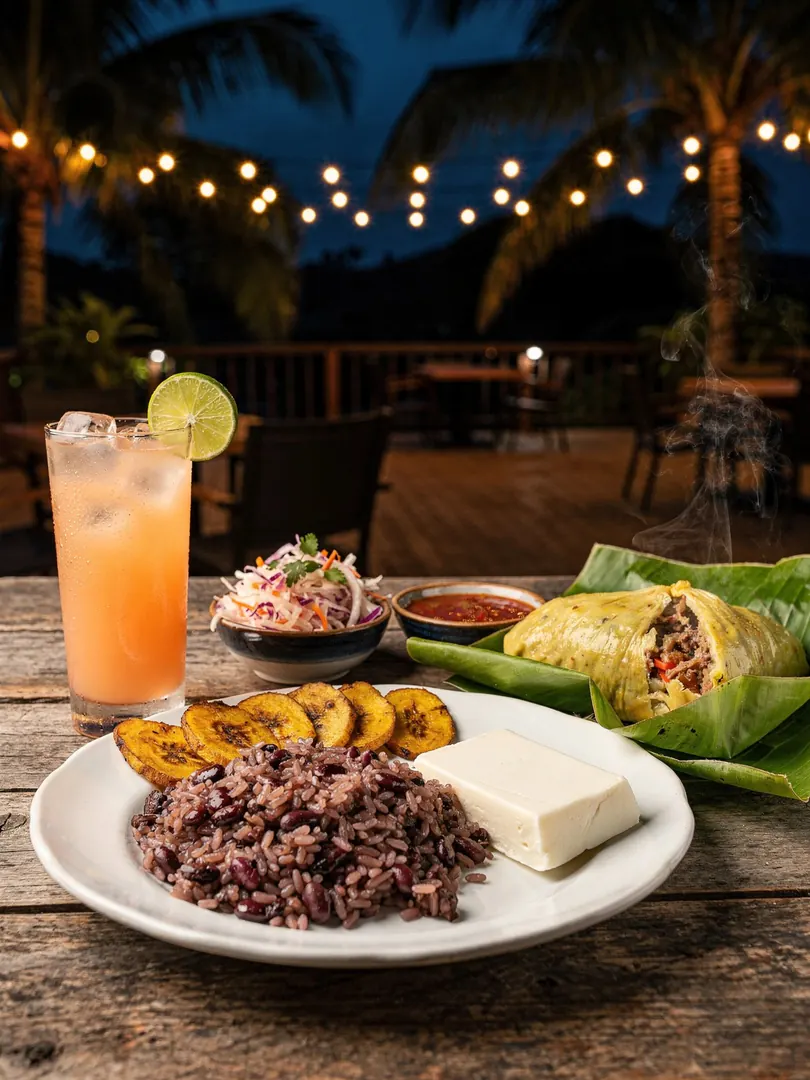
Gallo Pinto, Macuá
Food & Drinking Culture
Gallo Pinto is Nicaragua's national dish: rice and red beans, fried together and usually served with egg for breakfast. The dish is simple, but it reflects what the country's cuisine is built on: corn, rice, beans, and plantains.
On weekends, cooking becomes more elaborate. The Nacatamal is a large tamale made of corn dough with pork, potatoes, and rice, steamed in banana leaves. Indio Viejo is a thick stew of shredded beef and corn masa with sour orange juice. For Baho, beef, yuca, and plantains are steamed together in banana leaves.
On the street, you'll find Vigorón: boiled yuca with a cabbage slaw called curtido and crispy chicharrón. Fritangas, evening grill stands, cook up meat, cheese, and plantains. Around León and Nagarote, people eat Quesillo, a tortilla with soft cheese, sour cream, and pickled onions. Rich, fried, and tangy food calls for something light and citrusy — and that's exactly where white rum fits in.
The Macuá is considered the national cocktail: white rum, guava juice, orange juice, lemon juice, and a touch of sugar. It's said to have been created in 2006 by pediatrician Edmundo Miranda Sáenz. The fruit carries the drink while the light rum stays in the background, which also makes the Macuá a good match for savory food.
Among the country's rituals is La Gritería on December 7, the eve of the Feast of the Immaculate Conception. Families go from house to house, calling out in front of altars and receiving sweets and fruit in return. Rum isn't the centerpiece of this celebration, but it's a reminder that in Nicaragua, food and festivity go hand in hand.