Aroma from the Mash
Fermentation
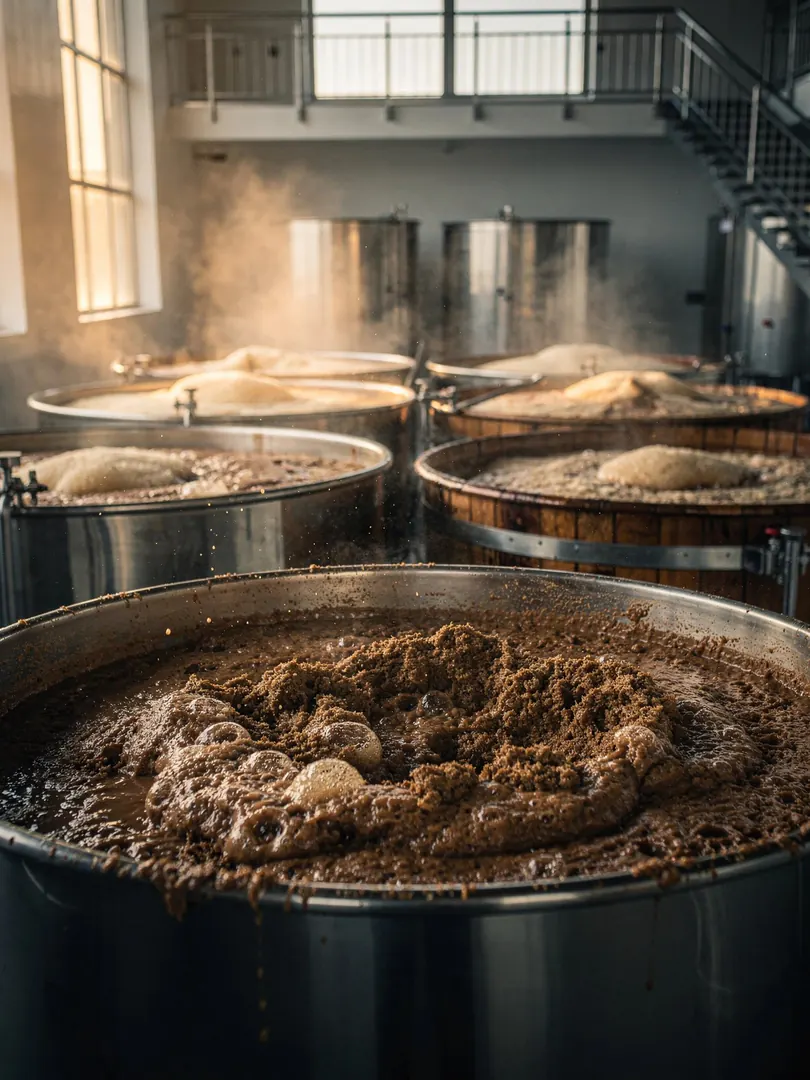
Molasses only becomes something drinkable through fermentation, and this is also where much of the later aroma is created. The thick mass is diluted with water until a thin, sweet mash results. Yeast is then added, a fungus that breaks down the sugar into alcohol and carbon dioxide. In the end, the liquid has only a few percent alcohol by volume and smells sour and cloudy, still bearing little resemblance to a finished drink.
Whether the yeast comes from the air or is added as a pure culture shapes the result. Wild yeasts and long fermentation times produce many esters, fragrant compounds formed from acids and alcohol that recall fruit and glue. Short fermentations with pure culture yeast yield leaner, cleaner distillates. Depending on the operation, fermentation takes anywhere from about a day to more than a week.
This distinction matters for Inländerrum, since the Inländerrum essence is meant to carry the aroma. According to the specification, it comes from rum distillate produced in Austria, concentrating whatever byproducts fermentation yields. A rum consisting almost entirely of alcohol and water could hardly fulfill this role.
What the individual houses do with yeast, duration, and mash remains a trade secret. Stroh explicitly calls its recipe secret and confirms only that it begins with real rum. In the end, it's an expert with a trained nose and experience, not analysis alone, who decides on the blend.
Rounding out is permitted with so-called bonificateurs, flavor-rounding additives that are allowed under the Austrian Food Code, Chapter B 23. They do not, however, replace rum alcohol. Comparing Inländerrum to the Slovenian Domači rum reveals a similar idea, namely rum flavor and color applied to a distillate, but with different rules governing it.