Distilled in Austria
Distillation
When it comes to distillate, the EU rules for Inländerrum become very precise. It must be distilled in Austria, from fermented sugarcane raw material, and according to the definition of rum, the distillation strength is below 96 percent alcohol. Above that, there would only be neutral alcohol without any characteristic smell. Rum retains its congeners, and thus its aroma, thanks to the lower strength.
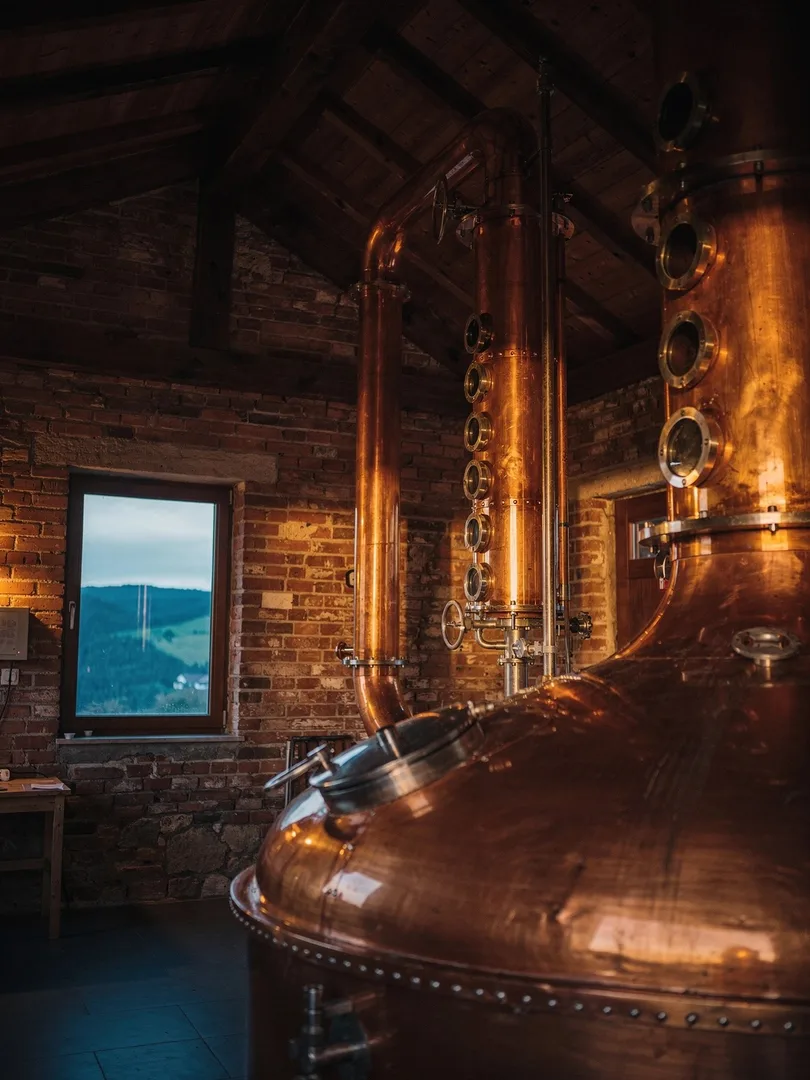
There are two basic types of stills. The copper pot still works in batches: mash goes in, is heated, and the vapor is collected and cooled. It yields heavy, aromatic distillates. The column still, by contrast, runs continuously and separates more cleanly across many plates, resulting in a lighter, purer spirit. Which type the individual producers use for their rum component is not disclosed.
The Inländerrum essence is also obtained from rum distillate and is optimized for aroma rather than purity. However, the specification sets limits on the aroma. Ethyl acetate, a compound with a fruity to solvent-like smell, may not exceed 240 milligrams per 100 milliliters, or 300 milligrams at strengths above 60 percent alcohol.
The dry extract, meaning what remains after evaporation, is limited to a maximum of 2 grams per liter. That means barely any sugar and barely any extract. Inländerrum still tastes sweet, though, thanks to its vanilla and caramel notes, not because of added sugar.
After distillation, the spirit is diluted to drinking strength. Common strengths are 38, 40, 54, 60, and 80 percent alcohol. Stroh 80 is the best-known bottle of this kind, its name stating the strength outright. Where the producers in Klagenfurt and elsewhere draw the line between distillate, essence, and blend is a craft that outsiders rarely get to see.