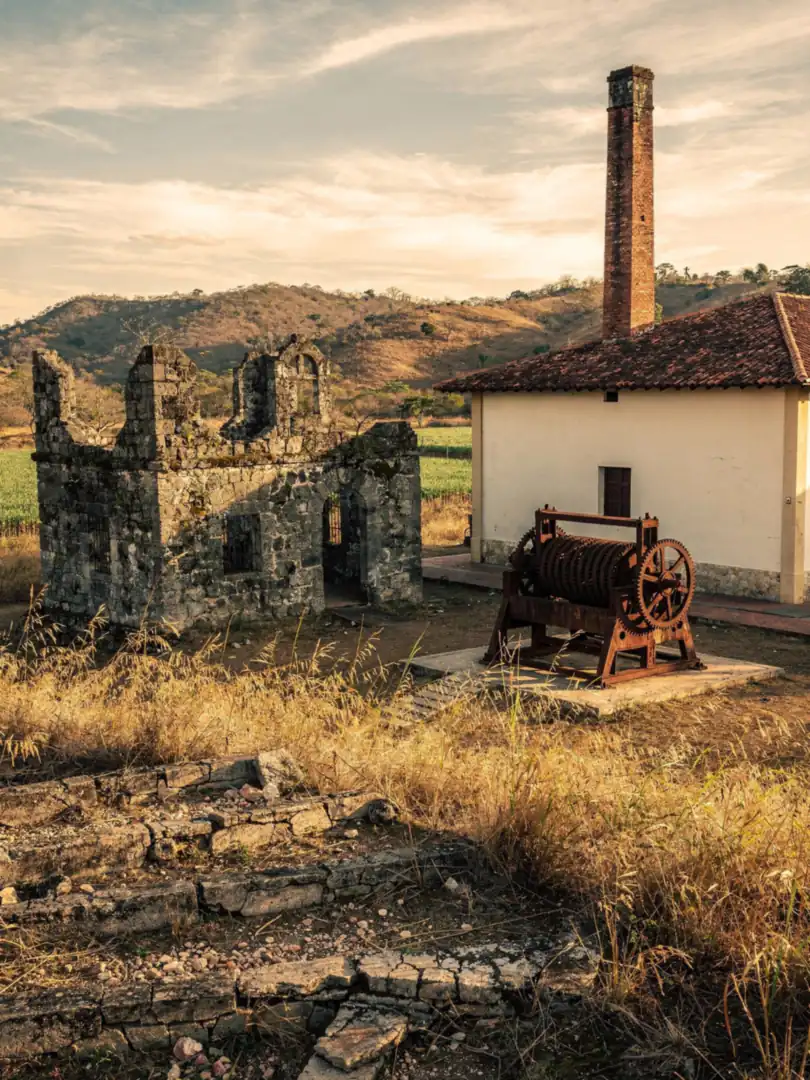
Sugar Mill in the Dry Country
Region & History
Where does Ron Abuelo come from? From Pesé, a small town in the province of Herrera, right in the middle of the Azuero Peninsula on Panama's Pacific side. The area belongs to the country's dry arc, where the rainy season is shorter than on the Caribbean coast and the sugarcane ripens well.
Sugarcane came to the New World with the Spanish; Columbus brought it to the Caribbean in 1493 on his second voyage. In the 16th century, Panama served the Crown as a transit country, through which silver from Peru passed and enslaved people from Africa were trafficked. The cane itself was grown and processed in the Americas by enslaved people, and for centuries sugar and rum were part of a trade built on forced labor. After independence from Spain in 1821, Panama belonged to Colombia until it broke away in 1903.
In 1908, five years after the republic's founding, José Varela Blanco, an immigrant from Spain, built the Ingenio San Isidro sugar mill in Pesé. According to the house, it was the first in the young republic. In that same decade, the United States was digging the canal, which opened in 1914.
Distilling has taken place in Pesé since 1936. That year, Don José, at the request of his three eldest sons José Manuel, Plinio, and Julio, began making spirits from sugarcane. In 1976, a modern distillery, Destilería Don José, was built not far from the original house. Today the third generation leads Varela Hermanos and bottles, among others, Ron Abuelo and Seco Herrerano.
The EU register does not list a protected designation of origin for rum from Panama; within the EU, only the general rum definition applies to this rum. According to its own figures, Varela Hermanos holds around 90 percent of the Panamanian spirits market and sells about a million cases a year. The company has remained family-owned throughout.