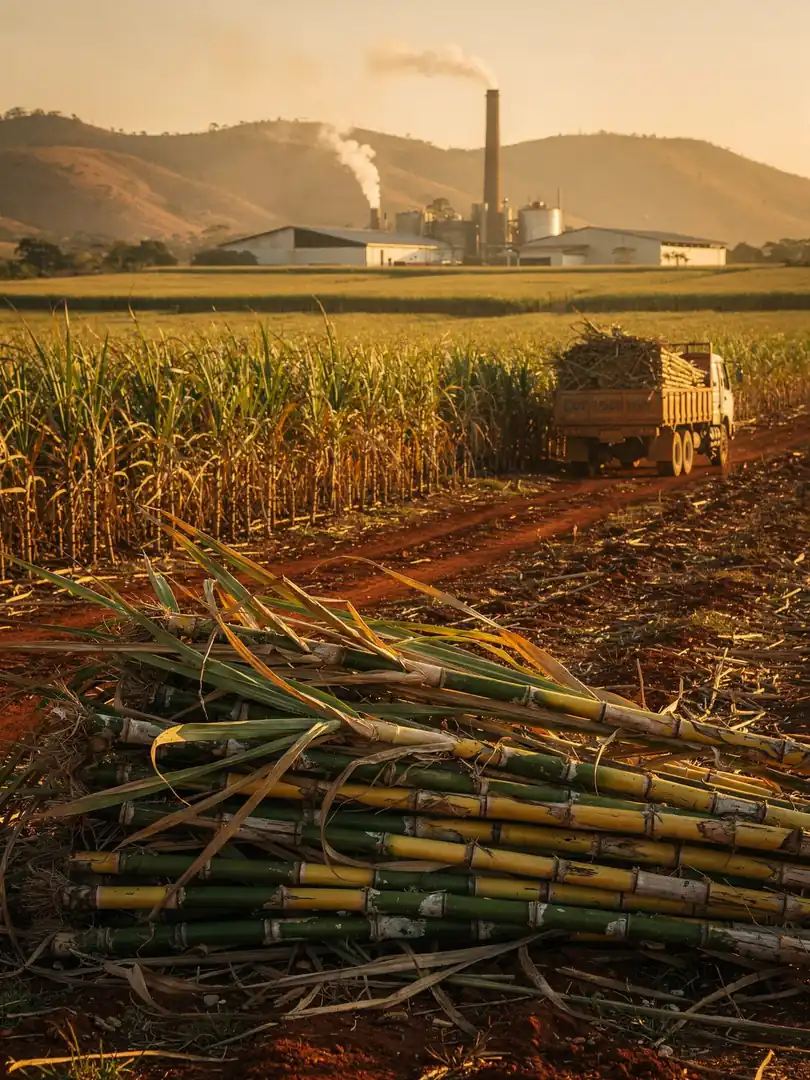
Cane from Herrera
Sugarcane & Molasses
Molasses can be shipped, and many distilleries buy it in. Varela Hermanos takes a different path: the house processes molasses from cane that, according to its own account, grows on its own land around Pesé. Difford's Guide puts this at around 800 hectares. The sugar mill and the distillery therefore sit in the same valley.
The journey from stalk to molasses begins at the sugar factory. The cut cane is pressed, the juice boiled down until sugar crystals form, which are then spun out. What remains is thick, dark, and still sweet. This is molasses, a byproduct of sugar that the distillery takes on as its raw material.
What raw material is rum made from? EU Regulation 2019/787 allows molasses, syrup, and sugarcane juice. The juice spoils within a few hours and must be processed immediately, so juice-based rum is only made in the field and only during harvest. Molasses, by contrast, keeps for a long time, and a distillery can use it all year round. Syrup, meaning thickened juice, is likewise shelf-stable.
Harvesting takes place during the dry months of the year, when the plant retains less water and holds more sugar in the stalk. After cutting, the stock sprouts again, so the same field delivers harvests over several years. A campaign is the period during which the mill and factory run without pause.
Seco Herrerano also begins on these same fields. It is distilled from sugarcane grown in the province of Herrera, and according to trade press accounts, not from molasses. This sets it apart from Abuelo right from the raw material. A rum made purely from juice may, moreover, only be called 'agricole' in the EU if it originates from a French overseas department or from Madeira.