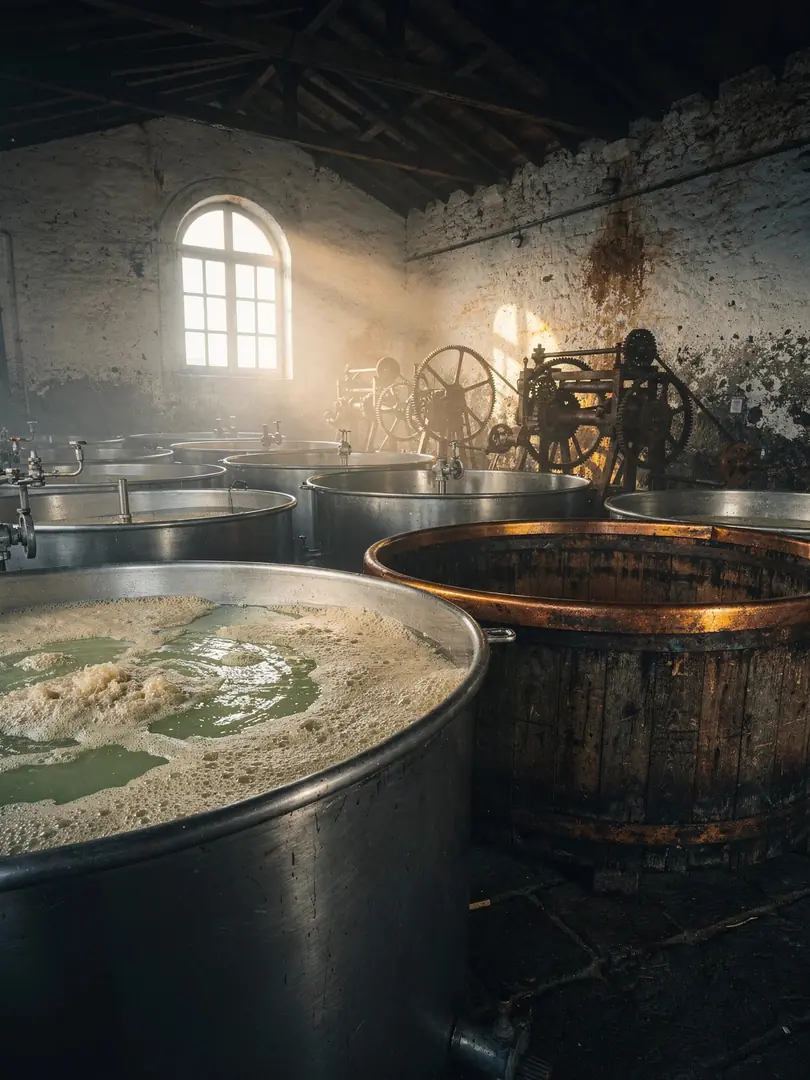
Fresh Juice Ferments
Fermentation
How does sugarcane juice become Rum da Madeira? The first step is fermentation, and it happens fast. The cane is milled immediately after harvest. The juice is then left to settle and filtered, keeping coarse residue out of the fermentation.
Fresh juice doesn't keep long. It's full of sugar, water, and the nutrients yeast craves, and it will start fermenting on its own if left alone. That's why the mill and fermentation tanks sit close together at these operations, and why distilling season lines up with the spring harvest.
Yeast consumes the sugar and turns it into alcohol and carbon dioxide. Along the way, esters form, volatile aromatic compounds that smell of fruit and blossom. Regulations require the distillate to contain at least 225 grams of volatile compounds per hectoliter of pure alcohol. That's a floor for any rum carrying this designation of origin, not a target.
The cane's sugar content matters directly here: the more sugar in the juice, the more alcohol ends up in the fermented wash. The minimum average of 15 degrees Brix ensures a reliable yield.
Fruity notes like melon, mango, and peach, which tasters often pick out in young Rum da Madeira, partly originate in this stage. Because no molasses is involved in juice rum, these notes come across bright and fresh rather than dark and heavy.
How long a batch ferments depends on the producer and the juice, whether at Engenhos do Norte in Porto da Cruz or at Engenho da Calheta. The longer and warmer the fermentation runs, the more secondary aromas develop; the shorter and cooler it runs, the cleaner the distillate.