White Gold
Region & History
Rum da Madeira comes from an island famous for its sugar in the 15th century. Around 1425, cane cuttings arrived from Sicily, during the era of Henry the Navigator. Within a few decades, historians note, Madeira became Europe's largest sugar producer, and sugar was known at the time as "white gold."
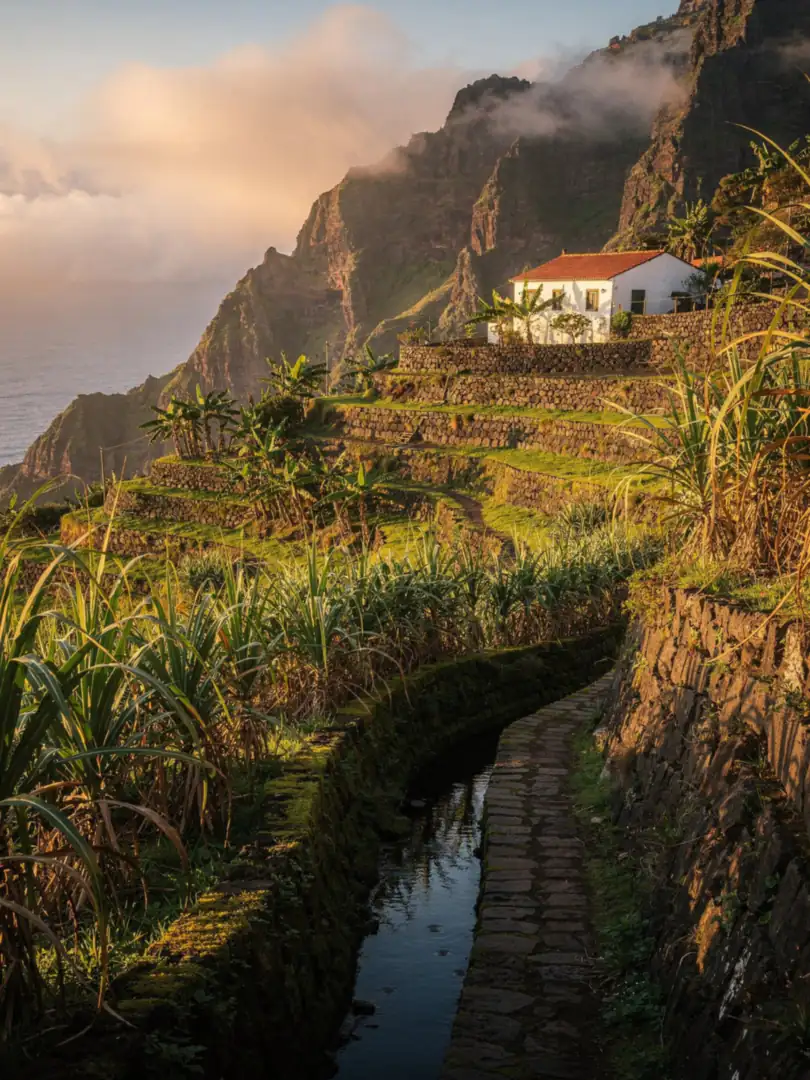
The cane needed water, which was often far from the fields. So islanders built levadas, narrow irrigation channels running along the hillsides, and terraces known on Madeira as "poios." Much of the work in the fields and on the channels was carried out by enslaved people brought to the island from the Canary Islands and Africa.
When the sugar trade later shifted to larger plantations across the Atlantic and in the Americas, the island lost its leading role, and wine took center stage instead. Yet sugarcane never disappeared entirely. Rum production became widespread from 1846 onward. In 1882, a fungus, Coniothyrium melanosporum, wiped out nearly all the plantations, though a handful of fields and mills survived the crisis.
Rum shares little more than its place of origin with Madeira wine, the island's famous fortified wine. One comes from the grape, the other from sugarcane, and each follows its own set of rules.
Today, the rum is protected under the geographical indication Rum da Madeira. It requires sugarcane grown on Madeira and Porto Santo and permits only juice as the raw material. Only rum made under these rules may carry the EU term "agricola," provided it remains unsweetened. It's produced by a small number of mostly family-run operations, the engenhos, including Engenhos do Norte in Porto da Cruz, Engenho da Calheta, Engenho Novo, and O Reizinho.