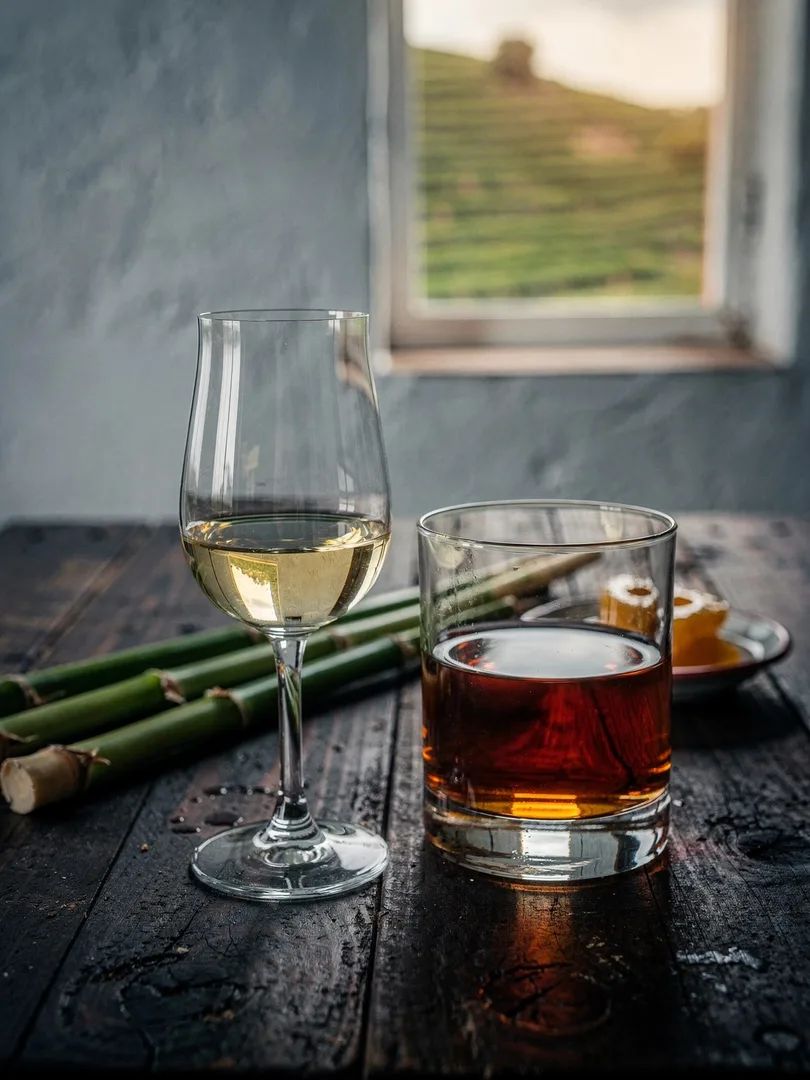
Natural and Envelhecido
Rum Style
Rum da Madeira comes in three styles. Natural is the young, unsweetened rum, ranging from clear to pale yellow. Tasters note melon, mango, and peach, a faintly sweet entry, and a mineral finish. It feels fresh, without the sharp edge of a rum straight off the still.
Envelhecido is the aged style, spending at least three years in oak. The color ranges from amber to topaz, with honey, caramel, and spice joining the aroma. It remains a juice rum at heart but comes across more complex and rounded than the natural. Both styles are typically bottled between 40 and 50 percent ABV.
Fortificado, the third style, is sweetened with syrup. It departs from the unsweetened character and therefore can't carry the term "agricola." So anyone buying Rum da Madeira should check the label carefully, since natural, fortificado, and envelhecido often sit side by side on the shelf.
The differences between houses tend to lie in nuance. Engenho Novo, home to William Hinton, works with its heritage column still; Engenhos do Norte in Porto da Cruz relies on steam; O Reizinho operates on a smaller scale. The resulting character depends on the cane, the fermentation, and the distiller's cut.
Compared with rhum agricole from the French Caribbean, the roots in fresh juice are the same, but the rules differ. Madeira requires island-grown cane and, for the aged style, three years in oak. Here, yeast, distiller, and a small growing region shape the character more than any dense rulebook.
A distant cousin is Brazilian cachaça: same raw material, but its own name, reserved for Brazil, under its own regulations. Compared with molasses rum, both stand out for the freshness that comes from juice. The finish stays shorter and cleaner, without molasses's dark sweetness.
Rum da Madeira NaturalCane juice · Pot still and column still
- Alcohol
- 40–50 % vol
- Cask ageing
- 0 Years
Fresh and fruity, melon, mango, peach, mineral finish.