Yeast and Time
Fermentation
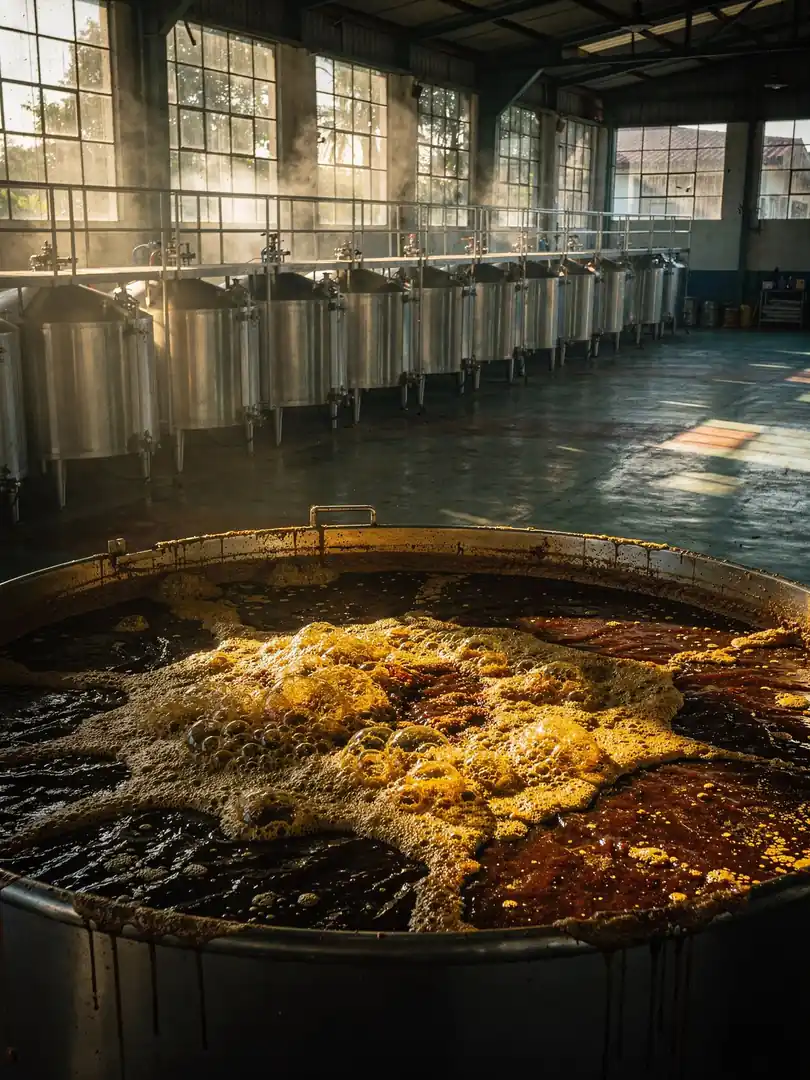
How does molasses become alcohol? The distillery dilutes the thick mass with water and adds yeast, and the yeast feeds on the sugar. What remains is alcohol, carbon dioxide and heat. The result is called wash, and it contains only a few percent alcohol, but already almost all the aromas of the finished rum.
At Serrallés, according to the house, a proprietary yeast strain is used, one the family has maintained for more than 75 years. The distillery also cites the water as part of its rum's character; it comes from the Río Inabón. A house strain makes the flavor recognizable, since every yeast produces its own aromatic compounds.
Among these compounds are esters. These are fragrant compounds formed from acids and alcohol that recall pear, apple or blossoms. The longer and warmer a fermentation runs, the more of them develop. The island's light style deliberately wants few of these—it should taste pure, bright and without rough edges.
Fermentation is therefore controlled and, for light rums, usually runs only a few days. Large tanks have replaced the small vats of the old sugar haciendas. Dark, spicy notes are meant to come later from the barrel, not from fermentation. Next comes the column.
This is where the profile that later reappears in the glass begins. In Ponce, Don Q has its yeast strain; in Cataño, Bacardí works on a large scale with its own recipe. Both aim for a light rum in the end, and both lay the groundwork for it in the fermentation tank, long before any barrel comes into play.