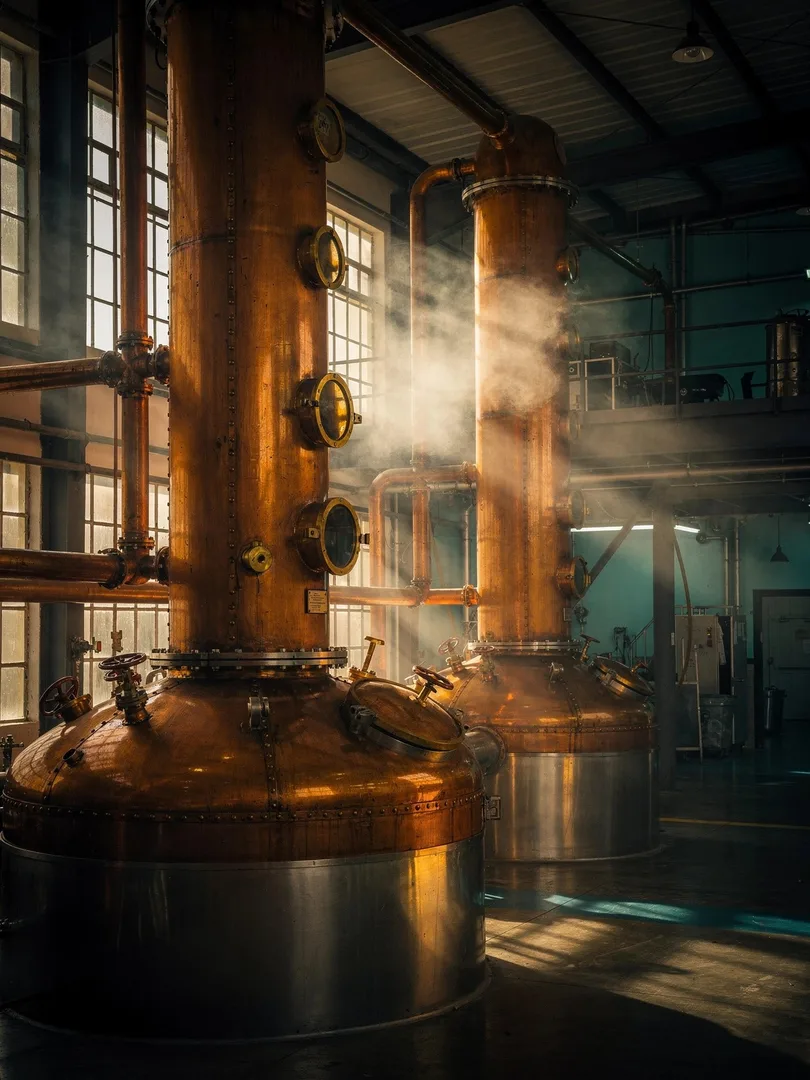
Column instead of Pot Still
Distillation
The pot still from France that Juan Serrallés brought to Ponce in 1865 marks the beginning of rum-making on the island. Today the island's rum takes a different path: under local law, it is produced via continuous distillation, that is, in columns.
A column still, also called a continuous still, works without pause. The wash flows in at the top, steam rises from below, and across many plates, alcohol, water and heavy aroma compounds separate. A high-proof, light spirit emerges from the head of the column. This is where Puerto Rican rum's restrained flavor comes from.
Don Q, according to the house, runs its spirit through columns multiple times; for the Gran Añejo, Serrallés cites five passes. The Cristal line is considered especially light and clear. Bacardí also distills in columns in Cataño, and on a scale said to make the site the largest rum distillery in the world.
After distillation, the distillery cuts the alcohol down to drinking strength with water, usually around 40 percent, and often filters it through activated charcoal. The charcoal removes color and certain aroma compounds. This means a rum that has rested in the barrel can end up crystal clear. White rum from the island is therefore rarely unaged rum.
There's a reason column-distilled rum is considered an industrial product: the column runs without interruption, every batch is meant to turn out the same, and the spirit barely changes from year to year. This is exactly what buyers of major brands expect, whether from Cataño or from Ponce. This isn't a mark against craftsmanship—it's simply a different way of thinking about rum.