At Least One Year
Barrel & Climate
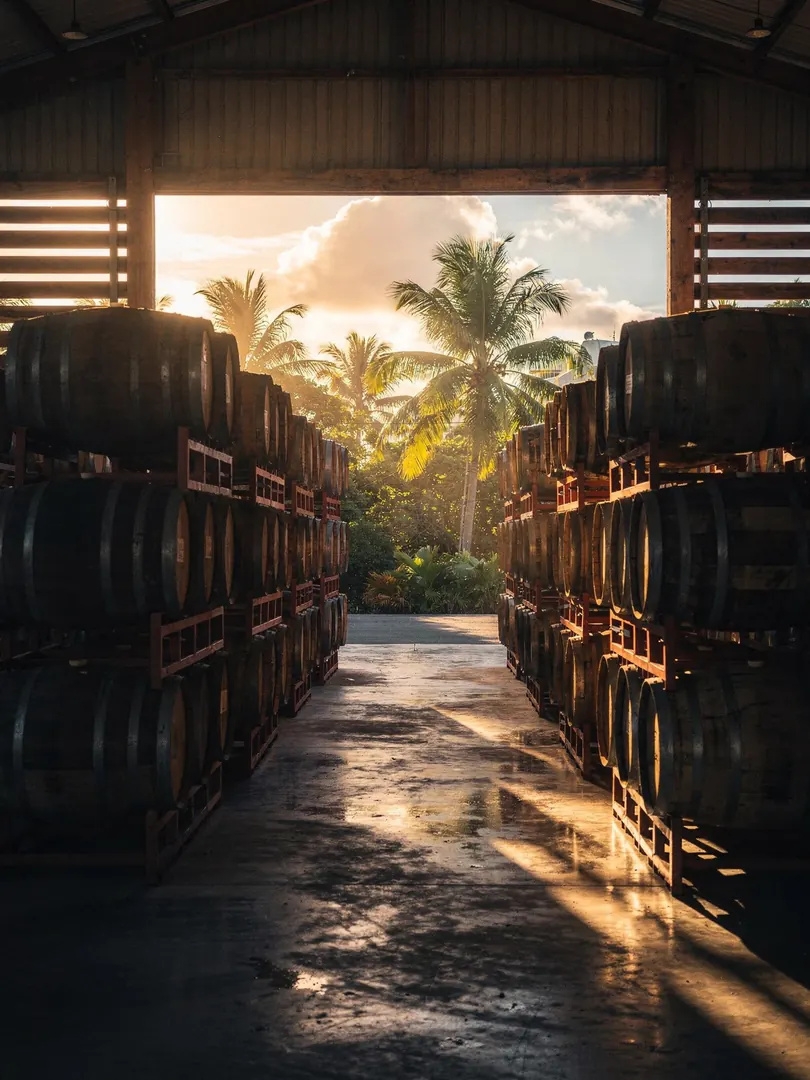
How long must rum from Puerto Rico rest in the barrel? At least one year, and specifically in oak, more precisely American white oak. This is required by local law for all rum from the island. This rule applies to white rum just as it does to dark, with the difference arising only afterward in filtration.
Beyond the minimum age, there are hardly any fixed terms. Añejo, Reserva or Gran Reserva are trade terms without a uniform standard. The only reliable indicator is a year printed on the label, and in the EU that must refer to the youngest component in the blend. A rum labeled “7 years” therefore consists of barrels that are all at least seven years old.
The tropical climate speeds up maturation, but it also costs volume. Warm days make the wood work harder, while at the same time part of the rum evaporates through the barrel. In warehouses like those in Puerto Rico, trade press reports losses of around eight percent a year, compared to about two percent in Scotland. The rule of thumb that one tropical year equals three European years is often cited, but it doesn't hold up chemically on a one-to-one basis.
What comes out of the barrels is then blended, filtered and brought to drinking strength before bottling. In doing so, the house's blenders even out differences between barrels so that a rum tastes the same year after year. This consistency is an explicit goal for major brands.
Both major houses work within this framework. At Don Q in Ponce and at Bacardí in Cataño, the barrels rest in the island's warmth, and the blenders decide when a barrel is ready. The “Rums of Puerto Rico” quality seal only guarantees the minimum rules, not the flavor of any individual rum. How long a rum actually aged is only revealed by the bottle if the house provides an age statement.