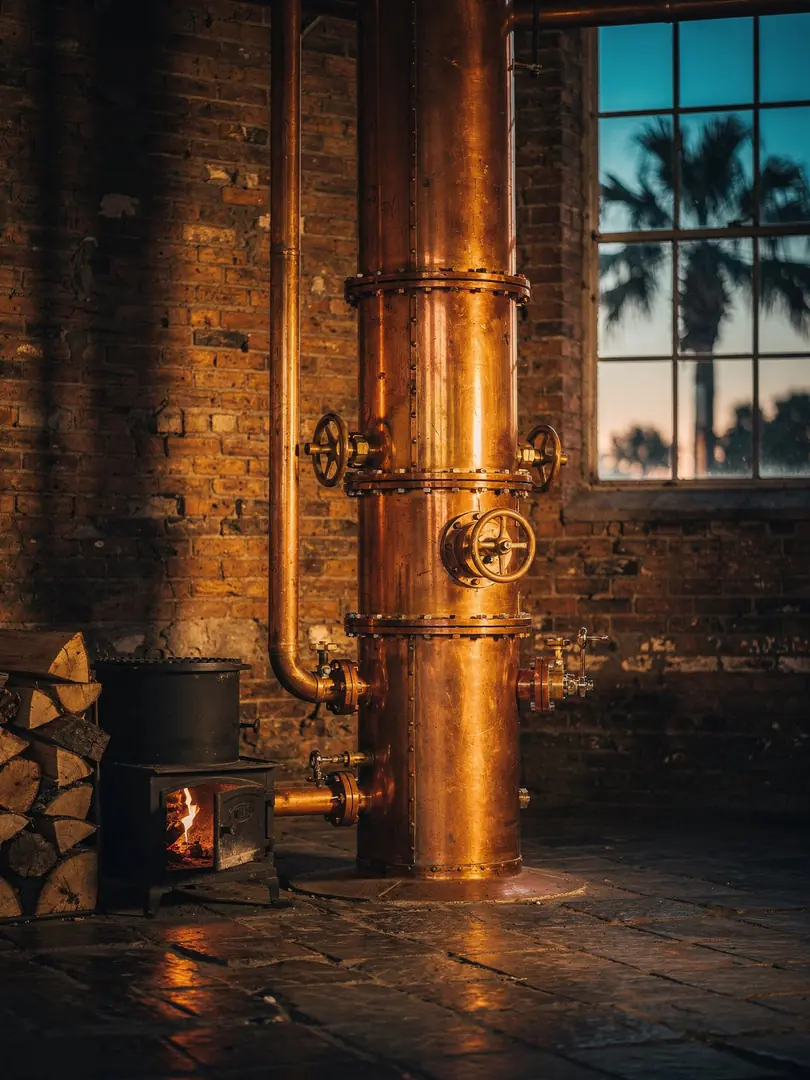
Column and blending tank
Distilling
Distilling separates alcohol from water and the residues of the mash. There are two types of still: the pot still works in batches and yields a more robust spirit, while the column still runs continuously and produces a lighter, cleaner one. Depending on the type of still, the same cane juice can taste completely different. How strong the distillate turns out depends on the equipment used; it only goes into the bottle once it has been brought down to drinking strength with water.
La Palma has something special going on. Reports say Ron Aldea distills in a wood-fired column still built in 1893 by the French manufacturer Egrot, and it's still in use today. The cane for it, some 200 to 250 tonnes a month, comes from growers on the island.
On Gran Canaria, Destilerías Arehucas is based in Arucas, tracing its roots back to the Fábrica San Pedro of 1884. According to the company's own history, modern distilling equipment was already in use back then, which helped the rum succeed early on. Well-known expressions include the white Carta Blanca and the golden Carta Oro.
Ronmiel de Canarias isn't distilled, it's blended. The specification sets out the process: water and honey are stirred together in a blending tank until a smooth syrup forms, to which sugar and flavorings may be added. Rum is then mixed in until the desired strength of 20 to 30 percent ABV is reached. Within 24 hours, chemical and sensory checks follow, with corrections made if needed. Before bottling, the drink passes through a filter at least once.
In the EU, rum must have a minimum ABV of 37.5 percent. Ronmiel, at 20 to 30 percent, falls well short of that and counts as a honey liqueur; legally it's classified as an "other spirit drink" and may not be called rum.