Yeast and Time
Fermentation
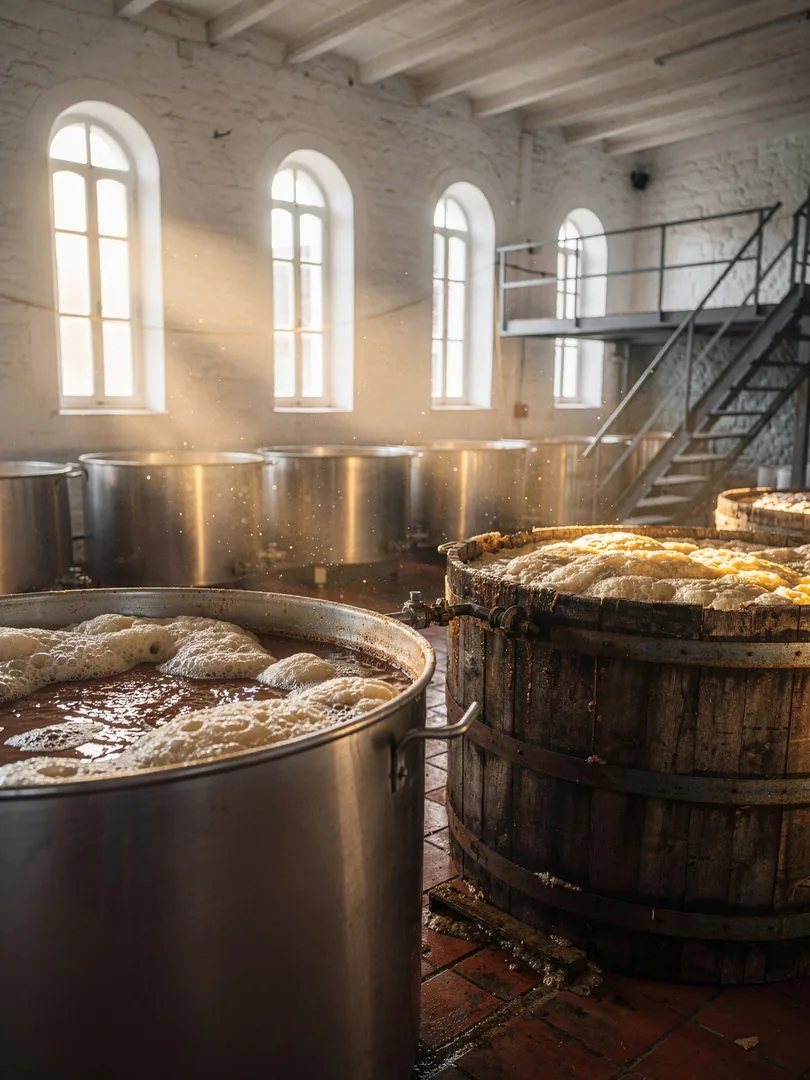
A rum is born first in the vat, and only afterward in the still. There, yeasts transform the sugar from molasses or juice into alcohol and carbon dioxide; the mash, as the fermenting mixture is called, foams and warms up. What emerges is a cloudy, mildly alcoholic liquid that is later distilled. The vats are made of wood or stainless steel, open or closed, depending on the distillery.
Time and yeast shape the flavor. As a rule of thumb: short fermentations yield light, clean rums, while long fermentations produce more esters—aromatic compounds with fruity notes. The yeast comes either from the surrounding environment (wild fermentation) or as cultivated pure yeast added to the vat; wild yeasts yield more varied, less predictable aromas, while cultivated yeasts give more consistent results. Temperature matters too: if the mash gets too hot, the yeast suffers, something distillers in warm climates must keep a close eye on.
Fresh sugarcane juice ferments quickly, but spoils quickly too. Distilleries that work with juice, like Ron Aldea, press the cane as soon as possible after harvest. Molasses, by contrast, can be stored and purchased from sugar factories, making molasses rum less dependent on harvest timing.
Ronmiel de Canarias involves no fermentation at all. Here, honey is merely an ingredient: it's stirred into water to form a syrup, and finished rum is added afterward. The specification requires that everything take place at natural ambient temperature, without heating or cooling. The application for protected designation of origin justifies this by its result: the honey should dominate the aroma, with notes of rum behind it.
Honey can be fermented, and the result is called mead. Ronmiel has nothing to do with that: its alcohol comes from the added rum, which was distilled beforehand at a distillery. Ronmiel is a blend, not a ferment.