Short and clean
Fermentation
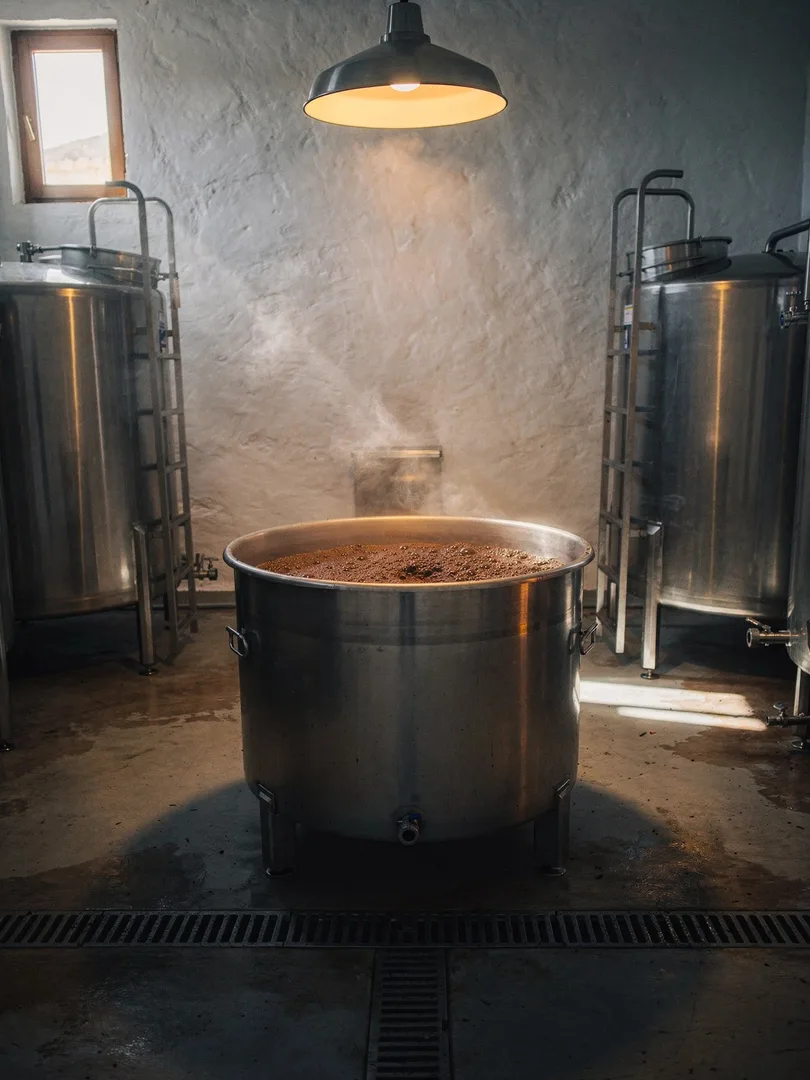
How does molasses ferment into rum? It's diluted with water and yeast is added. The yeast converts the sugar into alcohol and carbon dioxide, and the liquid foams and warms up. The result is called mash or wash and contains only a few percent alcohol at this stage.
At Ron Montero, fermentation reportedly lasts 24 to 30 hours, according to a rum specialist blog. That's short. In Hampden, Jamaica, the mash traditionally ferments for nine to ten days, producing the bold, fruity style the island is known for.
What does duration do to flavor? During fermentation, alongside alcohol, esters form—volatile aromatic compounds that can smell of banana, pineapple, or even glue. The longer the yeast works and the richer the mash is in secondary compounds, the more of these develop. A fermentation of about a day therefore yields a clean, light distillate, one where the cask later does most of the work shaping the flavor.
This is exactly what suits the light rum that Motril produces. It's not meant to be bold but smooth, with caramel and wood at the forefront. Light doesn't mean boring, though: with a clean distillate, aging matters more, and blending from different casks becomes the true craft. Anyone seeking ester-driven rum will find it in Jamaica, not on the Costa Tropical.
According to the house, the molasses comes from their own sugar cane. The factory in La Caleta, where molasses arose as a byproduct, has been closed since 2006.