Cane on the Guadalfeo
Region & History
Where in Europe did sugar cane grow for centuries? The answer lies on the Costa Tropical south of Granada, around Motril. On the alluvial plains of the Río Guadalfeo, between the Sierra Nevada and the Mediterranean, cane was cultivated for more than a thousand years. The oldest written mention of this coast comes from the Arab historian al-Razi, dating to the 10th century, and names the area around Salobreña.
The cane arrived in al-Andalus with the Arabs. In the Middle Ages, two customs houses stood on the coast of Granada where sugar was also produced, one in Almuñécar and one in Motril. In the 16th century, several sugar mills, called ingenios, operated in Motril. The most important was the Casa de la Palma. Behind it, on the remains of the old mill, the Museo Preindustrial de la Caña de Azúcar now shows how sugar was made before industrialization.
From the Mediterranean world, the cane continued its journey. On Madeira it is documented from around 1425, with cuttings brought from Sicily. Columbus carried it to the Caribbean on his second voyage in 1493. There, enslaved people grew and processed it on plantations.
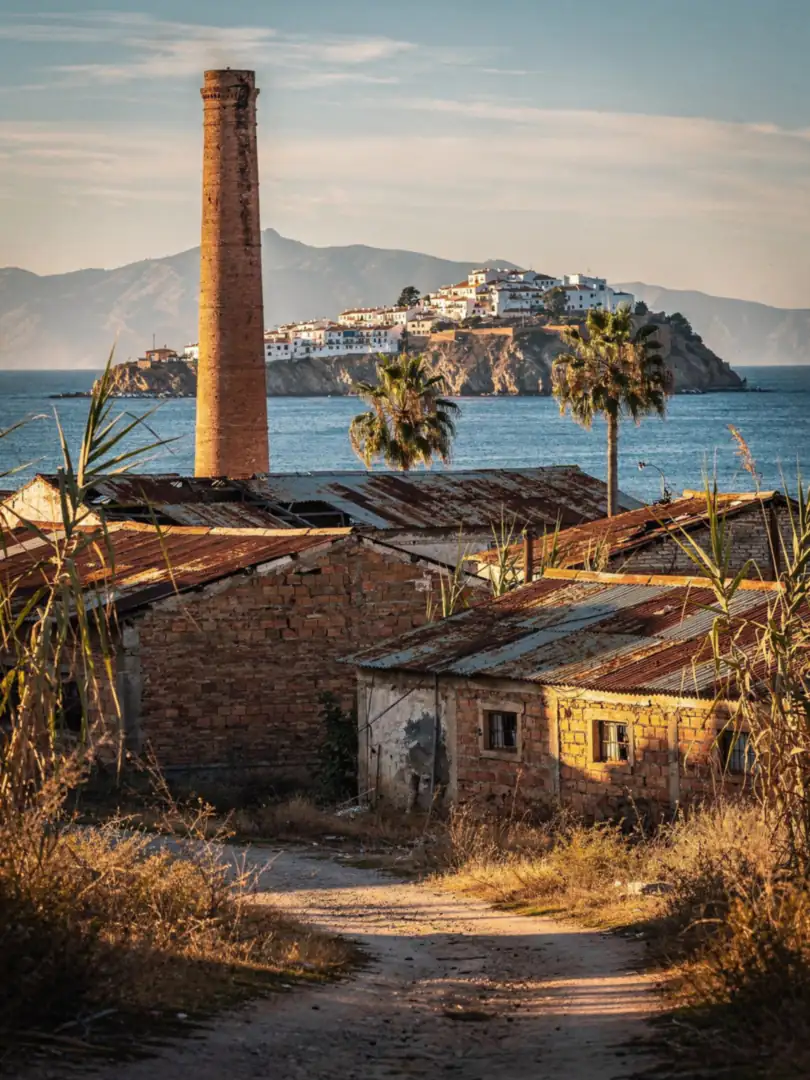
In 1861, the factory that was later called Azucarera del Guadalfeo began operations. It stood in La Caleta, in the territory of the neighboring municipality of Salobreña, and produced sugar, molasses, bagasse, and alcohol. On June 5, 2006, it closed for good. It is considered the last sugar cane factory in Europe, and according to the Junta de Andalucía, it housed the continent's last steam engine still in industrial use.
Rum from Motril is younger than the sugar. Francisco Montero founded the family house Ron Montero in 1963. The advertising claim that it is Europe's only sugar cane distillery isn't accurate: rum is also distilled from sugar cane on Madeira, where it even holds a protected designation of origin. No such protection exists for rum from Motril.