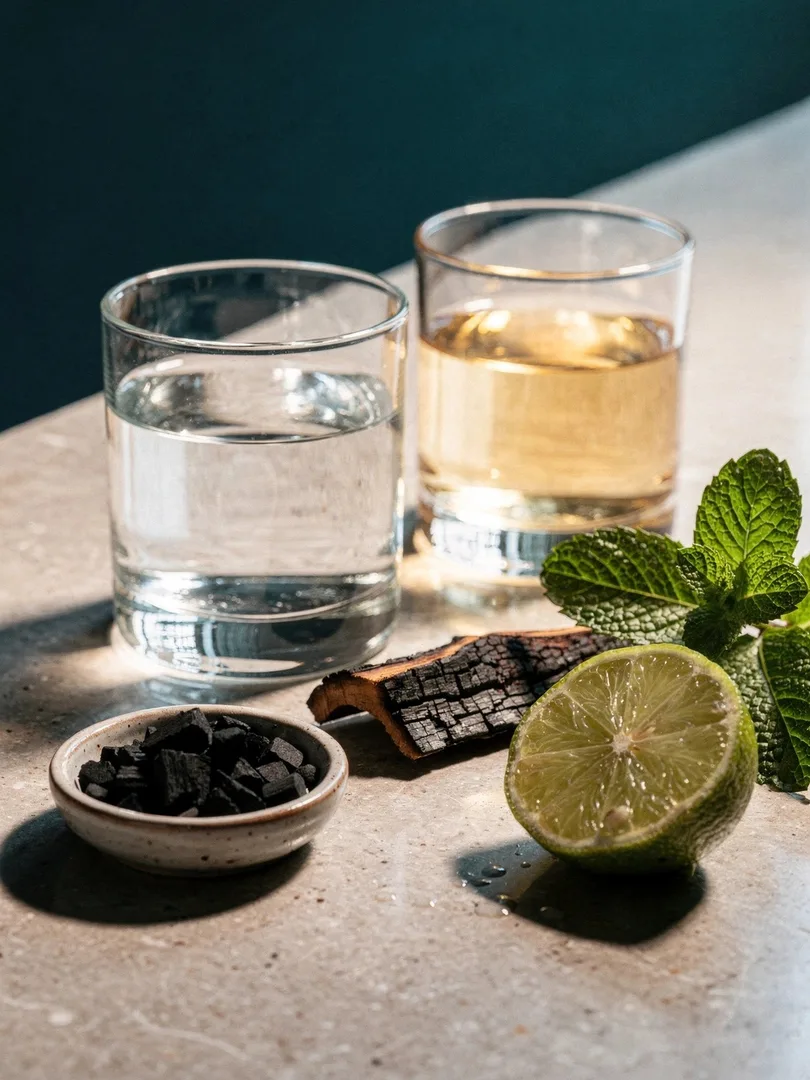
White rum with cask ageing
Matured yet still white: how activated charcoal decolorizes rum
A white rum can indeed be aged: many rums in the Spanish style spend a year or longer in the cask and are then filtered through activated charcoal, which removes the color and some of the wood aromas. So the color alone doesn't reveal whether a white rum is unaged.
What does activated charcoal do to rum?
Activated charcoal is a highly porous carbon, usually made from wood or coconut shells. Its interior is riddled with countless tiny channels, so even a single gram has an enormous surface area. Certain molecules adhere to this surface — experts call this adsorption.
When aged rum passes through such a filter, the charcoal captures mainly the larger color molecules from the wood. The rum becomes clear or nearly clear again. In the process, however, it also loses some of its aromas, such as tannins and certain wood notes. What remains is a mild, smooth rum with a faint hint of cask.
How heavily the rum is filtered is up to the distillery. Lightly filtered rums still show a hint of straw color, while heavily filtered ones are water-clear. This filtration is standard industry practice and doesn't have to appear on the label.
Why do distilleries filter aged rum?
The reason lies in the style. Many distilleries in the Spanish style want a white rum that is light and mixes well, for example in a Mojito or Daiquirí. Freshly distilled column-still rum can taste sharp. One to two years in the cask smooths it out, and the charcoal then removes the color again.
Sometimes the law even mandates maturation. In Puerto Rico, every rum must mature for at least one year in white oak, including white rum. The same minimum of one year in oak casks applies to Ron Dominicano. So a white rum from these countries is always aged.
Bacardí describes its Carta Blanca as matured in American white oak and filtered through charcoal. The Cuban specification also provides for a staged process: an aged distillate is blended with a charcoal-filtered spirit and water to create the base rum, which then continues to mature in the cask. Types such as Añejo Blanco already carry the word "aged" in their name.
Unaged versus filtered white rum compared
A Rhum agricole blanc from Martinique is made in a completely different way. After distillation, it rests for at least six weeks in a tank, usually stainless steel, and is bottled unaged. It tastes of fresh sugar cane, grass and pepper. The natural grade of Rum da Madeira is similarly unaged.
Many white rums made in pot stills, such as those from Jamaica, are also unaged and correspondingly bold. They show the fruit and esters of fermentation without any layer of wood influence. Between them and a filtered, aged white rum in the Spanish style lie entire worlds of flavor, even though both look equally colorless.
The difference becomes immediately apparent in a cocktail. A filtered, briefly aged rum stays in the background in a Daiquirí, letting the lime and sugar take the lead. A Rhum blanc or a white pot-still rum, on the other hand, brings its own fruit and spice and shapes the drink. Anyone recreating a classic should therefore know which type of white rum the recipe calls for.
How can you tell if a white rum is aged?
The color won't help you, but the label sometimes will. An age statement in years is, within the EU, a minimum figure referring to the youngest component. A reference to the origin can also help, if the country mandates a minimum maturation period. Terms like blanc, natural or unaged, on the other hand, point to a rum without cask ageing.
There are clues on the nose. A filtered, aged rum often smells soft, with a touch of vanilla or coconut. An unaged rum smells more directly of the raw material — grass, molasses or ripe banana.
The same caution applies in reverse. A dark rum isn't necessarily old, since the EU permits caramel coloring for color adjustment. Color and age are two separate questions when it comes to rum. Anyone wanting to know the age should read the number, not the color.