Maturing in the Cool North
Continental Ageing: What Does It Mean for Rum Matured in Europe?
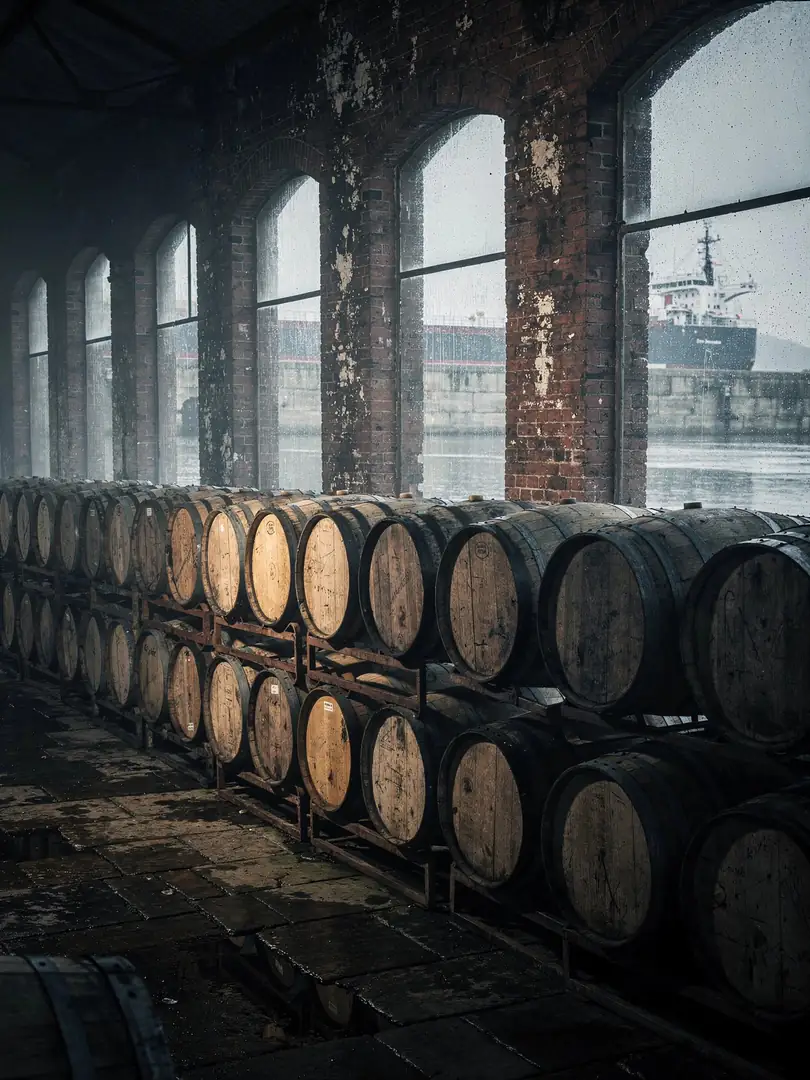
Continental Ageing means a rum is distilled in the Caribbean or South America but matured in casks in Europe, traditionally in port warehouses near Liverpool, for example. In the cooler climate, it matures more slowly, evaporates less, and usually turns out lighter in color and body than a tropically aged rum of the same age.
Why Was Rum Matured in Europe?
For a long time, rum was primarily a trade commodity. Caribbean distilleries sold young rum in casks or as bulk spirit to merchants in Europe, who would store, blend, and bottle it. If someone wanted to age a rum, they did so wherever it was being sold.
A well-known example is Liverpool. According to a report from the specialist site Cocktail Wonk, Demerara rum from Guyana arrived at Liverpool's Nelson Dock by tanker ship for decades. It flowed through a pipeline into a warehouse on the quay. Merchants bought batches of it and had them matured nearby in casks.
Germany had similar trading hubs. Flensburg wasn't a distilling town but a place where imported rum was stored and blended. The history of these rum houses is part of rum's broader story, but the key principle here is simple: maturation happened wherever the trade was based.
What Does Rum Matured in Europe Taste Like?
In the cool, damp warehouse of a British port, maturation proceeds slowly. The rum draws less from the wood, stays lighter in color, and retains more of its fruity notes. According to industry experts, continentally aged rums tend to be lighter in both color and flavor, while tropically aged rums are fuller and darker.
The great advantage is the low loss. In Scotland, around two percent evaporates per year, while in the Caribbean trade sources cite around eight percent. That's why a rum can rest in a European warehouse for twenty or thirty years without the barrel being left with just a remnant. Many very old rums from independent bottlers came about this way.
Comparison sets have shown just how big the difference is. Independent bottlers have released rums from the same distillery and the same vintage, one aged tropically and one aged continentally. In a direct comparison, the tropical rum usually comes across as denser and woodier, while the continental one seems fresher and more refined.
Double maturation: first the tropics, then Europe
Some houses combine both approaches. Planteray, formerly Plantation, describes its method as double maturation. According to the producer, the rums first mature in the Caribbean in bourbon barrels. They are then shipped to Château de Bonbonnet in the Cognac region, where they continue maturing in former Pierre-Ferrand Cognac casks.
The second maturation phase in the cooler climate proceeds more slowly and adds the spice of French oak. The result is a rum that shows both climate zones in the glass. If an age statement is to appear on the bottle within the EU, each of these maturation phases must have taken place under tax supervision or an equivalent form of control.
Can protected rums mature in Europe?
Many rules of origin draw a clear line here. The Jamaica Rum geographical indication requires maturation in Jamaica. The Cuban specification stipulates that maturation must take place entirely in Cuba, with only bottling permitted abroad. A Rhum vieux under the AOC Martinique must be bottled on the island.
On Barbados, this was precisely the point of dispute. The draft rule of origin proposed by Mount Gay, Foursquare and St Nicholas Abbey called for maturation to take place on Barbados. The West Indies Rum Distillery, owned by Maison Ferrand, objected, as it wanted to allow maturation abroad as well. The debate over a rule of origin has been going on for years.
For buyers, this means: a rum matured in Europe isn't a worse rum, just a different one. Those seeking the full tropical character should pay attention to where the maturation took place. Those who prefer delicate fruit and high age statements will often find exactly that in continentally aged bottlings.