The Relatives
Cachaça, Clairin, Charanda, Grogue: Sugarcane Spirits Beyond Rum
Cachaça, Clairin, Charanda, and Grogue are sugarcane spirits with their own origins and their own names. They share a raw material with rum, usually fresh sugarcane juice, but differ in law, fermentation, and distillation method. Cachaça, for instance, is a designation that belongs to Brazil alone.
What Connects Rum to Other Sugarcane Spirits?
Sugarcane has been distilled into alcohol for centuries, and the result wasn't always called rum. The term rum became established for sugarcane spirit on Barbados in the 17th century. In Brazil, Haiti, Mexico, and Cape Verde, distinct traditions arose with their own names. According to tradition, some reach back further than the word rum itself, in Brazil's case to the year 1532, although the written evidence for this is thin.
What these spirits share is the raw material, often fresh juice rather than molasses, and a rustic origin rooted in many small distilleries. What sets them apart is name, origin, and in some cases their own legal frameworks. Cachaça, for example, is separately regulated in Brazil and, under naming law, is not classified as rum. In the glass, it's worth comparing it to Rhum agricole from Martinique, since using the same raw material reveals just how much fermentation, still type, and cask ultimately shape the result.
Cachaça: What Sets It Apart from Rum?
Brazil enshrined Cachaça as the country's typical and exclusive designation by decree in 2009. It's made from fermented sugarcane juice and bottled at 38 to 48% ABV. Up to 6 grams of sugar per liter is permitted; between 6 and 30 grams, it's called Cachaça adoçada, meaning sweetened. Legally, it's therefore neither rum nor rhum agricole, even though the raw material is the same as on Martinique.
In flavor, young cachaça sits close to white agricole, though often softer and somewhat rounder on the nose. It's distilled in both column stills and copper pot stills, called alambique in Brazil. One distinctive feature is maturation: alongside oak, industry sources note that Brazilian woods such as Amburana or Jequitibá are also used, which can lend spicy, cinnamon-like notes. Cachaça became known worldwide through the Caipirinha.
Clairin from Haiti: Sugarcane Spirit Without Filtering
Numerous small operations in Haiti distill Clairin, Creole for "clear." Fresh juice is most commonly used, sometimes syrup, and fermentation runs spontaneously with wild yeasts from the surrounding environment rather than purchased cultured yeast. Distillation takes place in small pot stills, often with just a few plates for extra strength, and the distillate is bottled unaged and unfiltered. The flavor is raw and layered: grass, brine, olives, overripe fruit.
Clairin gained international recognition when Luca Gargano of the Italian merchant Velier began bringing bottlings from individual distilleries such as Sajous or Vaval to export markets starting in 2012. Each one tastes of its place, its cane variety, and its fermentation. Clairin thus shows how cane-juice rum can taste without a column still and without strict regulations. With Barbancourt, Haiti also has a double-distilled, aged cane-juice rum of an entirely different character, and both represent the same country.
Charanda and Grogue: Sugarcane Spirits from Mexico and Cape Verde
Charanda comes from the Mexican state of Michoacán, mainly from the area around Uruapan. It has held protected designation of origin status there since 2003, much like Tequila and Mezcal for agave spirits. It's distilled from locally grown sugarcane, with styles ranging from light, fresh bottlings to cask-aged expressions. Outside Mexico, Charanda is rarely found. Still, it shows that sugarcane spirit carries its own name even in a place where agave usually comes to mind first.
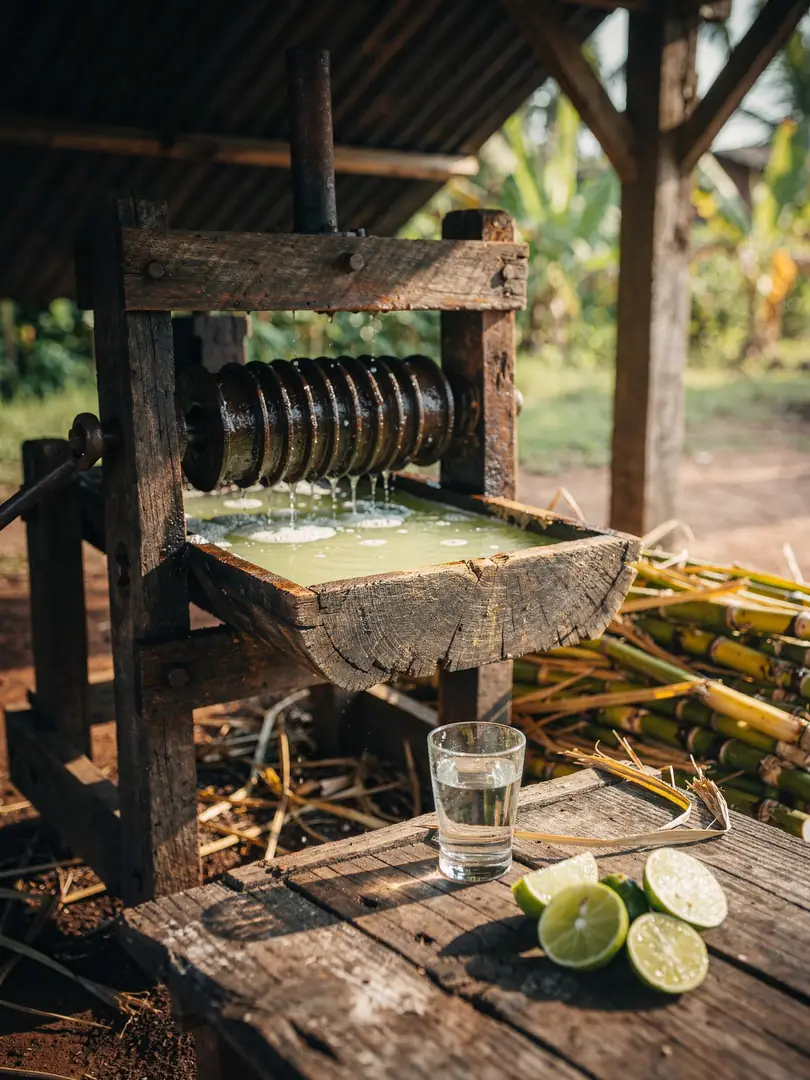
Grogue from Cape Verde, off the West African coast, is traditionally produced using trapiches, old cane mills that press the juice from the stalks. A 2015 law regulates its production and sale and permits only sugarcane as the raw material, meaning added sugar to stretch the mash is prohibited. A large share of the stills are located on the island of Santo Antão. Little of it is exported, but in the glass, Grogue shows the same green, grassy character found in other cane-juice spirits.