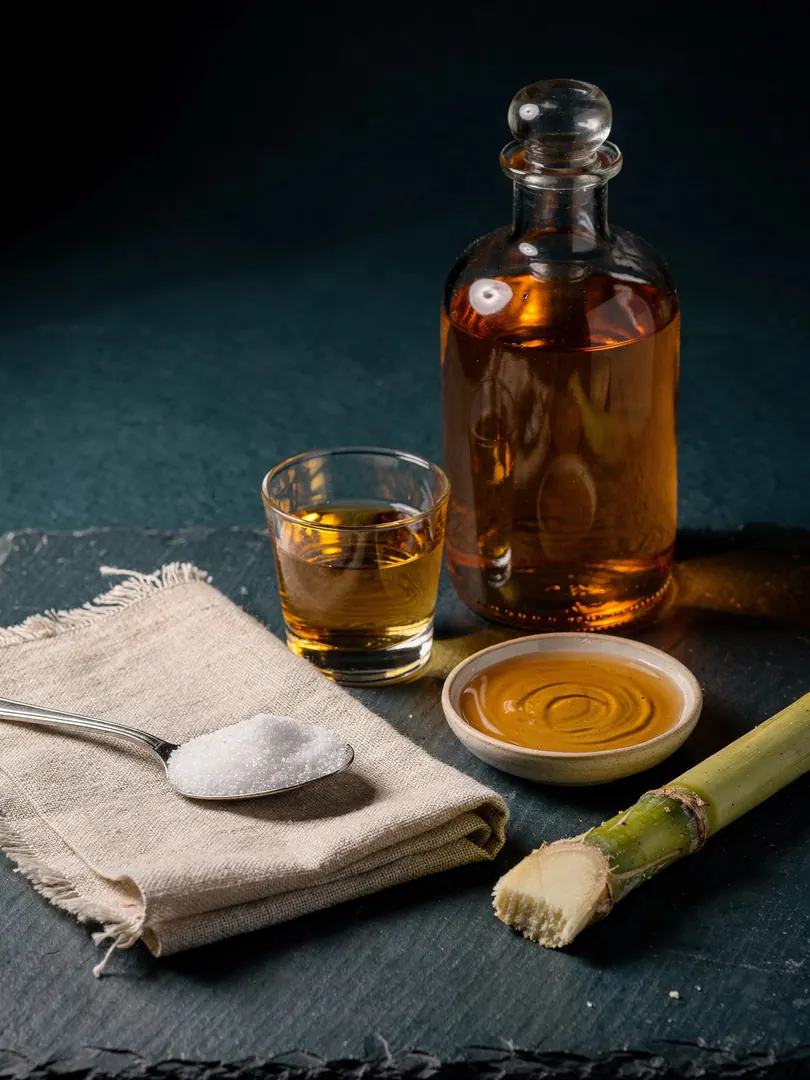
The Sugar Limit
20 Grams per Liter: The EU Sugar Limit for Rum Since 2021
Since May 25, 2021, rum sold in the EU may contain no more than 20 grams of sweetening products per liter, calculated as invert sugar. Sweetening is only permitted 'to round off the final taste.' Before this, EU law had no upper limit for rum at all.
What the EU Spirit Drinks Regulation Says About Sugar in Rum
The rule appears in Regulation (EU) 2019/787, Annex I, Category 1, which defines rum and specifies what may be added. Additional alcohol is prohibited, as are flavorings; caramel coloring is permitted only to adjust color. There's a separate provision for sweetness: rum may be sweetened to round off the final taste, but the finished product may contain no more than 20 grams of sweetening products per liter.
The regulation has applied since May 25, 2021, replacing the earlier Spirit Drinks Regulation (EC) No 110/2008. That older regulation defined rum but set no sugar limit. A producer could therefore sweeten as much as they wanted and still label the product 'rum.' The new limit applies to any rum sold in the EU, regardless of where it was distilled. A rum from Panama or the Philippines must comply just as much as one from Martinique.
What Does 'Expressed as Invert Sugar' Mean?
Producers sweeten with various types of sugar. The regulation lists these as sweetening products, including white sugar, dextrose, fructose, glucose syrup, honey, and caramelized sugar, which is produced solely by controlled heating of sucrose. To make these comparable, they're all converted into invert sugar equivalents. Invert sugar is ordinary table sugar that has been split into its two building blocks, glucose and fructose.
In practice, this means the total sugar quantity is what counts, not the type. Whether a distiller uses cane sugar syrup, honey, or glucose syrup, the combined total may not exceed 20 grams per liter. The list covers sugars and naturally sweet substances like honey or carob syrup. Anything meant to taste like vanilla or caramel without actually being sugar falls under a separate prohibition. Rum may not be flavored, as explained further in Station 6.
How Much Is 20 Grams of Sugar per Liter?
Twenty grams per liter sounds like very little, and compared to soda, it is. But for a spirit, this amount is clearly noticeable. Two grams per 100 milliliters soften the bite of the alcohol, make the rum smoother, and give it a fuller feel on the palate. Experienced tasters can detect just a few grams through a smooth, slightly sticky finish. At 20 grams, many people already perceive a rum as distinctly sweet.
The limit applies to the finished product, meaning whatever ends up in the bottle. It doesn't matter whether the sugar was added in one step or came from a sweetened component of a blend. Since sugar doesn't evaporate during distillation, nearly everything measurable comes from later addition; the cask contributes only small amounts. The figure is therefore straightforward to interpret: it represents the maximum sweetness a producer may add to their rum.
What Applies to Rum with More Than 20 Grams of Sugar?
A drink with more sugar than this may not be labeled 'rum' in the EU. For sweetened rums, the 2021 rule meant one of two things: either the recipe stays under 20 grams, or the label carries a different designation, usually 'spirit drink.' Many flavored products already used this designation anyway, since flavorings are banned in rum. Which path a given brand took is shown on the label itself, not by the brand name.
Some rules go further than the EU standard. The Jamaica geographical indication allows only water and coloring after distillation. Rum carrying the term 'traditionnel' may not be sweetened at all, and the same applies to rum labeled 'dry.' The protected designation Demerara Rum from Guyana, by contrast, adopts exactly the 20-gram limit. Cuba's pending application for EU protection likewise proposes a maximum of 20 grams, sweetened only with Cuban cane sugar syrup.