Laventille and Caroni
Region & History
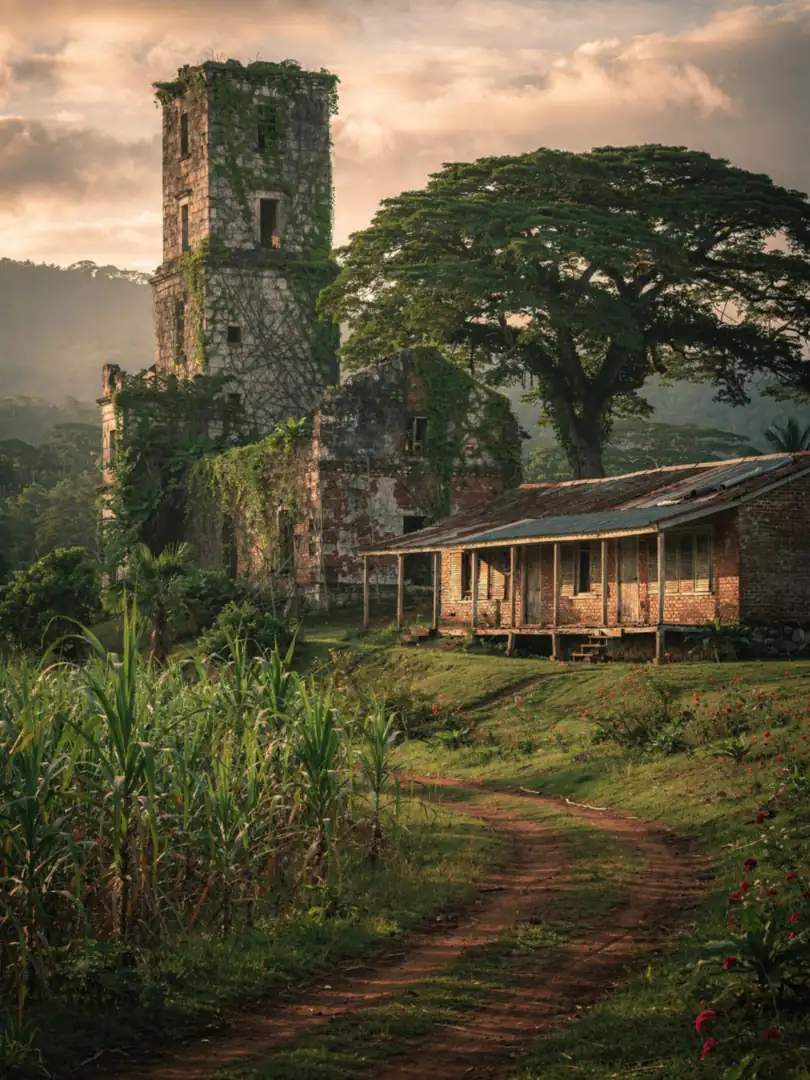
Rum from Trinidad has a backstory that at first has little to do with rum at all. Spain claimed the island after 1498, but plantations only emerged late. With the Cedula of Population of 1783, the Crown brought French planters and their enslaved workforce to the island, and in 1797 the British conquered it. Sugar cane was grown and processed on land cleared by enslaved people.
Slavery ended across the British Empire in 1834. On Trinidad, an apprenticeship period followed until 1838, during which the freed people still had to work for their former owners. From 1845 onward, planters recruited indentured labourers from India. Their descendants make up a large share of the population to this day, and this shows in the island's cuisine. In 1962, Trinidad and Tobago gained independence.
Two names carry the island's rum history. Angostura traces back to a bitters recipe from 1824, developed by the physician Dr. Siegert in Venezuela; the bitters remain only context here. The rum distillery in Laventille, a hillside district east of Port of Spain, was only established in 1949.
The second name is Caroni, founded in 1923. According to trade press reports, Angostura won a bidding process for the rum division in 2001, but the sale was never completed. In 2002 the distillery stood idle, and on 31 July 2003 Caroni Ltd. was liquidated. In 2004 Luca Gargano of the Italian house Velier came across the full cask warehouses; Velier acquired the remaining stocks and the brand. Every bottle of Caroni since then is old stock.
Trinidad rum does not carry a protected designation of origin like Martinique or Jamaica: there is no entry for the island in the EU register of geographical indications. The word "Trinidad" on a label thus names a place, not a prescribed method. Trade sources today name Angostura in Laventille, under Angostura Holdings, as the island's rum distillery.