Molasses instead of juice
Sugar Cane & Molasses
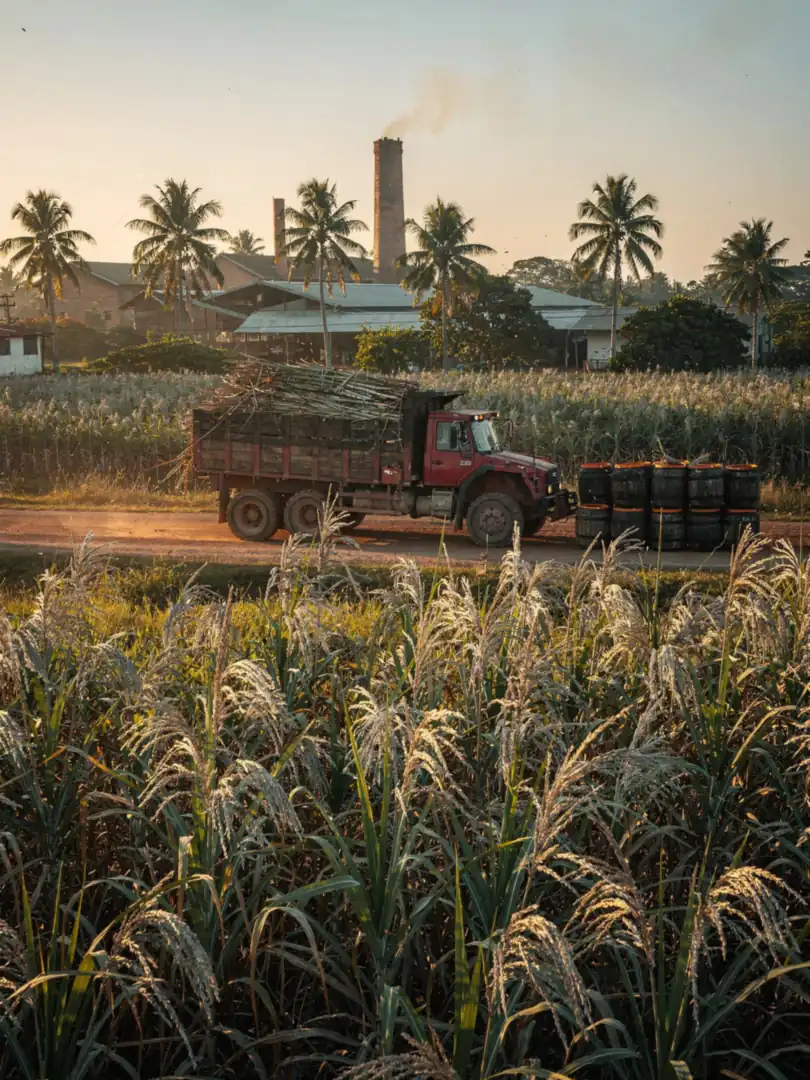
Remarkably little of what you'd still call sweet survives the journey from sugar cane to rum. The factory presses the stalks, boils down the juice, and lets the sugar crystallise out. What remains, a dark, viscous residue, is called molasses. It smells of liquorice and caramel and still holds enough fermentable sugar to make rum.
On Trinidad, molasses is the standard raw material, both at Angostura and at Caroni. This sets the island apart from Martinique, where rum is made from fresh cane juice and is called rhum agricole. Juice spoils within hours and must be processed right at the field. Molasses, by contrast, can be stored and shipped, which means a distillery can operate all year round.
Cane on Trinidad grew mainly in the flat central plain around the Caroni River. The same name denotes the county, the former sugar company, and the distillery. The dry season runs roughly from January to May, and traditionally the harvest, known as the crop, took place during these months. In the rainy season that follows, the cane grows back.
With the shutdown in 2002 and the liquidation on 31 July 2003, Caroni's link between field, factory, and distillery came to an end. Anyone needing molasses today buys it like any other raw material: the commodity is tradeable, and that is precisely why a rum made from molasses is not bound to any single place in the world.
What remains of the sugar in the finished rum? During distillation, the sugar stays behind in the residue, while alcohol and flavour compounds pass into the distillate. Sweetness only appears if a producer adds something after distillation; in the EU, a maximum of 20 grams per litre is permitted. A third option is syrup, that is, thickened cane juice, which Guatemala, for example, uses.