Valleys and Sugar
Region & History
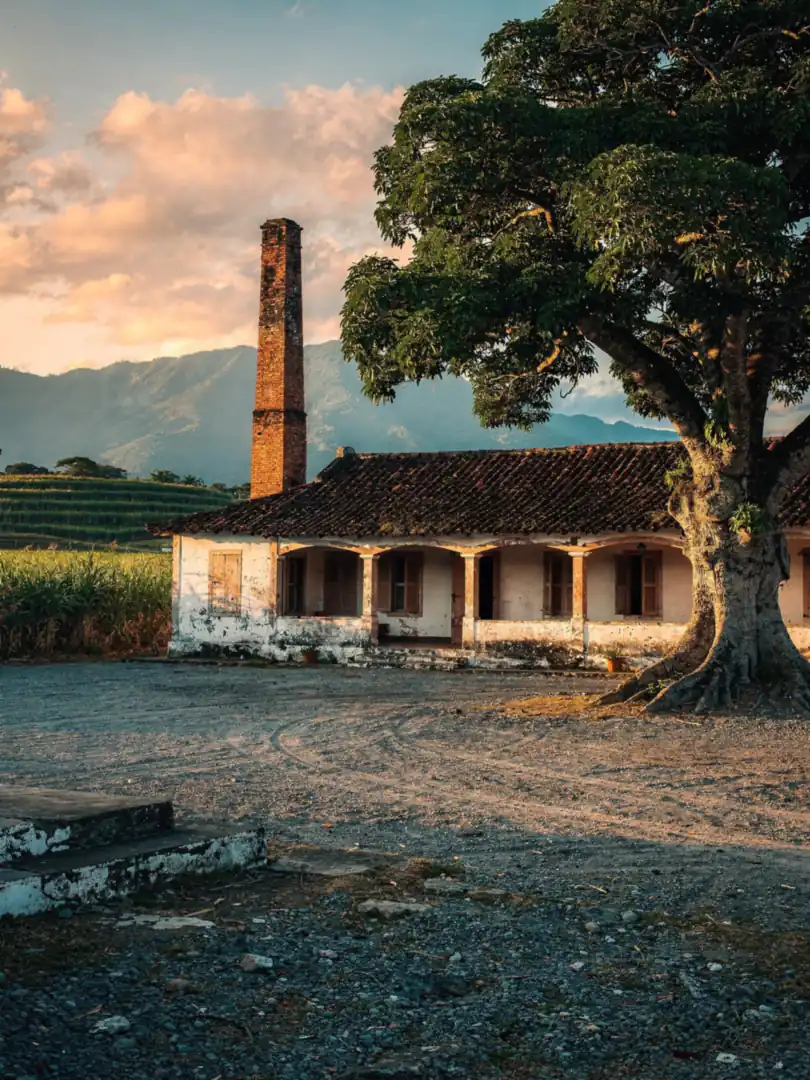
Venezuelan rum comes in large part from the Valles de Aragua, fertile valleys west of Caracas. There, near El Consejo, lies the Hacienda Santa Teresa, founded, according to the house, in 1796. Anyone wanting to understand what Venezuelan rum truly is would do well to start right here. From this spot the whole story unfolds: from cane grown on the haciendas, through brandy-making, to the protected name that now appears on the bottles.
Sugarcane arrived in the country with the Spanish in the sixteenth century, first in Coro and El Tocuyo, then in the valleys further inland. On the haciendas, enslaved people from Africa did the work, planting, cutting, and processing the cane. From the juice came sugar, syrup, and a simple brandy known as aguardiente.
At Santa Teresa, according to the house's own history, distilling began with a small pot still, and the rum distillery started operations in 1896. The Ron Santa Teresa brand was registered in 1909. The hacienda has, according to the house, been in the hands of the Vollmer family since the late nineteenth century.
Alongside it, major brands grew up as well. Pampero was, by its own account, founded in Caracas in 1938 and released the country's first certified Añejo in 1954, aged two years. Cacique launched in 1959 and is considered Venezuela's best-selling rum. Pampero, according to press reports, passed from Diageo to the Italian Gruppo Montenegro in 2024.
Protection of origin came late. On 15 August 2003, the authority SAPI recognized the Ron de Venezuela designation of origin, and in 2019 this became a DOC, a Denominación de Origen Controlada. It is overseen by the development fund Fonpronven. Venezuela also applied for registration in the EU in 2020, where it currently remains listed as pending.