Cane and Molasses
Sugarcane & Molasses
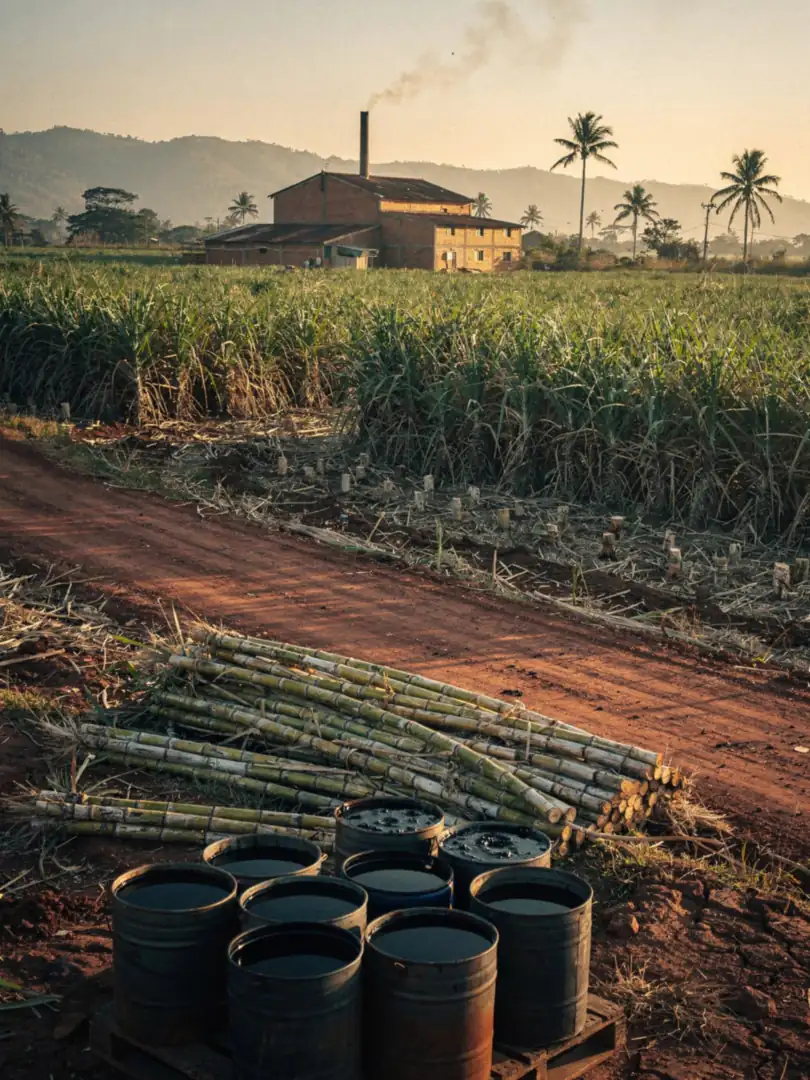
In the fields of the Valles de Aragua, the sugarcane grows dense and taller than a person, green stalks with sharp-edged leaves that rustle in the wind. Hacienda Santa Teresa names these valleys as the source of its cane, and according to the house, at Santa Teresa 1796 the entire journey from field to bottle stays within the valley.
Distilling, however, usually begins not with the cane itself but with molasses. That's the name for the dark, thick residue left behind at the sugar mill once the sugar has crystallized out. It still contains residual sugar that yeast can ferment. Because molasses can be stored and shipped, a distillery doesn't need its own sugar mill.
Fresh cane juice, by contrast, spoils within hours. Anyone wanting to distill rum from it must process it right at the field, and can only do so during harvest season. That's the path taken by rhum agricole in the French Antilles. The Ron de Venezuela designation of origin requires Venezuelan raw material, distilled according to the familiar cornerstones from either molasses or cane honey, meaning reduced, concentrated juice.
The cane makes its presence felt in Aragua beyond the distillery, too. Boiled-down juice yields papelón, a solid brown block of sugar that ends up in Venezuelan drinks and desserts. Papelón con limón, dissolved in water with lime, is a popular refreshing drink that tastes of caramel and fruit all at once.
Harvesting mostly takes place in the dry season, when the stalks have stored up plenty of sugar. At the sugar mill, the juice is pressed, boiled down, and separated from the crystals. What remains is the molasses, which later kicks off fermentation at the distillery. How much molasses a distillery receives depends on the sugar mills that take in and process the valley's cane, and on how much sugar they choose to market themselves.