Cask and Tropical Heat
Cask & Climate
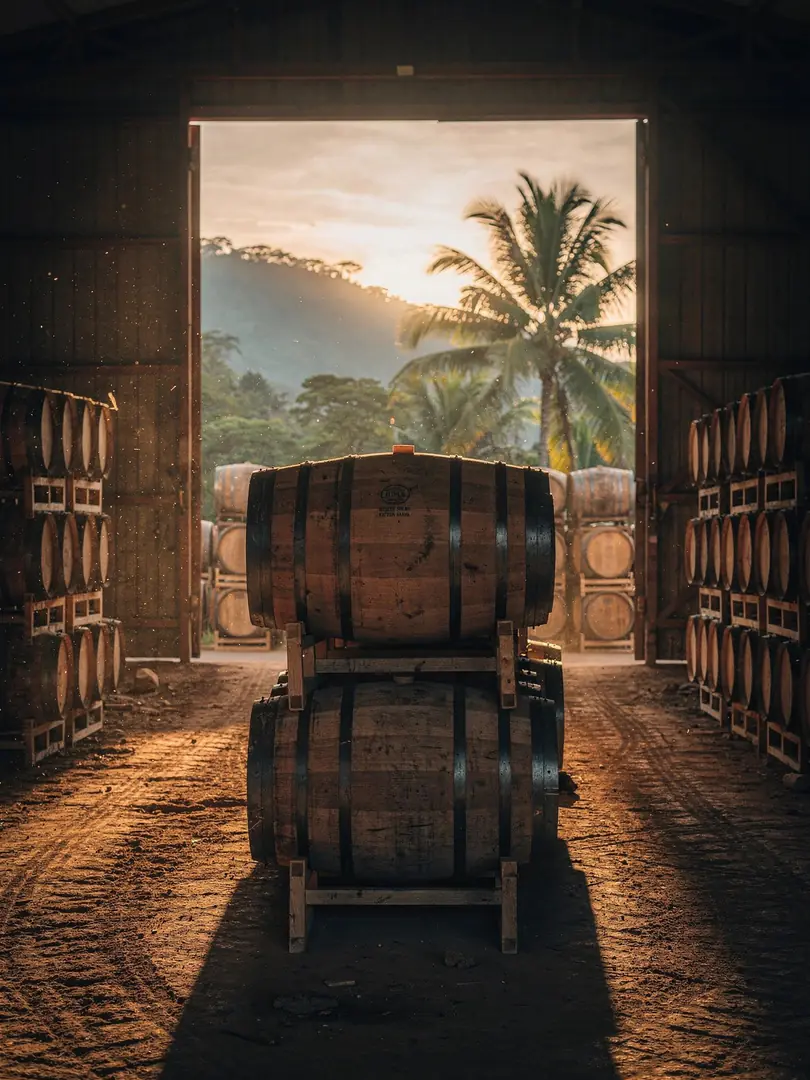
At La Miel, aging means oak above all. According to the house, the rums rest in American white oak that previously held bourbon or malt whisky. Such casks have already held one fill and release vanilla and caramel more gently than new wood. The result is a rum that smells of pastry and orange peel rather than fresh shavings.
The country sets a fixed minimum. Anyone calling a rum Ron de Venezuela must age it for at least two years in oak casks, as required by the designation of origin. Beyond that, there are no standardized age categories. Terms like Añejo or Reserva are marketing words whose meaning each house defines for itself.
The climate does its part. Daytime temperatures hit 30 to 31 degrees, dropping six to seven degrees at night, with the air staying humid. The wood expands and contracts, and the rum moves into the cask wall and back out again. In the cask here, evaporation often runs around eight percent a year, many times the Scottish figure. In English, this loss is called the angel's share.
The rule of thumb about a tropical year equaling three European ones gets cited often, though it has little solid chemistry behind it. Evaporation does run faster, but the reactions within the wood follow a different rhythm.
The distillery names different ranges for its brands. According to the house, Planas ages for up to six years and is then decolorized using activated charcoal, Mantuano for up to eight, and Reserva Exclusiva for up to twelve years. Here the phrase "up to" matters: it describes the range of rums in the blend, not the age of every drop.
So how old is a rum, really? In the EU, an age statement may only be given if it applies to the youngest component and the aging took place under tax supervision. If a bottle bears a large number, it's worth checking what it actually refers to. And since color says nothing about age, a pale rum like Planas may well have spent several years in cask.