Kettle, Pot, Column
Distillation
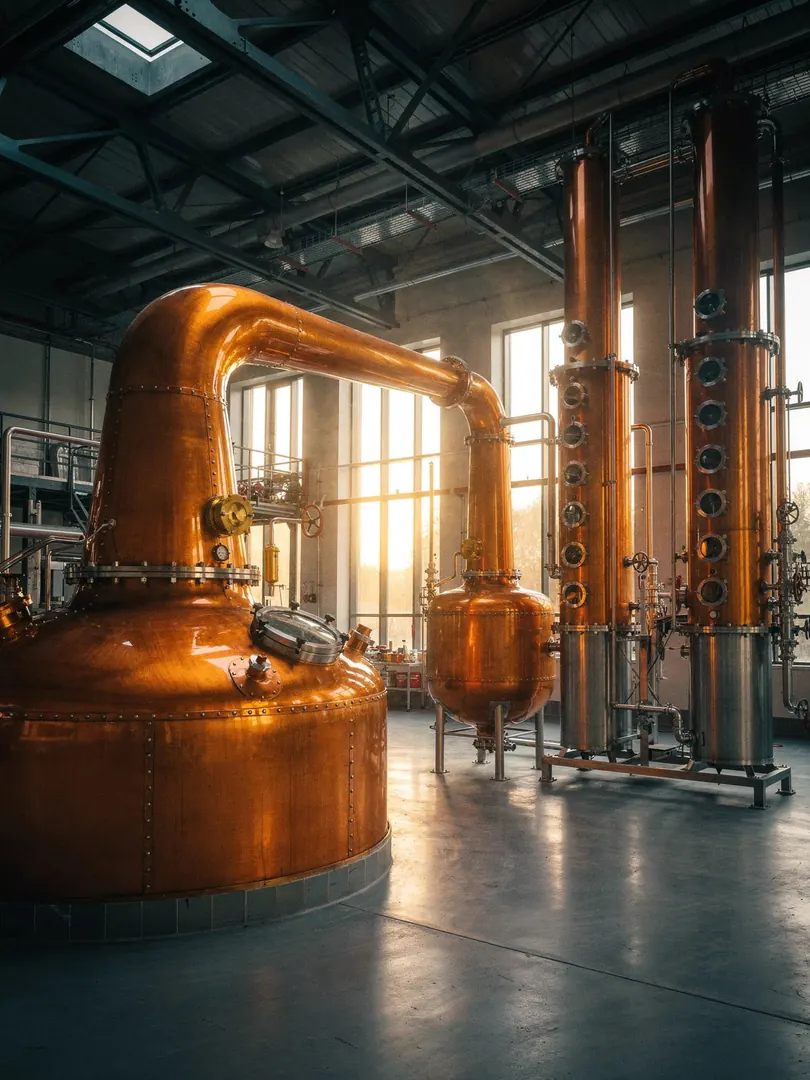
To understand how Diplomático is distilled, you need to look at three pieces of equipment. According to the house, the distillery works with a copper pot still from Scotland, a Barbet column from France, and a batch kettle from Canada. These produce three types of distillate, which are later blended together.
The pot still is the classic copper kettle with a neck, into which the fermented mash is poured. It operates batch by batch and retains many congeners. The result is a heavy, aromatic spirit in which a great deal of the molasses character still comes through.
The batch kettle is likewise filled in batches. According to the house, it produces heavier distillates than the column, though without quite the power of a pot-still rum from Jamaica. It's precisely this interplay between kettle and pot still that, according to the producer, defines Reserva Exclusiva.
The column, by contrast, runs continuously. Mash flows in at the top, steam rises from below, and alcohol and water separate step by step on the plates inside. What emerges is a very pure, light spirit. In the EU, a rum distillate must stay below 96 percent ABV to still qualify as rum. At La Miel, several columns stand in a row, monitored by a computer-controlled station.
Because Seagram's equipped the site in 1959 for whisky and gin as well, large pot stills for whisky and a pot still for gin also stand on the grounds. According to trade press, the equipment can also produce vodka and the agave spirit cocuy. This explains why a rum distillery is so versatile.
The blends arise from this interplay. According to the house, Reserva Exclusiva comes from pot stills and batch kettles, Mantuano blends all three distillation methods, and Planas is decolorized with activated charcoal after aging. The distillery is not generally open to the public; visitors are admitted by invitation only.