Molasses from Next Door
Sugarcane & Molasses
What is molasses, and why is it used in the rum from La Miel? Molasses is the dark, sticky syrup left over once a sugar factory has crystallized the sugar out of boiled cane juice. It still contains plenty of fermentable sugar, smells of licorice and caramel, and is a byproduct that's well worth using for distilleries.
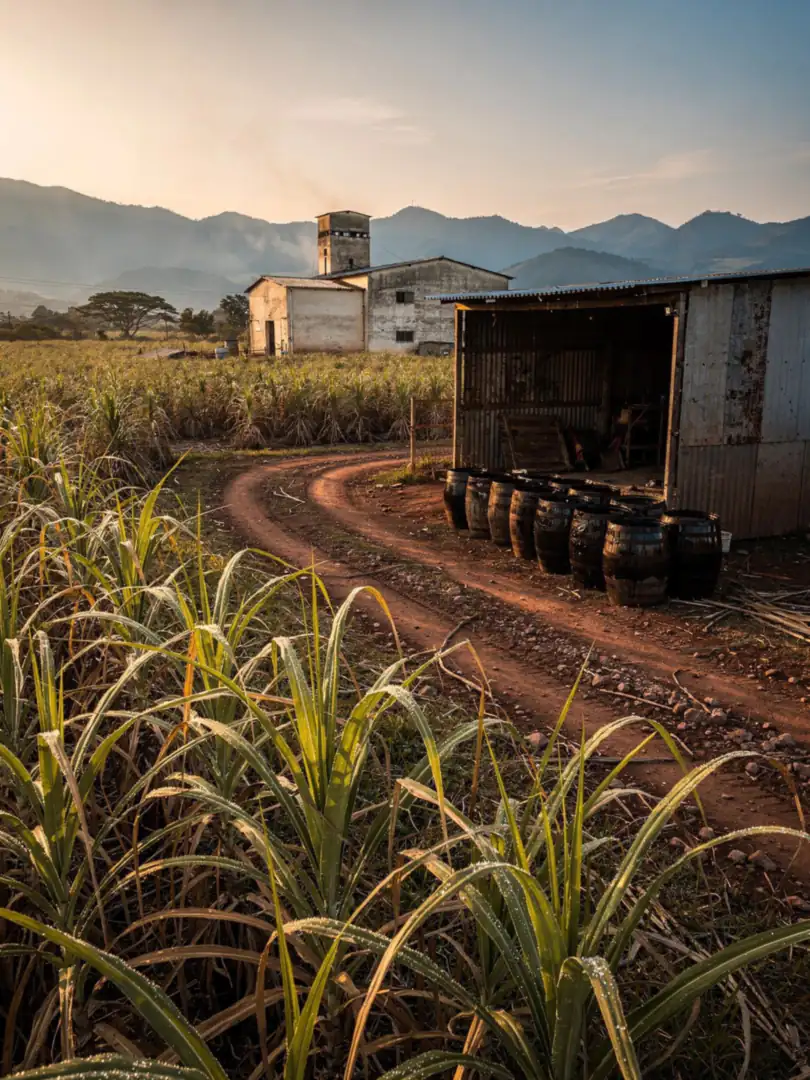
Destilerías Unidas sits right in the heart of sugarcane country, between Lara, Yaracuy, and Portuguesa, three states among Venezuela's major growing regions. According to industry sources, three sugar factories within about 80 kilometers supply roughly 80 percent of the molasses the distillery processes. The distances are short, and the tanker trucks rarely travel far.
Cane needs warmth, water, and plenty of sun, and this region offers both. Daytime temperatures climb to 30 to 31 degrees Celsius, dropping six to seven degrees at night, while the air stays humid. Harvesting takes place during the zafra, as the harvest season is called in Spanish, in the drier half of the year, when the cane has stored up plenty of sugar.
Why not simply ferment the juice directly? Rum made from sugarcane juice, as used in rhum agricole, must be freshly pressed and processed immediately. Molasses, by contrast, keeps well in tanks, allowing the distillery to operate year-round even when the mills stand idle. Somewhere between the two lies syrup, boiled-down juice. For the Planas, the house also cites cane honey, meaning thickened cane juice, alongside molasses.
A second raw material is often forgotten: water. According to industry sources, the distillery draws it from five wells, each roughly 100 meters deep, reaching groundwater from the area of Terepaima National Park. With about 200 milligrams of minerals per liter, it's so soft it needs no treatment.
Legally, the position is clear. In the EU, rum is a spirit produced exclusively from molasses or syrup from cane sugar production, or from sugarcane juice. Beet sugar is therefore excluded. The Ron de Venezuela designation of origin also requires Venezuelan raw materials, meaning the cane itself must come from within the country.