Early Harvest
Base Wine & Cuvée
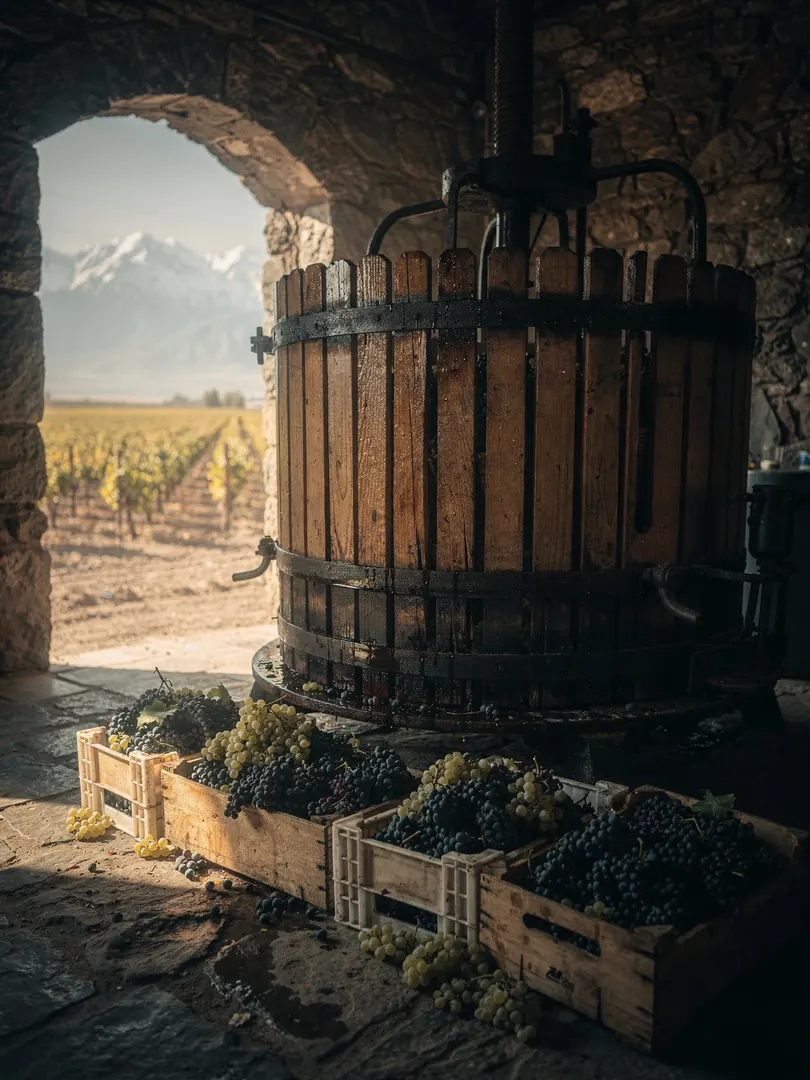
In the Southern Hemisphere, the year runs the other way around. While Europe has snow, Mendoza begins harvesting grapes for sparkling wine, usually in late January or February. The timing depends on elevation; in the cooler Uco Valley it comes later than down in Agrelo.
Grapes are picked early, before the berries get too sweet. That's the basic rule of any bottle-fermented wine, and in Mendoza it counts double, because the sun is so intense. Wait too long and you get plenty of sugar but little acidity. The base wine, by contrast, should taste light, sharp and almost a touch unripe. Only the second fermentation in the bottle later gives it alcohol and power.
After that comes gentle pressing. White juice fractions from red Pinot Noir berries only succeed if the skins release barely any color, so wineries use pneumatic presses and separate the first free-run juice from the harsher press fractions. Each lot ferments separately, with the Chardonnay and Pinot Noir wines kept apart in tank.
In winter, the cellar master assembles the cuvée. This is called the assemblage: tasting each wine individually and blending them into an overall picture meant to taste similar year after year. Reserve wines from earlier vintages help achieve this.
Alongside these are vintage cuvées. At Chandon they're called Cuvée Millésime, where the character of a single year counts rather than a consistent house blend. Whether a bottle carries a vintage is stated on the label. Mendoza has good conditions for this, since the skies are reliably sunny and the years resemble each other more closely than in northern Europe. Differences tend to arise from frost, hail or a hot summer rather than persistent rain. Those who taste vintages side by side therefore often notice subtle shifts in acidity and fruit ripeness rather than dramatic leaps.