Chardonnay and Pinot
Grape Varieties
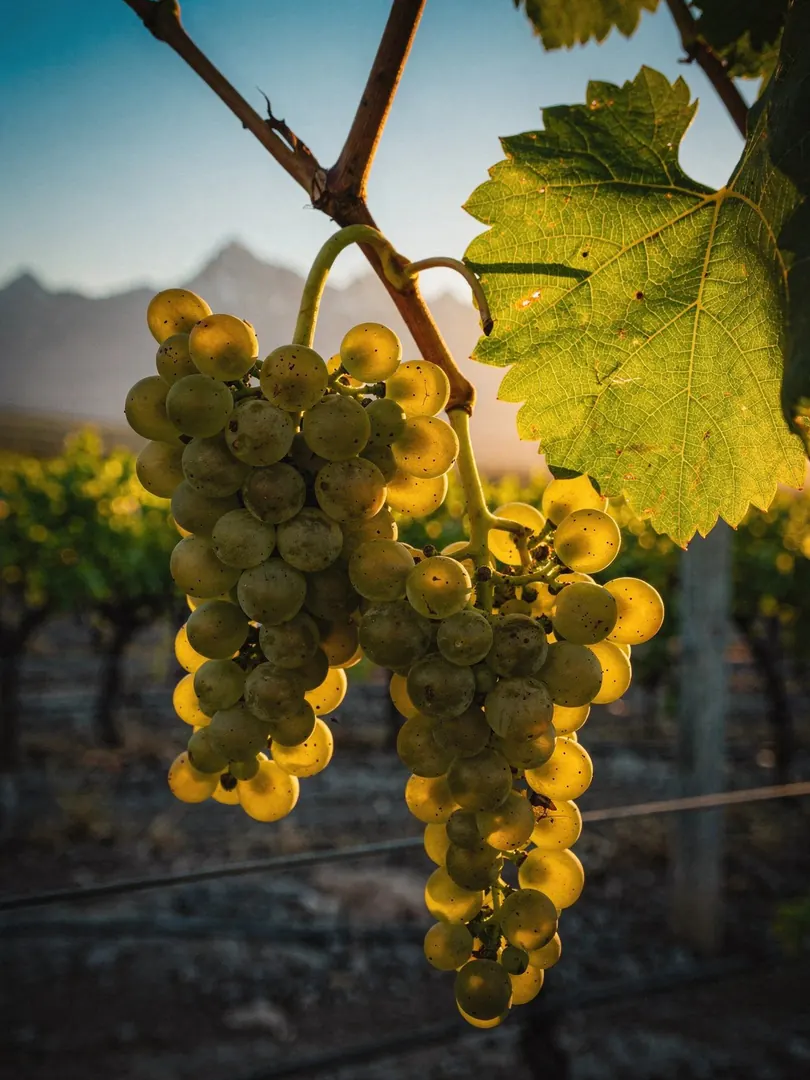
For espumante from Mendoza, the same two varieties take center stage as in Champagne: Chardonnay and Pinot Noir. Both thrive better in the cool Uco Valley than down on the hot plain. In Tupungato they grow in the valley's highest sites.
In this climate, Chardonnay provides the backbone. Picked early, it brings citrus, green apple and an acidity that doesn't fade even after long lees aging. Its flavor is reserved enough that it needn't be overwhelmed by oak or much sweetness. That makes it the main variety in many cuvées, and on its own it can produce a Blanc de Blancs.
Pinot Noir is the red variety that nonetheless yields white juice, since the pigment sits in the skin. It brings fullness, red fruit and weight on the palate. For rosé sparkling wines, it usually supplies the color. Baron B is Chandon's flagship line, and trade sources cite one cuvée in the range as 60 percent Chardonnay and 40 percent Pinot Noir.
Which grape varieties are permitted for sparkling wine is set by the wine institute INV. In practice, quality houses stick to the two classic varieties, and blending the two together produces the balanced style of most cuvées.
One grape variety is deliberately absent from this journey. Malbec, Argentina's number-one red grape, is covered in the wine journey. For sparkling wine, Chardonnay and Pinot Noir lead the way, and altitude matters here more than variety.