Cool island
Soil & Climate
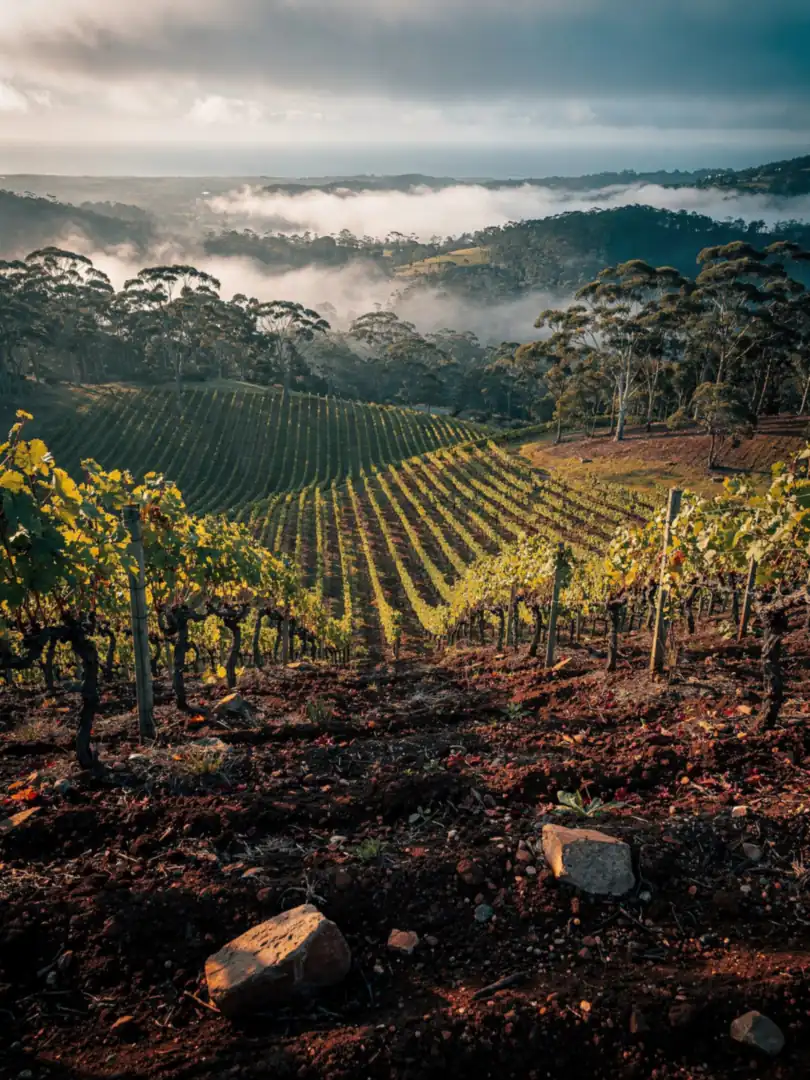
Anyone wondering why mainland winemakers look to Tasmania need only check the map. The island lies beyond the Bass Strait, the stretch of sea between it and the mainland, placing it far in the south of Australia. There, grapes ripen slowly, and that is exactly what a base wine for sparkling wine needs: sugar that doesn't run away, and acidity that stays.
Acidity is no side issue in sparkling wine. It keeps the wine fresh once the dosage is added later, and it carries it through long years on the lees. In the assessment of wine critics, most of mainland Australia is too warm to produce base wines with this natural acidity. That's why sparkling wine houses seek it out on the island.
The sparkling wine producers are concentrated in the northeast, not far from the coast on the Bass Strait. Clover Hill sits on the site of a former dairy farm, so the vines there grow on old pastureland. The island's wine industry names seven areas: Tamar Valley, Pipers River, East Coast, Coal River Valley, Derwent Valley, Huon Valley with Channel, and the Northwest. These are place names, not official sub-appellations.
For sparkling wine, this means a base wine that is picked early yet still carries ripe aromas. Warmer regions, by contrast, often have to pick very early to save acidity, accepting underripe, green notes as a tradeoff. The houses rarely describe the soils in detail. They prefer to talk about the parcel, the grape variety, and how long the wine spent on the lees.
For the reader, this means: Tasmanian sparkling wine is more a wine of climate than of soil. Comparing it to Champagne means comparing two cool sites with very different histories but the same intention.