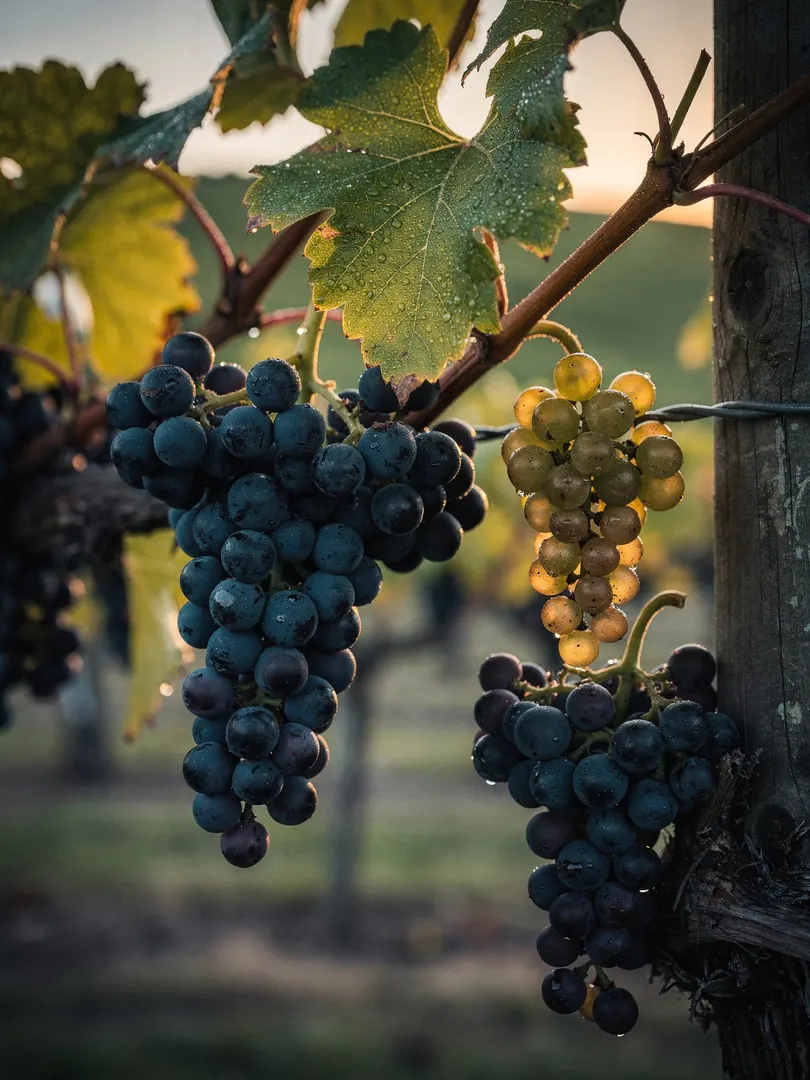
Chardonnay, Pinot, Meunier
Grape Varieties
Chardonnay, Pinot Noir and Pinot Meunier are the varieties Tasmania's sparkling wine houses rely on. At Jansz, according to the house, Chardonnay and Pinot Noir are used; at Clover Hill, all three grow across some 23 hectares. This is the same trio found in Champagne, just on the other side of the world.
Why these varieties in particular? Pinot Noir brings body and red fruit without turning the wine red, since the grapes are pressed in a way that keeps the juice pale. Chardonnay supplies freshness, citrus fruit and tension. Pinot Meunier is the softer, fruitier variety that gives a cuvée roundness and shows aroma early. Together they produce a wine that is lively when young and becomes broader with time on the lees.
Pinot Noir is the island's most important variety, including beyond sparkling wine. According to reports from Wine Tasmania, in 2012 and 2013 a good 600 hectares of bearing Pinot Noir vines were in production, alongside a good 300 hectares of Chardonnay. Chardonnay thus covers roughly half the area of Pinot Noir, but a larger share of it goes into base wines for sparkling wine. These figures date from the early 2010s and have grown since.
Important for understanding: here, the vineyard is usually not the answer to a question about site, but about variety. A house decides how much Pinot Noir goes into the blend, and thereby whether the wine leans toward structure or elegance. For rosé, Pinot Noir plays the lead role. Jansz and Bay of Fires each have a rosé cuvée in their range, and the rosé is made from red Pinot Noir.
A peculiarity of the island is that the grapes don't grow solely for producers based there. Wineries on the mainland also source base wine from here—but that's a story for the next stop.