Early Harvest, Cuvée
Base Wine & Cuvée
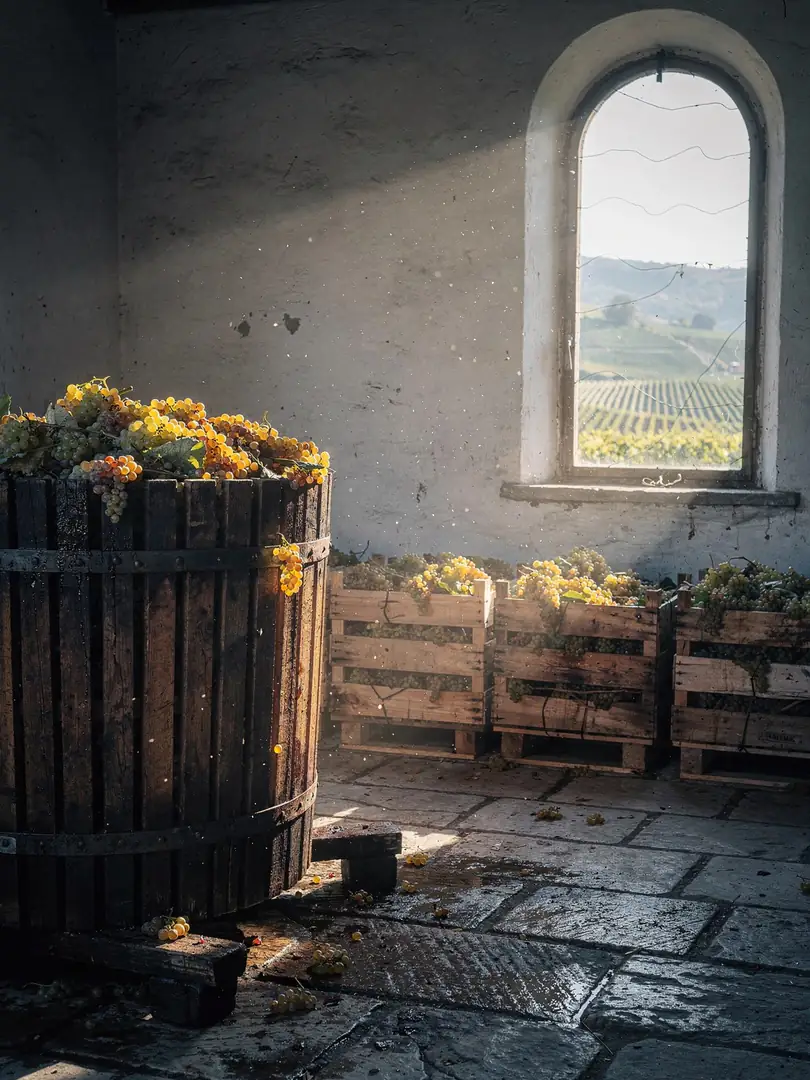
The base wine for Riesling Sekt is harvested earlier than that for still wine, picked for acidity rather than must weight. At this stage the grapes are still hard and tart, and that's exactly what the cellar master wants. Sugar and alcohol are added later anyway, during the second fermentation.
Pressing is done gently. Whole grape clusters go into the press, pressure builds slowly, and the result is a pale, clear juice with no tannin. With red varieties like Spätburgunder, this process yields a Blanc de Noirs, which § 32 of the Wine Ordinance permits as long as the grapes are pressed as for white wine and the finished wine looks typical of a white.
For Winzersekt, the base wine must be of quality-wine standard and come from grapes grown by the same operation that produces the Sekt. A growers' cooperative may work with grapes from its members. This keeps the entire path from vine to bottle in one set of hands, with no bulk wine bought in.
Assemblage, meaning the blending of different wines into a cuvée, has two faces in the Rheingau. The winegrower blends sites, parcels, and sometimes varieties from a single vintage. A large brand house, such as the one Matheus Müller founded in Eltville am Rhein, by contrast has to make sure its Sekt tastes the same year after year, blending wines from different vintages, including reserve wines, to achieve that.
On a Winzersekt label, grape variety and vintage always appear, as § 34a requires. It therefore always carries a vintage. A Sekt without a vintage statement isn't a flaw, then, but often simply an effort to maintain a familiar house style.