Riesling Leads
Grape Varieties
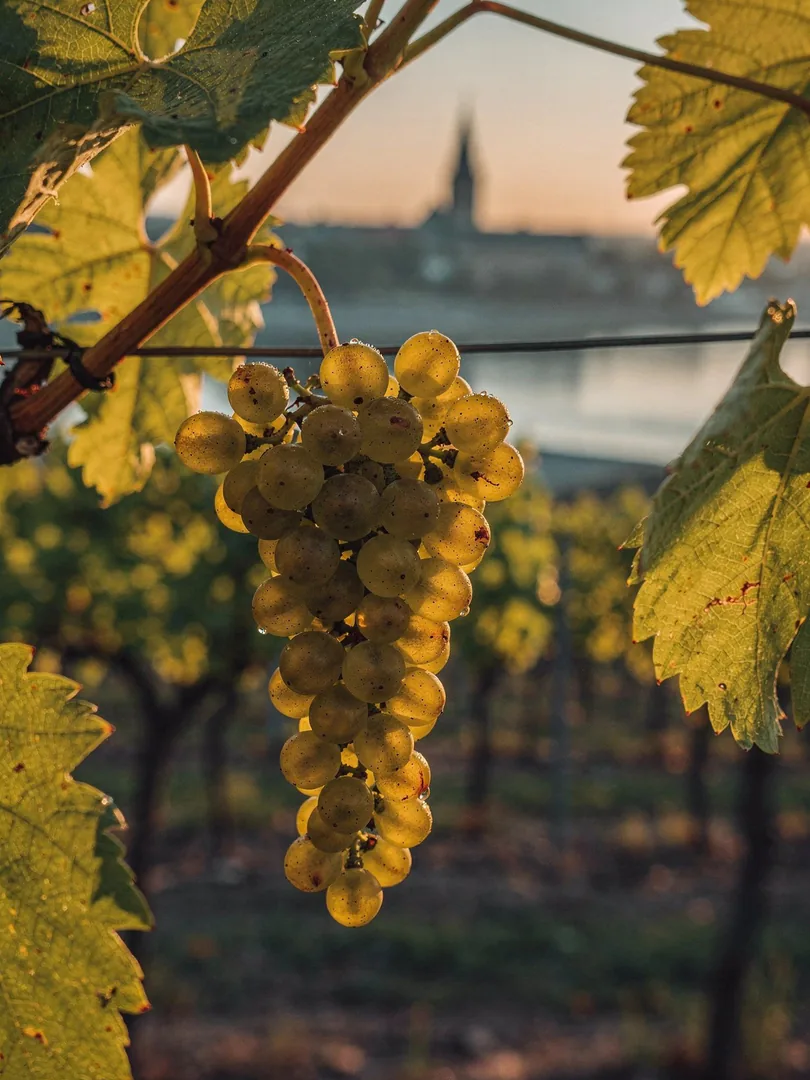
In the Rheingau, Riesling covers around 80 percent of the vineyard area, and that shapes the region's Sekt as well. Anyone drinking a Rheingau Riesling Sekt, say from Schloss Vaux, is tasting a variety that holds onto its acidity even late into ripening. That's exactly what makes it suited as a base wine for second fermentation.
Typical notes include citrus peel, green apple, and a touch of quince, along with a dry, slightly mineral freshness. With time on the lees, brioche-like bread crust notes emerge, without the fruit disappearing. Because Riesling itself expresses terroir so clearly, a Rheingau Riesling Sekt tends to taste less "baked" and more fruit- and stone-driven than many a Champagne.
The second main variety is Spätburgunder (Pinot Noir), known above all around Assmannshausen in the Rheingau. As Sekt, it's usually bottled as a Blanc de Noirs, a white sparkling wine made from red grapes. § 32 of the Wine Ordinance explicitly permits this, provided the grapes are pressed as for white wine and the resulting wine looks typical of a white.
Weissburgunder (Pinot Blanc) and other Pinot family varieties also find their way into Sekt. In a blend, they add a softer, nutty note that rounds out Riesling. Muskateller, too, is made into Sekt in Germany.
Naming a grape variety on the label is a promise. For Winzersekt, stating the variety is actually required, as is the vintage. A Sekt with a stated grape variety can also, on request, be assigned an official quality control number. That way, what's written on the bottle reflects what's really in the glass.