Bottle or Tank
The Second Fermentation
How is Sekt made in the Pfalz? Two ways, and both are permitted. In the first, the base wine ferments a second time in the bottle; in the second, it ferments in a sealed pressure tank. Sekt b.A. from the Pfalz may be produced by either method—only Winzersekt is required to use the bottle method.
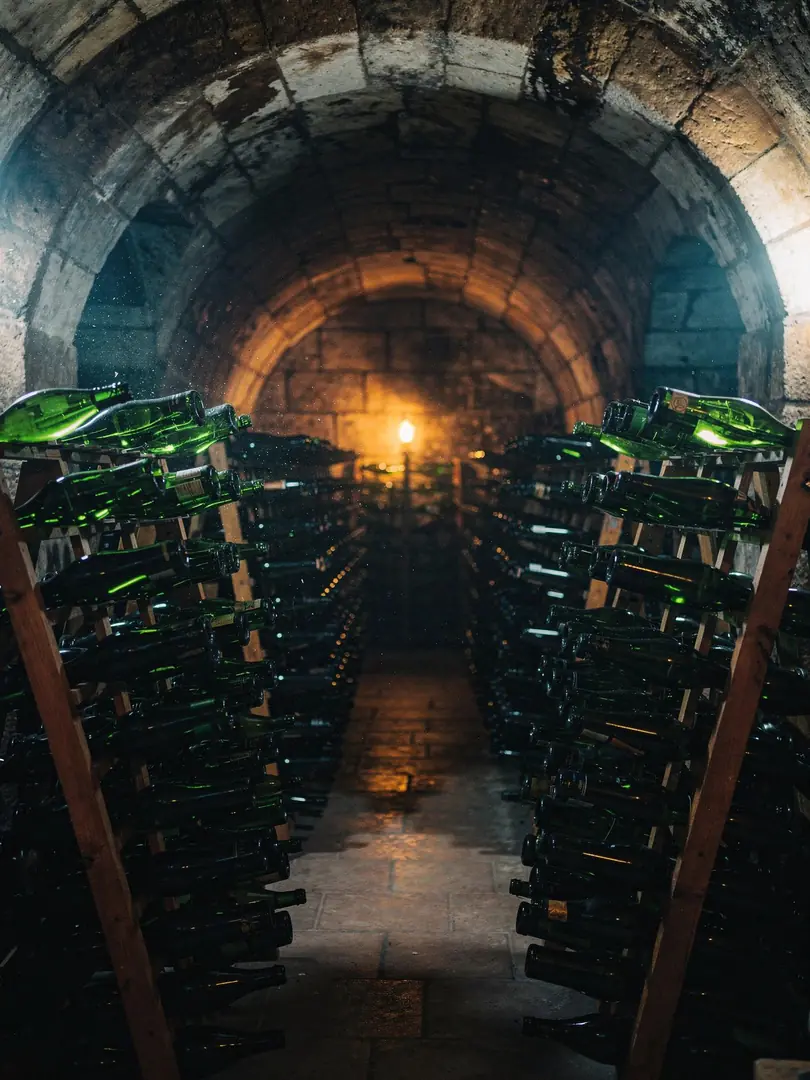
The bottle first receives the base wine, then a mixture of sugar and yeast known as the liqueur de tirage. The yeast converts the sugar into alcohol and carbon dioxide. Since nothing can escape, the gas dissolves into the wine. This creates the pressure that, for Sekt, must reach at least 3.5 bar. According to the company, this was the very path Carl Joseph Wagner took when he brought bottle fermentation to Pfalz Riesling in Wachenheim.
For the label, wording matters. 'Traditional bottle fermentation' requires that the Sekt rest on the lees for at least nine months at the same estate and be disgorged from that very bottle—that is, freed of sediment. If the label simply says 'bottle fermentation,' the lees may instead be removed by transferring the wine under pressure—the transfer method (Transvasierverfahren).
In the tank, things move faster. The minimum production period is six months, of which 90 days must involve lees contact—or 30 days if stirred mechanically. This is the method many brands use to produce large volumes with consistent results. Pét-nat, where the first fermentation finishes in the bottle, has no formal legal definition and falls outside Pfalz Sekt regulations.
Pfalz Riesling SektBottle fermentation · Riesling
- Time on lees
- 9–24 Months
- Sugar
- 6–12 g/l
- Alcohol
- 11–12.5 % vol
Citrus, green apple, later bread; taut acidity, fine mousse.