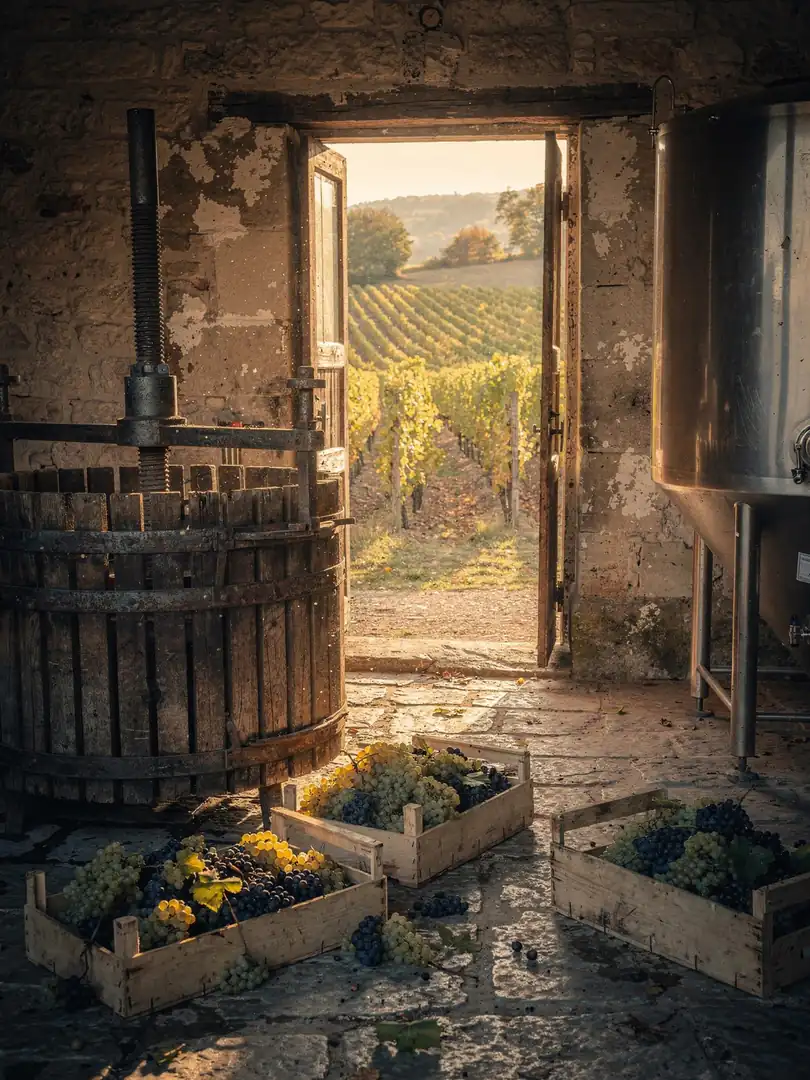
Hand harvest, pressing, rosé
Base Wine & Cuvée
No Crémant without hand harvesting: European law requires it for the name, and the grapes go whole into the press. The specifications call for protecting the harvest from rain and preventing oxidation between vineyard and press; any juice that runs out of the grapes during transport is discarded.
A fixed limit applies to pressing: no more than 100 liters of must from 150 kilograms of grapes. This gentle approach keeps bitter components from skins and seeds out of the press. The must is clarified and fermented cool, with the specifications setting a maximum temperature of 25 degrees.
The base wine is meant to stay lean. After any permitted enrichment, it may reach at most 11.5 percent ABV total alcohol, and its sulfur content before the second fermentation must not exceed 100 milligrams per liter. Later, the second fermentation nudges the alcohol up just a touch further.
Then begins the work of the cellar master, who assembles the cuvée. From sites and varieties stretching from Rully to the Châtillonnais, he blends the wine of the house: Chardonnay from cool limestone for freshness, Pinot noir for body, perhaps a dash of Aligoté for acidity. Because the vineyards lie so far apart, the choice is wide.
For rosé, the specifications allow two methods: the Pinot noir is left briefly on the skins or its juice is drawn off, or a red wine is blended into the white base wine before bottling. If only Chardonnay is used, the label reads Blanc de Blancs; if it's pale juice from Pinot noir, it reads Blanc de Noirs.