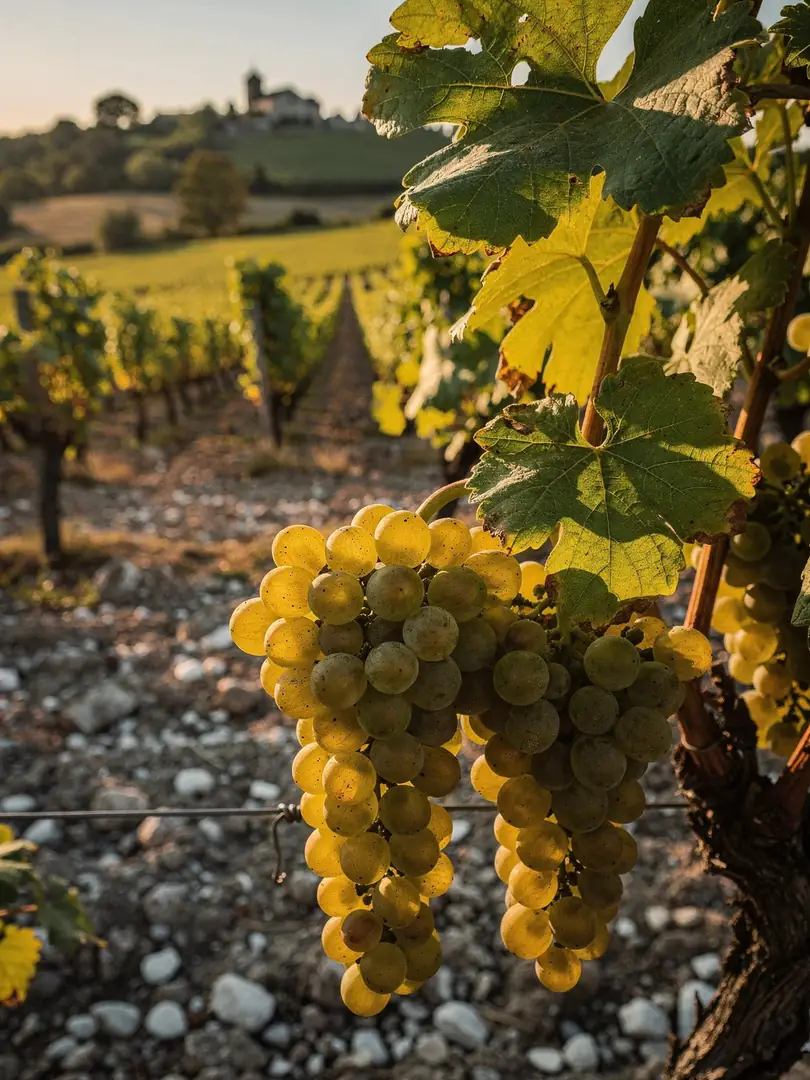
Pinot, Chardonnay, Aligoté
Grape Varieties
The grape varieties of Crémant de Bourgogne read like an inventory of the whole region. Permitted white varieties are Chardonnay, Aligoté, Pinot blanc, Melon and Sacy, while the dark varieties are Pinot noir, Pinot gris and Gamay. The specifications themselves note that Chardonnay and Pinot noir are by far the preferred choices.
One rule holds the blend together: Chardonnay, Pinot blanc, Pinot gris and Pinot noir combined must make up at least thirty percent of the cuvée. Gamay, the grape of Beaujolais, may only be included in a limited proportion. The remainder is filled out by the other varieties, including Aligoté, which is at home in Rully and the rest of the Côte Chalonnaise.
In Burgundy, Chardonnay delivers citrus, apple and a crisp acidity that doesn't fade even after long lees aging. Pinot noir brings body and red fruit, structure in white wines and color in rosé. Both varieties thrive especially well on limestone slopes and ripen early enough for the early harvest that sparkling wine requires.
Aligoté is considered the plainer sibling, strong in acidity and simple in fruit, otherwise known mainly as the base of Kir. For sparkling wine, it's exactly this acidity that proves useful. Melon, known in the west as the grape of Muscadet, and Sacy, an old variety from the Yonne, now appear only rarely in the cuvée.
The specifications call for the finest varieties to dominate the blend so the wine can develop its full aroma: Pinot noir, Pinot gris and Chardonnay. For rosé, Pinot noir is the first choice, since its skin releases exactly as much color during pressing as a pale rosé needs.