Fermentation in the Bottle
The Second Fermentation
In spring following the harvest, the base wine is bottled, no earlier than January 1st. Along with the wine, a mixture of sugar and yeast goes into the bottle, the liqueur de tirage. The standard is around 24 grams of sugar per liter.
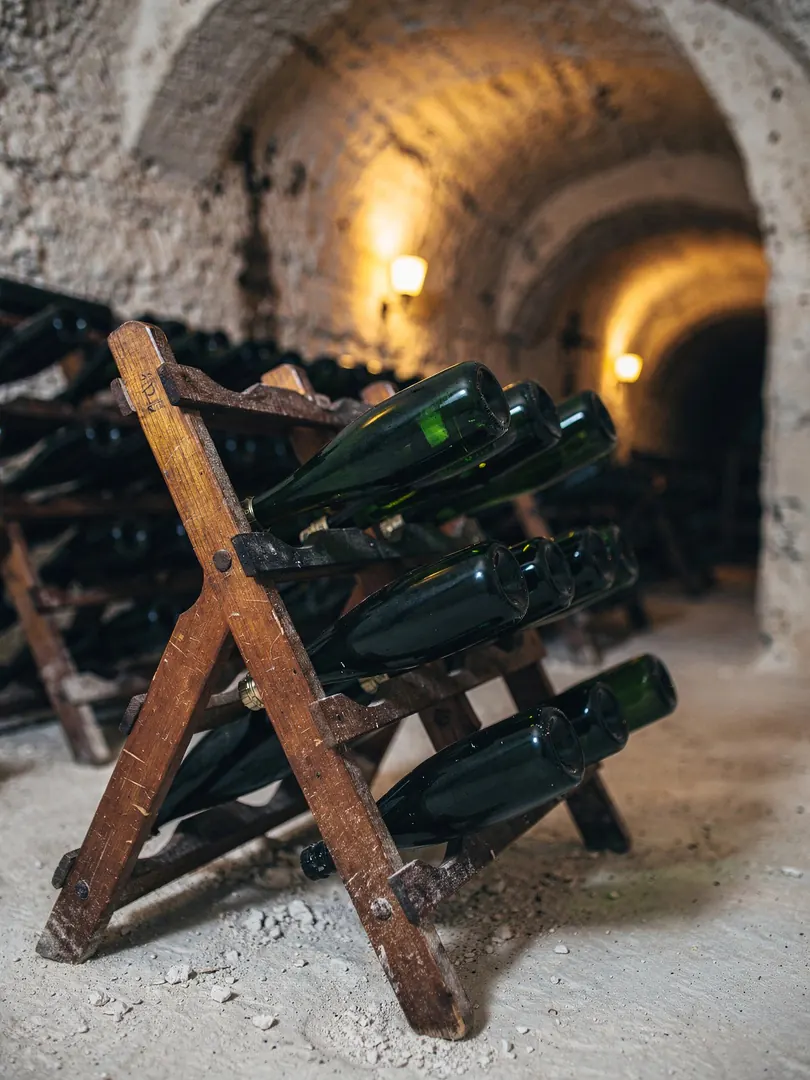
A crown cap seals the bottle, which then rests in a cool cellar, often around 13 degrees Celsius. The yeast converts the sugar into alcohol and carbon dioxide, and because the bottle is sealed, the gas stays dissolved in the wine. This second fermentation is also called prise de mousse, the foaming.
This creates around six bar of pressure, more than double that of a car tire. That's why Champagne bottles have thick glass and a punted base. When the bottle is opened, this gas escapes again, and that's exactly what creates the bubbles rising in the glass.
Unlike tank-method sparkling wine, Champagne offers no choice: the second fermentation must take place in glass bottles. Only very small bottles and formats from the Jéroboam (three liters) upward may be transferred afterward. A Blanc de Blancs in the standard 0.75-liter bottle has therefore fermented in that exact bottle.
For Salon and Clos du Mesnil, the second fermentation proceeds just like it does for any Champagne. The difference lies in the years that follow, and in the selection of grapes beforehand. The three signature wines below follow the same path and differ in lees aging and dosage.
Blanc de Blancs Brut Non-VintageBottle fermentation · Chardonnay
- Time on lees
- 15–36 Months
- Sugar
- 0–12 g/l
- Alcohol
- 12–12.5 % vol
Citrus and green apple, fine mousse, taut chalky acidity, a touch of brioche.