Fermentation in the Bottle
The Second Fermentation
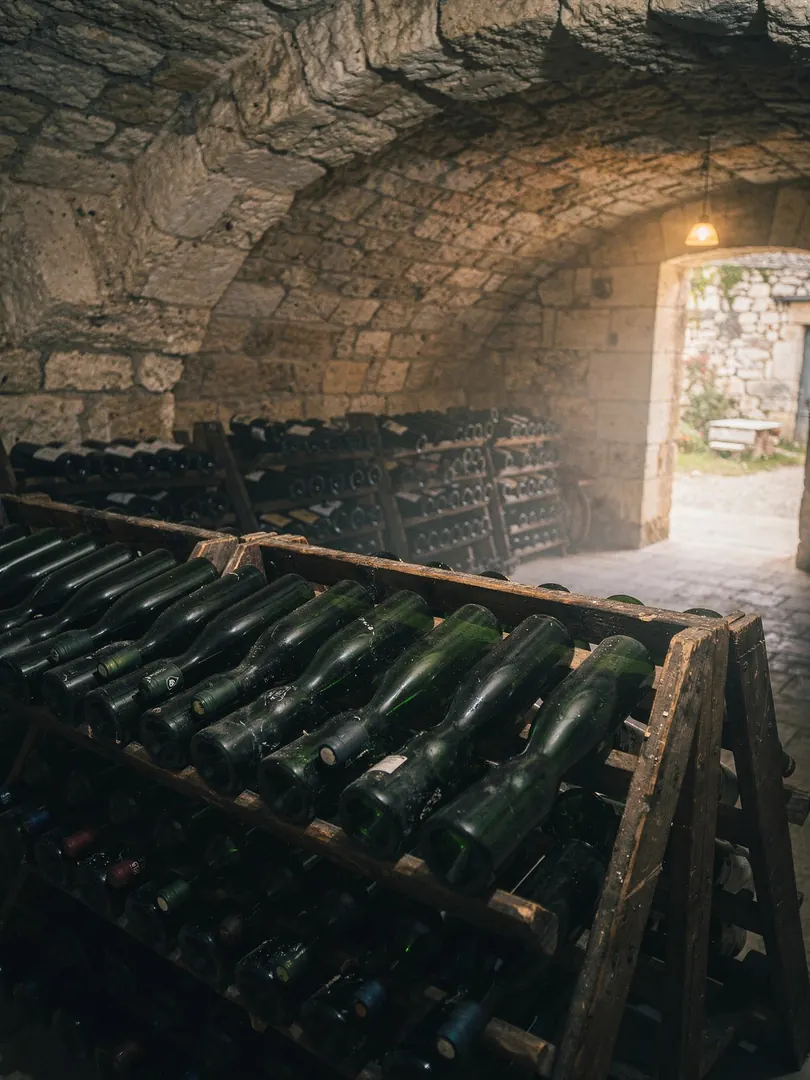
Strictly speaking, there is no second fermentation in sweet Clairette de Die—only a single one that takes place in two vessels. It begins in the tank, where it's slowed by cold and partial yeast removal, then continues in the bottle. The regulations explicitly require glass bottles for this process.
This is known as the Méthode Dioise Ancestrale. "Ancestrale" means roughly "passed down from the ancestors," referring to a very old way of creating sparkle: the must is bottled while it still contains sugar. The yeast ferments this remaining sugar, the resulting carbon dioxide stays dissolved in the wine, and fermentation stops on its own.
Nothing is added. The liqueur de tirage, which introduces sugar and yeast to the bottle in Champagne production, is forbidden here, as is the final dosage. The sugar you taste later comes entirely from the grapes themselves. The regulations require a minimum pressure of three bar and at least 35 grams of fermentable sugar per liter.
By comparison, Asti is fermented in a pressurized tank, where fermentation is stopped before the finished wine is bottled. In Die, by contrast, the wine finishes fermenting inside the bottle and rests on its lees for at least four months.
How clear the final wine turns out depends on the producer. The regulations allow for lees removal through several methods: disgorgement, meaning expelling the yeast from the bottle neck, filtration from bottle to bottle, or transfer into a collection tank with filtration at no more than 4 degrees Celsius.
Dry Clairette de Die and Crémant de Die follow the classical path: complete fermentation first, then addition of sugar and yeast, second fermentation in the bottle, followed by lees aging. The dry style requires at least 3.5 bar of pressure, and after the dosage d'expédition, no more than 15 grams of sugar per liter.
Clairette de Die Méthode AncestraleMéthode ancestrale · Muscat à petits grains (min. 75%), Clairette
- Time on lees
- 4–6 Months
- Sugar
- 35–60 g/l
- Alcohol
- 7–9 % vol
Sweet, rose and citrus notes, low alcohol; sugar from the grape itself, no dosage.