Muscat Before Clairette
Grape Varieties
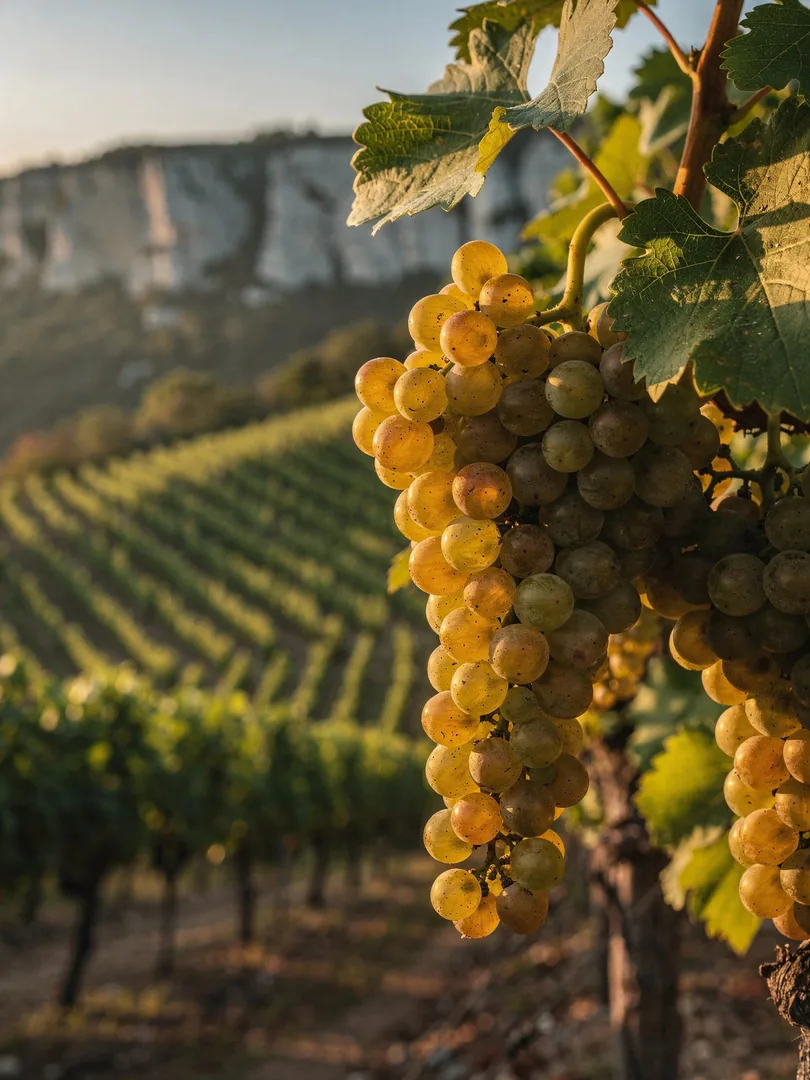
The name is misleading: Clairette de Die is mostly Muscat. For the sweet style bearing the additional designation "méthode ancestrale," the regulations require that at least 75 percent of both the vineyard area and the blend be Muscat à petits grains, the small-berried Muscat variety known in German as Gelber Muskateller and in Italy as Moscato bianco. The same grape lies behind Asti, yet the resulting wine is entirely different.
Clairette is the second variety, a white grape of southern France with little aroma of its own. In the sweet style, it only supplements the Muscat as an addition. As the main variety, it appears in the regulations only for the dry style; in the sweet style it may be blended in, but never dominate. The dry Clairette de Die may consist entirely of Clairette and undergoes a second fermentation in the bottle, just like a Crémant.
Crémant de Die is also built around Clairette as the main variety; Aligoté and Muscat à petits grains are permitted as secondary grapes. Anyone familiar with Crémant made from Chardonnay or Pinot will encounter something different here—a base built on a grape that shares its name with the valley itself.
Muscat brings its aroma straight from the grape. Trade publications describe the wine with notes of rose blossom and citrus. To preserve as much of that aroma as possible in the glass, the must is kept cold, fermentation is slowed early, and the still partially fermented must is bottled.
The 75 percent threshold applies on two levels: across a producer's total vineyard area and within each individual blend in the cellar. Growers who only supply grapes and farm less than 1.5 hectares are exempt from the vineyard-area rule. Mutations such as pink-skinned Muscat may be planted alongside the white variety on the same plot.