Vosges at Its Back
Soil & Climate
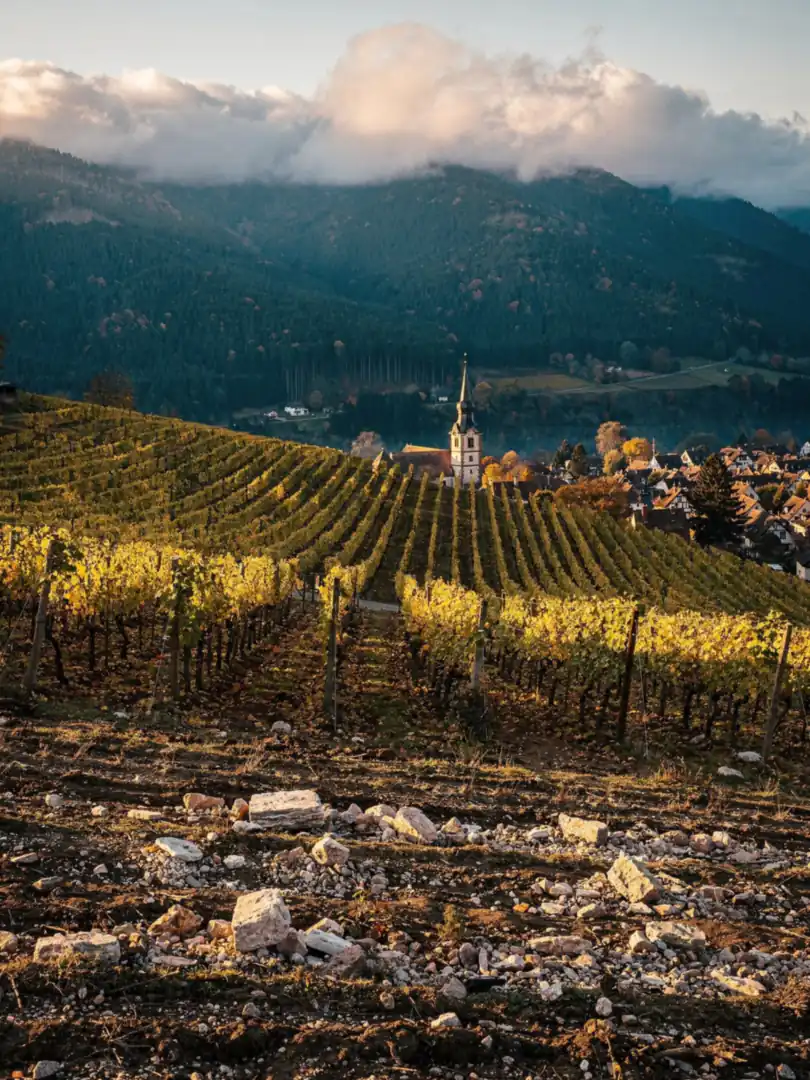
To the west, the Vosges mountains rise and hold back the rain carried in by Atlantic winds. That's why Colmar is considered one of the driest cities in France. The vines at the foot of the slopes get plenty of sun, even though Alsace lies far to the north.
For sparkling wine, that's only half an advantage. Sun brings sugar, yet the base wine needs to stay lean and retain acidity, since fine bubbles need freshness as a counterbalance. That's why winegrowers harvest early, often well ahead of the grapes destined for still wines.
Alsace's soil changes over just a few hundred meters—from granite and sandstone near the Vosges, to limestone and marl, to loess and gravel out on the plain. For Crémant, the famous single vineyards matter less. What growers look for are reliable parcels that deliver grapes with similar ripeness and crisp acidity year after year.
Pinot blanc and Auxerrois ripen reliably even on heavier soils. Riesling holds onto its acidity especially well on stony slopes. A blend from several parcels evens out what any single vineyard might lack in a difficult year.
There's no chalk tunnel here like in Champagne. The bottles rest in the vaulted cellars of wine villages and in cooperative halls, where the temperature stays constant year-round. That coolness matters, because it slows the second fermentation and makes the bubbles finer.
Why does Crémant d'Alsace often taste round and fruity? The answer lies in this combination: plenty of light, little rain, early-picked grapes, and varieties like Pinot blanc that are naturally mild.