Picking Early
Base Wine & Cuvée
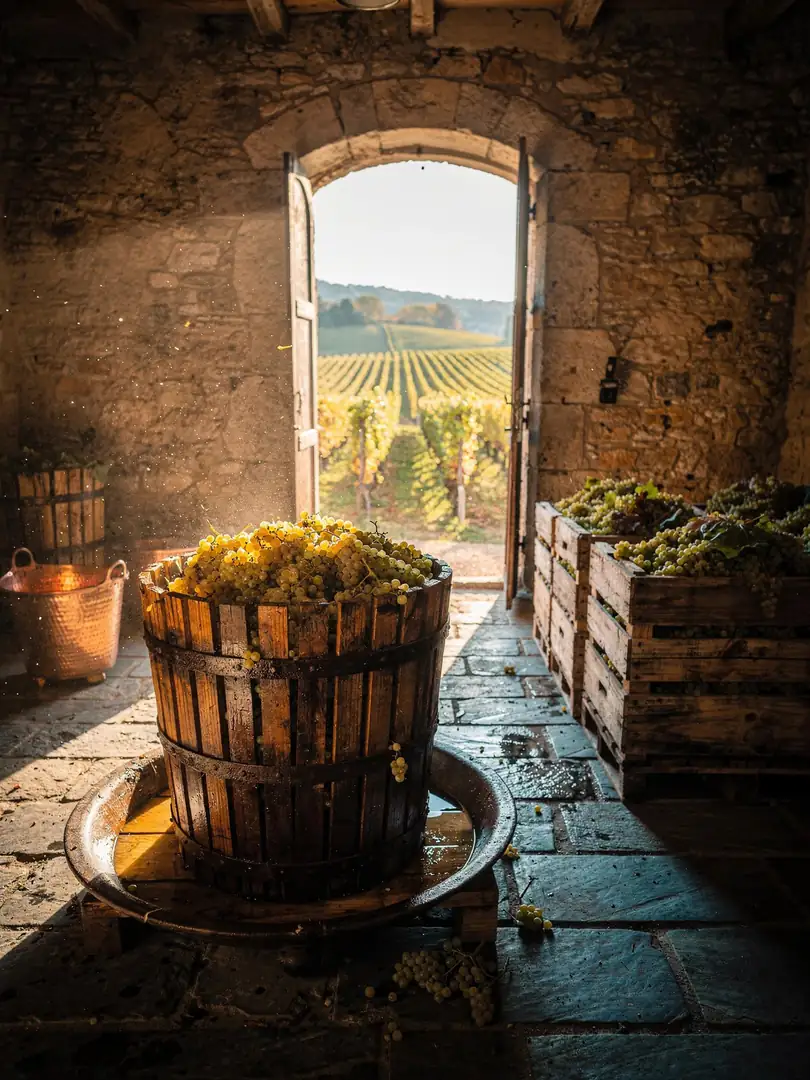
Crémant de Limoux begins in autumn with a decision typical of sparkling wine production: picking early. Riper grapes would have more sugar and less acidity, and the resulting base wine would turn out too heavy and too alcoholic. Harvest timing is therefore driven by acidity, not sweetness.
EU law requires hand harvesting for Crémant. Hand-picked grapes arrive at the press house undamaged and are pressed as whole clusters wherever possible, so that skins and seeds don't color the must or make it bitter. From 150 kilograms of grapes, a maximum of 100 liters of must may be extracted, just over two-thirds. The rest stays in the press, because the final juice tastes harsh and coarse.
Next comes the work on the cuvée, the blend. Each grape variety, each zone, and often each vineyard is fermented separately at first. In spring, the cellar master tastes through the individual lots and assembles the blend. Chardonnay provides structure, Chenin blanc acidity, Mauzac the apple note, Pinot noir fullness. The result is the base wine, still unsparkling, austere, and on its own not a wine you'd enjoy drinking.
One limit in the Crémant rules is worth knowing: sulfur dioxide must not exceed 150 milligrams per liter, and sugar must stay below 50 grams per liter. Sulfur protects the wine from oxidation but shouldn't be noticeable on the palate. A cleanly made base wine needs only a little of it.
Blanquette méthode ancestrale works differently. There's no cuvée of several varieties here, since it's made from Mauzac alone. The must isn't enriched, so no sugar is added. Everything the wine later carries in alcohol and sweetness comes from the grapes themselves and from the year they grew in.